Behavior Problems at the Cat Hotel: House Soiling, Aggression, Scratching, and Excessive Vocalizing
Published on August 10, 2026
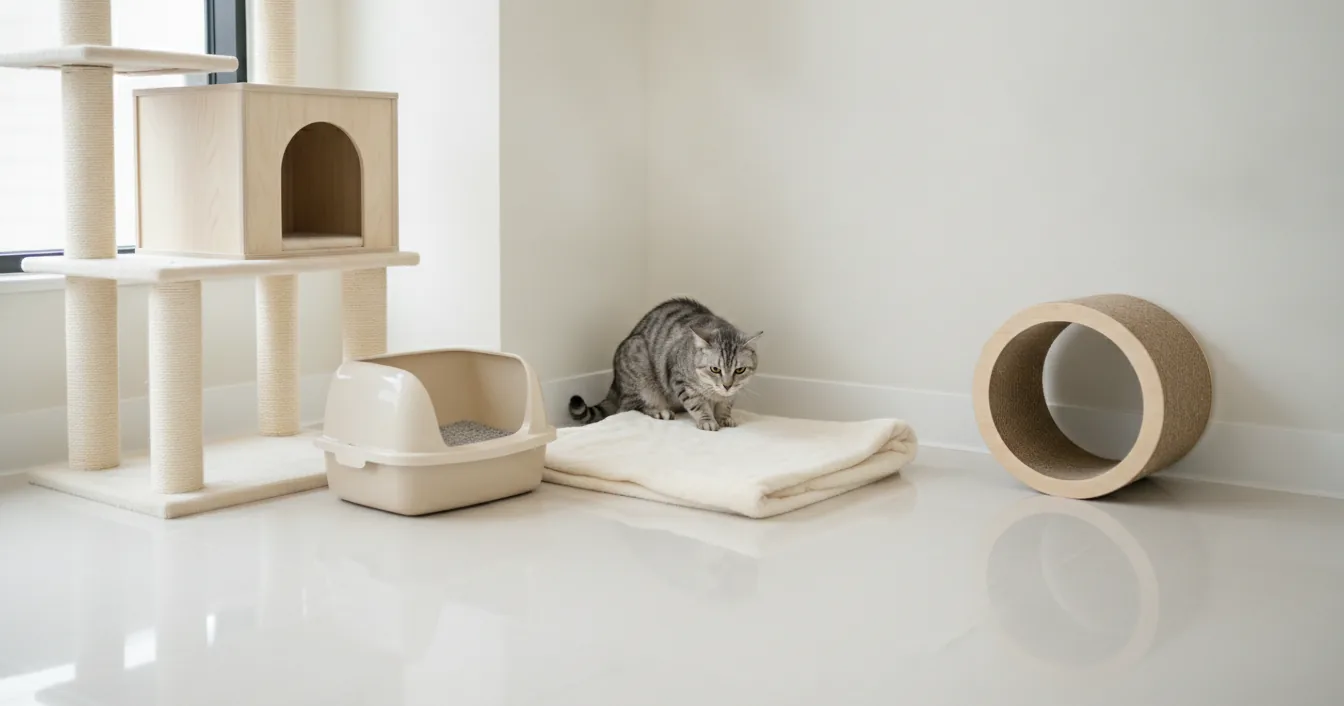
Most boarding stays are uneventful. The ones that go wrong tend to go wrong in four recognizable ways: a cat stops using its litter tray, a cat turns on the hand that feeds it, a cat shreds whatever soft surface it can reach, or a cat vocalizes for hours and does not stop. The Cornell Feline Health Center groups these under behavioral issues alongside cognitive dysfunction and over-grooming, and they are the same problems that fill veterinary behavior caseloads in the home. Boarding does not invent them. It compresses them, strips away the coping strategies a cat relies on at home, and hands the result to a staff member who has known the cat for two days.
This guide is the operator’s playbook and the owner’s disclosure checklist for those four problems. It assumes you already know how to read the early signals; if that is the gap, start with our guide to feline stress signals and body language at boarding. What follows is about what to do once the signals have already turned into behavior.
Rule Out Pain and Illness Before You Call It Behavior
The first rule in feline behavior medicine is that a behavior problem is a medical problem until somebody proves otherwise. Cornell’s Duffield Institute for Animal Behavior exists on exactly that premise, that behavior belongs in the clinic rather than in the training-tips column, because so much of what looks like temperament turns out to be physiology.
The boarding-relevant examples are concrete. A cat that suddenly urinates outside the box may have lower urinary tract disease, not a preference complaint. A cat that bites when a staff member lifts it may have arthritis in the spine or hips. A cat that yowls at three in the morning may be hyperthyroid, hypertensive, or cognitively declining rather than lonely. New-onset behavior in a cat that has boarded uneventfully before is a medical flag, and it deserves a call to the owner rather than a note in the file.
House Soiling: The Most Common and the Most Fixable
House soiling is the behavior problem most likely to surface in a suite, and in a boarding context it is usually about the box rather than the cat. A tray the cat cannot get into, litter it has never seen before, a box placed a foot from the food bowl, or a tray scooped once a day when the cat is used to twice: any of these will push a fastidious cat to go elsewhere.
Distinguish two things that look identical on the floor. Inappropriate elimination is a cat squatting and emptying its bladder on a horizontal surface, usually a soft one. Spraying is a standing cat backing up to a vertical surface, tail quivering, depositing a small amount of urine as a scent-marking behavior. The first is a litter box problem. The second is a stress and territory problem, and in a facility it often means the cat can see, hear, or smell other cats too closely.
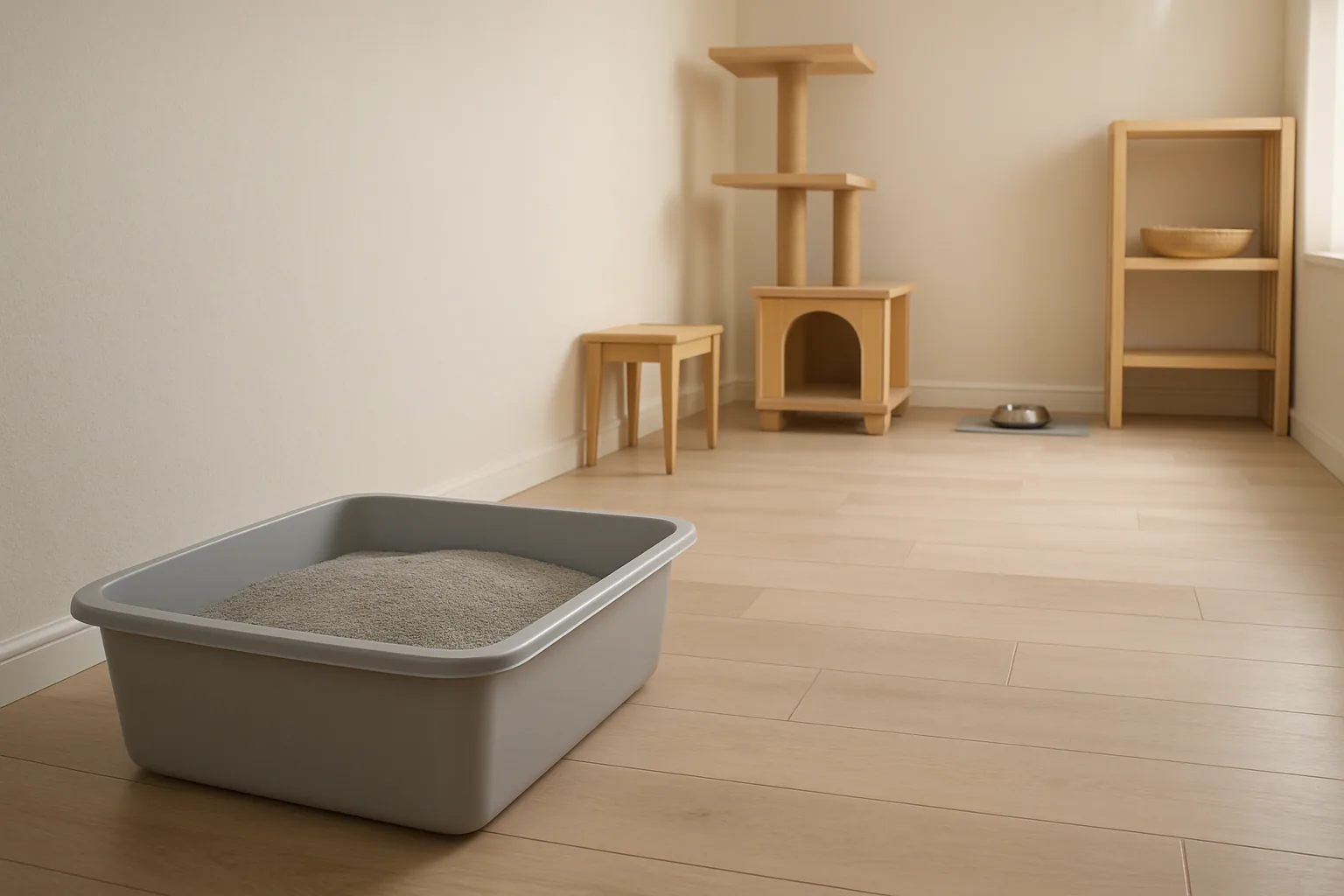
The fixes are unglamorous and they work:
- Offer a large, uncovered tray, low-sided for seniors and arthritic cats, and ask owners to send the litter the cat uses at home.
- Separate the resources. Litter at one end of the suite, food and water at the other, and bedding elsewhere. Cats will not reliably eliminate next to where they eat.
- Scoop at least twice daily and log output. A tray that stays clean also gives you an early-warning record of diarrhea or straining.
- Break the sightlines. Frosted film, a partial screen, or simply moving a sprayer’s suite away from a high-traffic aisle removes most of the trigger for marking.
- Clean with an enzymatic cleaner. Ammonia-based products leave a scent signature that invites a repeat performance in the same spot.
Never punish a soiling cat. It reliably increases anxiety, and anxiety is what produced the behavior.
Aggression: Fear First, Almost Always
Aggression at a cat hotel is rarely the confident, territorial kind. It is fear-based, defensive, and directed at whoever opened the door. Cornell’s classification is worth knowing because the type dictates the response: fear aggression, petting-induced aggression, redirected aggression, play aggression, and pain-related aggression each need something different.
Redirected aggression is the one that injures staff most often. A cat sees or smells another cat it cannot reach, arousal spikes, and the nearest available target absorbs it. The cat is not angry at the person. It is over-threshold and cannot tell the difference, and it can stay over-threshold for hours after the trigger is gone.
The de-escalation sequence is short, and it is mostly about doing less:
- Stop and give distance. Step back, break the stare, turn your body sideways, and let the cat come down. Do not reach into a suite to remove a growling cat unless there is a medical emergency.
- Do not corner or grab. Scruffing is out under current cat-friendly handling guidance. Towel-wrapping by a trained handler is the tool for a cat that genuinely must be moved.
- Wait out redirected arousal. Give the cat its own quiet space with the trigger removed, and leave it for hours rather than minutes.
- Assign one handler. A behaviorally difficult cat should meet the smallest possible number of people, on a predictable schedule.
- Feed, clean, and move on. Care tasks only, no elective handling, until the cat’s posture and appetite recover.
Write the incident down every time, including what preceded it. The pattern in the log is what tells you whether you are looking at a cat that hates the vacuum, a cat in pain, or a cat that should not board here again. Where a cat has a documented history, a pre-visit anxiolytic arranged with the owner’s vet can lower the baseline enough to make care possible; our review of gabapentin, trazodone, and what the evidence supports covers what those drugs actually do and what a facility may legally administer.
Destructive Scratching Is Normal Behavior in the Wrong Place
Scratching is not misbehavior. Cats scratch to condition their claws, stretch the muscles of the forelimbs and back, and leave visual and scent marks. A boarding cat that shreds a bed or the carpet edge is doing something entirely species-typical on the only substrate available.
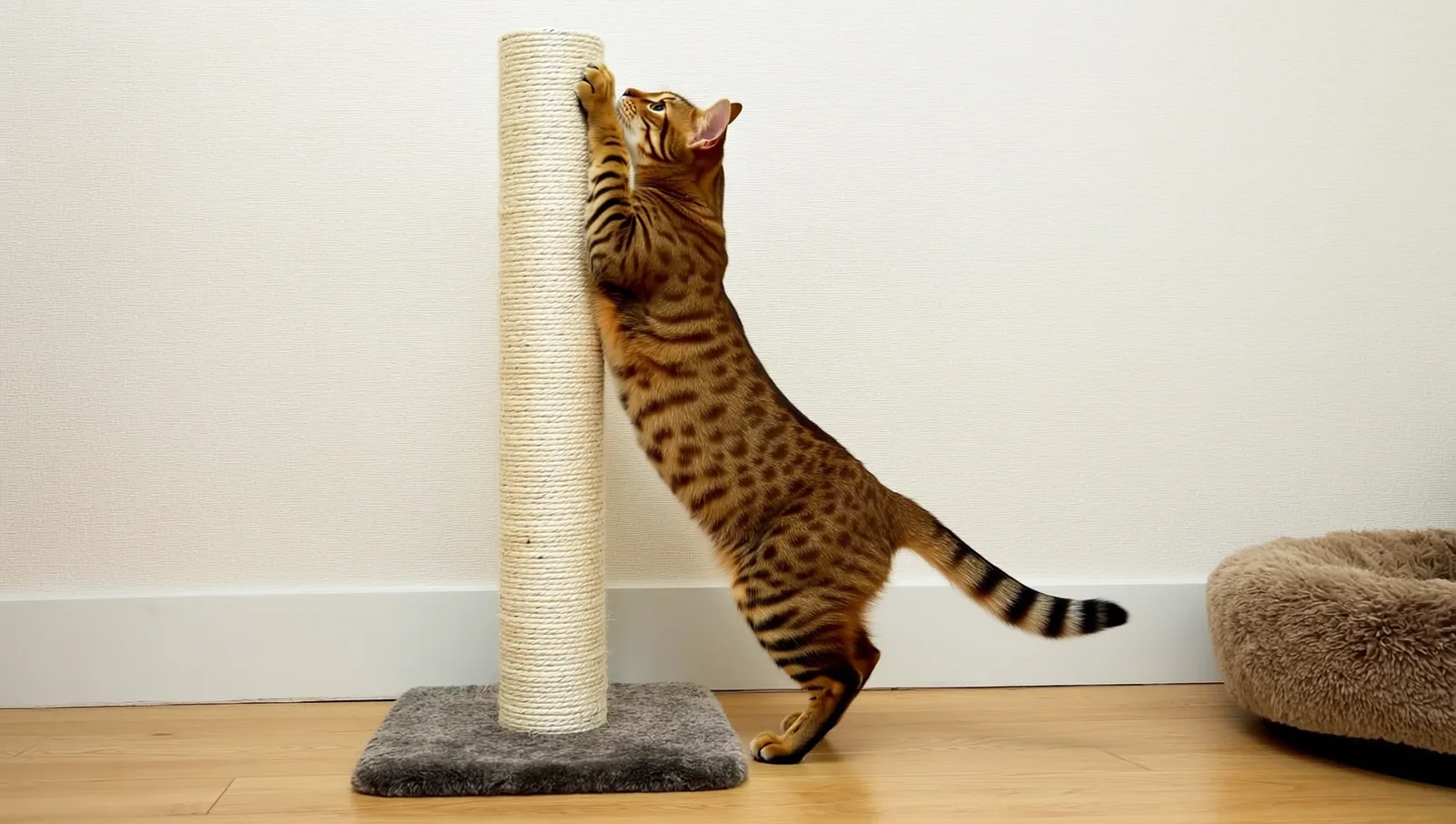
Which means the answer is substrate, not correction. Provide both vertical and horizontal options in every suite, because cats have individual preferences and you do not know which one a new guest prefers. A vertical post must be tall enough for a full stretch and heavy enough that it will not tip, since a wobbling post teaches a cat to avoid it. Sisal, corrugated cardboard, and carpet all have their partisans, so offering two textures is cheap insurance. Place them near the sleeping area, because much of a cat’s scratching happens right after it wakes up. Declawing is not an answer to anything and is now banned or restricted in a growing number of jurisdictions; nail caps and routine claw trims, handled at home before the stay, are the appropriate version of that conversation.
Excessive Vocalizing: Read It Before You Try to Stop It
A cat that vocalizes without pause is the hardest problem in a small facility, because it degrades the environment for every other guest. It is also the one most often misread as attention-seeking.
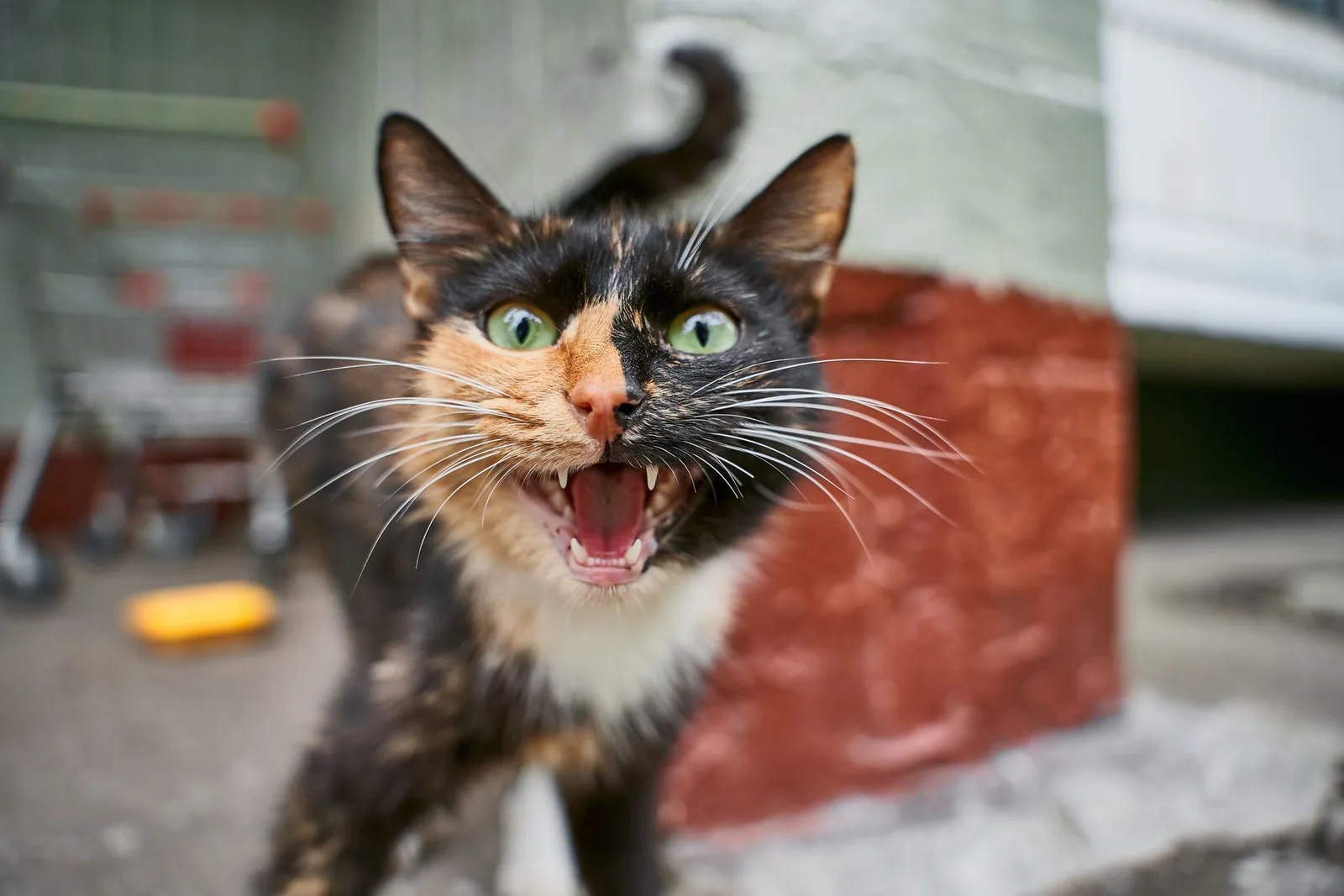
Sort it by type. Loud, insistent, near-continuous meowing usually means a socially attached cat calling for its people, and it typically eases over the first two or three days as a routine establishes. Growling and low yowling are threat and distress signals, and they call for the aggression playbook above, not for company. Nighttime yowling in an older cat points toward cognitive dysfunction, hypertension, or hyperthyroidism, and belongs in a vet conversation; our guide to boarding a senior cat covers the geriatric version in more detail. A cat whose vocalizing escalates rather than settles after 48 hours, especially alongside a dropping appetite, is not adapting, and appetite loss is its own escalating risk, as we cover in what to do when a cat will not eat at the hotel.
What helps: predictable routine, a suite away from the aisle, a covered hiding place, an item that smells of home, and structured contact at fixed times. What does not help is responding every time the cat calls, which reinforces the pattern. Nor does ignoring a cat that has genuinely stopped coping.
The Suite Setup That Prevents Most of This
Prevention is mostly furniture and layout, decided long before a difficult cat arrives. Every suite should carry a hiding place, a raised perch, separated food and litter zones, and at least two scratching surfaces. Sightlines between suites should be broken by default rather than on request. Cats should be out of sight and earshot of dogs entirely, not simply in a different room. A facility should also hold at least one quiet suite away from the main aisle, reserved for the guest that needs it. That is one of the things worth asking about when you are choosing a cat hotel.
What Owners Should Disclose, and What to Ask
Under-disclosure is the single most common cause of a bad outcome, and it is almost always well-intentioned. Owners worry that an honest history will get their cat refused. In practice, a facility that knows what is coming can prepare for it, and a facility that is surprised cannot.
Tell them the litter brand and box type, any history of soiling or spraying, whether the cat bites or swats and what provokes it, how it responds to being picked up, whether it has ever been sedated for a vet visit, and any chronic pain or medication. Then ask the facility how it handles a cat that will not let staff in, whether one person can be assigned to your cat, what its threshold is for calling you, and what happens if the stay is not working. A good operator answers those questions without hesitation, because they have already had to.
Behavior problems at a cat hotel are not a sign of a bad cat or a bad facility. They are what happens when a territorial animal loses its territory. The stays that go well are the ones where somebody planned for that in advance.
Further reading (sources)
- Cornell Feline Health Center on the behavioral issues cats are most commonly seen for
- Duffield Institute for Animal Behavior for treating animal behavior as clinical medicine rather than training advice
- AAFP and ISFM set out handling guidance for a cat that is already frightened
- Kessler and Turner on scoring feline stress before it becomes a behavior problem