Lab Tests and Diagnostics in Cat Boarding: What Gets Tested, What It Costs, and How Fast Results Come Back
Published on September 8, 2026
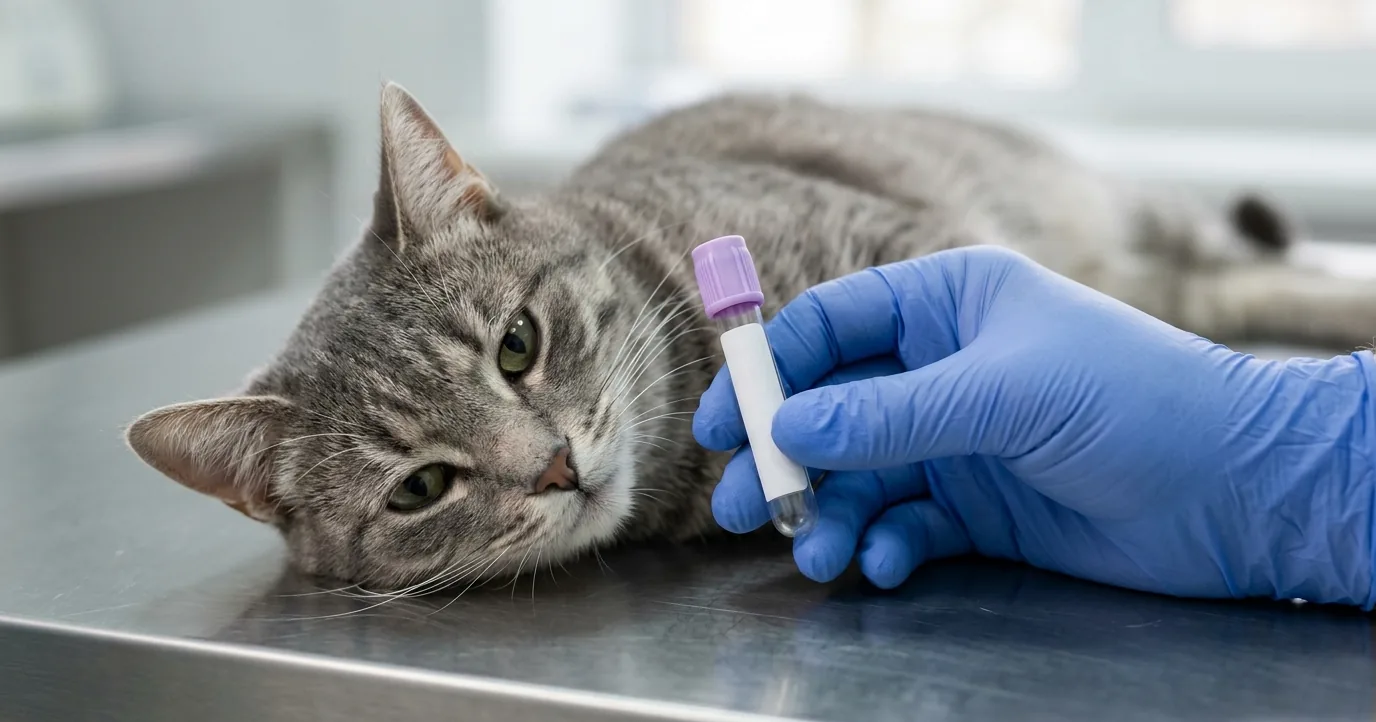
Lab work turns up in a boarding stay at the least convenient moments. A facility demands a FeLV and FIV test at intake for a cat that has never set a paw outdoors. Three suites start sneezing on a Tuesday and somebody asks whether to run a respiratory panel. A new arrival has soft stools and the vet wants a faecal sample. A breeder hands over a coronavirus titre result with the confidence of someone presenting a passport.
Almost nobody in that chain, owner or operator, has been told what these tests actually do. So the results get read as verdicts. Negative means clean, positive means keep it out, and a page from a laboratory becomes a clearance certificate. That is not how diagnostics work, and the gap between what a test proves and what people assume it proves causes real harm: healthy cats turned away, sick cats waved through, and money spent on results that land days after the decision was made.
This guide covers the tests that genuinely touch a boarding stay, what each one can and cannot tell you, how the sample has to be handled, honest turnaround times and price ranges, and the question that matters most inside a facility: when does paying to test beat simply isolating and waiting?
A Result Is a Snapshot, Not a Certificate
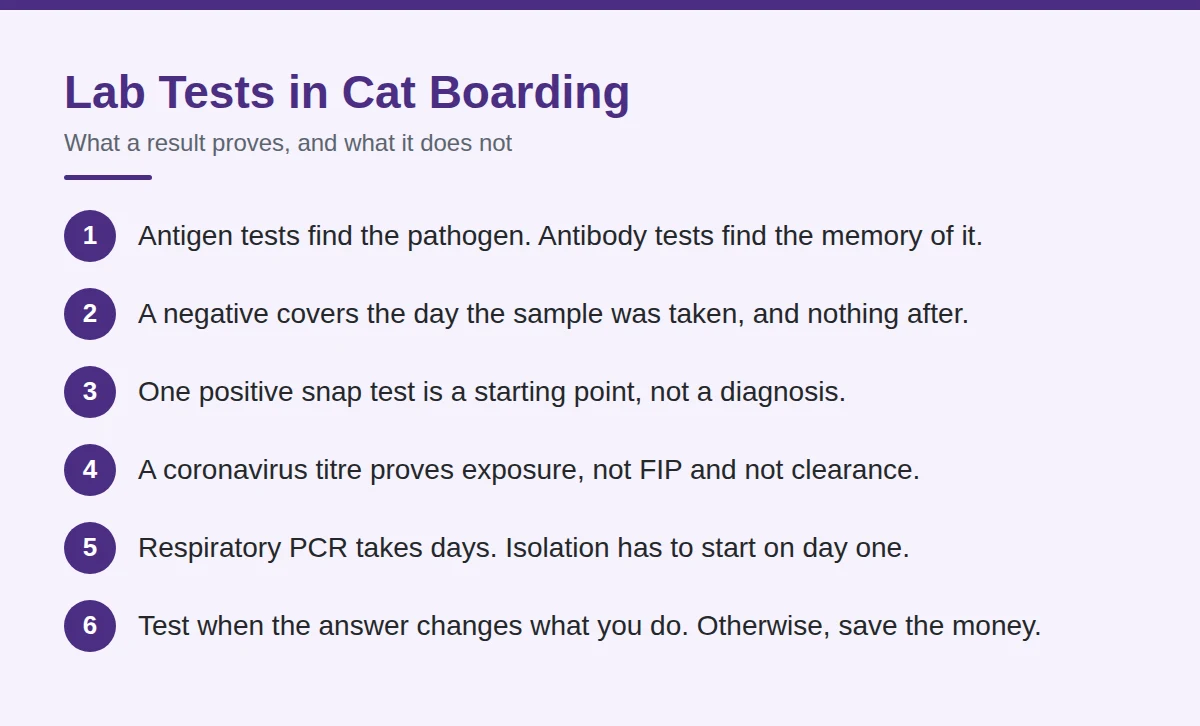
Every test below measures one thing, in one cat, at one moment. That sounds too obvious to state until you watch how results get used at an intake desk.
Two distinctions do most of the interpretive work. The first is antigen versus antibody. An antigen test looks for the pathogen itself, or a protein it makes, so a positive means the organism is present right now. An antibody test looks for the immune system’s memory of an encounter, which may have happened last week or three years ago, and which may have come from a vaccine rather than an infection. A cat can be antibody positive and entirely uninfectious. It can also be antigen negative and quietly incubating.
The second is detection versus disease. PCR finds genetic material with remarkable sensitivity, and that sensitivity is a double-edged thing. Finding herpesvirus DNA in a swab tells you the virus is there. It does not tell you the virus is what is making that cat sneeze, because a large share of perfectly well cats carry and intermittently shed it anyway.
Put those together and the practical rule falls out on its own. A negative result describes the moment the sample was taken. A cat tested on Monday, driven across town on Friday, and parked in a reception area next to six other carriers is a different cat by drop-off.
The FeLV and FIV Test at Intake
The in-clinic combination test, usually called a snap or lateral flow test, is the one most owners meet. It uses a few drops of blood and gives an answer while you wait.
The awkward part is that the two halves work in opposite directions. The FeLV side is an antigen test: it detects p27, a viral protein, so a positive suggests the virus is circulating. The FIV side is an antibody test: it detects the cat’s immune response, not the virus. That single difference produces most of the confusion in the room.
Three consequences follow. Kittens under about six months can carry maternal antibody absorbed from their mother’s milk and test FIV positive without being infected, so they need retesting once that antibody fades. Cats given the FIV vaccine, which was withdrawn in North America around 2017 but is still used in Australia, New Zealand and parts of Asia, produce antibody that a standard test cannot distinguish from a genuine infection. And on the FeLV side, a cat infected in the last few weeks may not yet have detectable antigen, which is why a negative in a recently exposed cat needs repeating roughly 30 days later.
The rule that matters most: a positive on a healthy cat is a starting point, not a diagnosis. Where the disease is uncommon, a fair proportion of positives in apparently well cats turn out to be false. The American Association of Feline Practitioners retrovirus guidelines are clear that a positive result in a healthy cat should be confirmed with a different type of test, typically PCR for proviral DNA, before anyone makes a decision the cat has to live with. Facilities that permanently blacklist a cat on one snap result get this wrong regularly.
Realistically: 10 to 20 minutes in the clinic, and roughly $40 to $70 in the United States as a standalone test, often folded into a wellness visit. A confirmatory PCR runs $60 to $120 and takes two to four business days.
Respiratory PCR Panels When a Wing Starts Sneezing
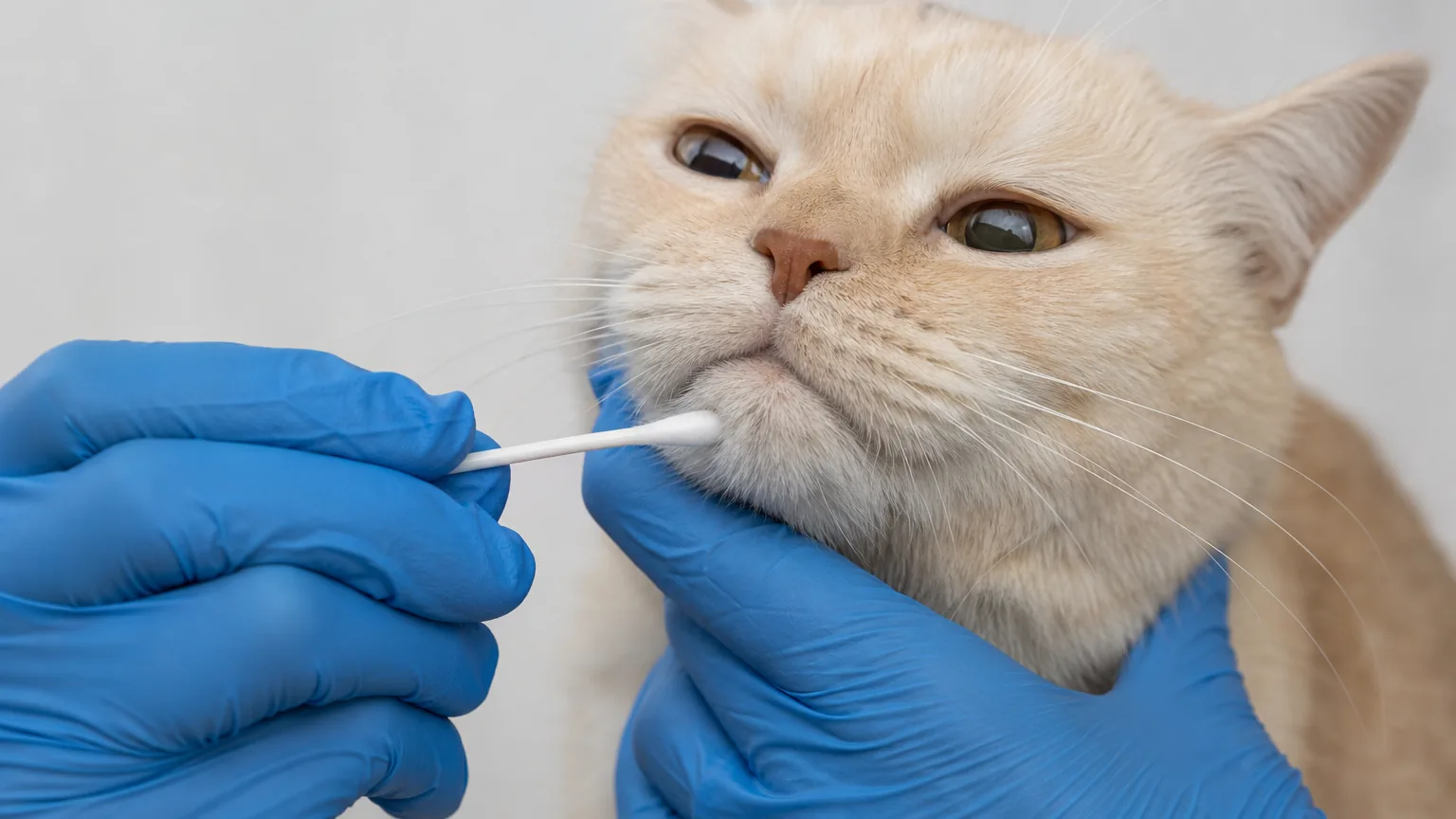
A feline upper respiratory panel is a PCR test that screens one set of swabs for the usual suspects at once: feline herpesvirus-1, calicivirus, Mycoplasma felis, Bordetella bronchiseptica, and Chlamydia felis. Samples come from the conjunctiva, the back of the throat and sometimes the nose, and the swab type matters, because wooden shafts and calcium alginate tips can interfere with the PCR reaction itself.
Two caveats decide whether the panel is worth running.
Recent vaccination muddies the result. Modified live vaccines contain live, weakened herpesvirus and calicivirus, and a cat vaccinated in the previous few weeks can return a positive that standard assays cannot separate from a field strain. If the panel is being run to work out what is loose in your building, vaccination dates have to be on the submission form.
A positive is not automatically the cause. Herpesvirus goes latent in most cats that have ever met it and reactivates under stress, which is precisely what boarding supplies. So a positive on a sneezing cat is consistent with the diagnosis but does not confirm it, and a negative does not exclude it, because shedding is intermittent and any antibiotic started before sampling will suppress the bacterial targets.
Used well, the panel answers a narrower and more useful question: is there something here that changes treatment? Chlamydia felis and Mycoplasma respond to doxycycline. Herpesvirus does not. That distinction is worth paying for during a multi-cat outbreak, which is why the sensible approach is to sample three to five affected cats early in their illness and before treatment, rather than one cat at random on day six. Some laboratories will pool swabs from several cats to hold the cost down, at some cost in sensitivity, so ask before you collect.
Expect roughly $150 to $250 per panel, plus the visit fee, and two to four business days after the sample reaches the lab. Whether the outbreak protocol described in our complete URI prevention guide waits for that result is the subject of the last section of this article. It should not.
Faecal Testing at Intake and Mid-Stay
Faecal testing is cheap, genuinely useful, and more often botched than any other test on this list.
The standard screen is a centrifugal flotation, which spins the sample rather than letting it sit, and finds considerably more parasite eggs than the passive flotation some practices still run. Ask which one you are getting. Beyond that, the specialist tests each cover a blind spot: Giardia is poorly detected by flotation alone and needs an antigen ELISA or immunofluorescence, and Tritrichomonas foetus, a classic cause of stubborn diarrhoea in young cats from breeding catteries, will not show on flotation at all and needs PCR or a dedicated culture pouch.
Then there is the sampling problem, which no laboratory can fix for you. Parasites shed intermittently, so a single negative sample is weak evidence. Where it actually matters, three samples collected over three to five days is the standard, not one hopeful scoop. The sample should reach the lab within about 24 hours, refrigerated rather than frozen, since freezing destroys the Giardia cysts and protozoa you are looking for, and a sample left in a warm car is worth very little.
Prices sit around $25 to $50 for a flotation, $30 to $60 for a Giardia antigen test, and $150 to $250 for a full PCR diarrhoea panel. Flotations usually come back in one to two business days, panels in two to four.
The FCoV Titre and What It Does Not Mean
This is the result most often waved around and least often understood.
A feline coronavirus titre measures antibody, reported as a reciprocal number such as 1:100 or 1:1600. It tells you the cat has met feline coronavirus at some point. That is all it tells you. In multi-cat households and breeding catteries the great majority of cats are seropositive, because FCoV is an ordinary, usually harmless enteric virus that spreads by the faecal-oral route and passes through most cat populations.
Specifically, the titre does not diagnose FIP, does not indicate how likely the cat is to develop FIP, and does not tell you whether the cat is shedding virus today. Shedding is a separate question answered by faecal RT-PCR, and even that is intermittent enough that repeated sampling is needed to call a cat a persistent shedder. International guidance is consistent on the point: titres have some value in managing a breeding colony and very little in judging an individual cat.
So when a breeder presents a low or negative titre as proof of a clean cat, the honest reading is that on the day blood was drawn, that cat had not mounted a measurable antibody response. It may have been exposed since. It may have been exposed the week before and not yet seroconverted. Our article on feline coronavirus and FIP at cat hotels covers what actually reduces risk in a facility, and it is litter hygiene and suite design rather than paperwork. A titre costs about $40 to $80 and takes two to five business days.
Baseline Bloodwork Before a Long Stay
Nobody needs pre-boarding bloodwork on a healthy four-year-old going away for five days. It becomes reasonable in a narrower set of cases: a cat over about ten, a stay of several weeks, a cat on long-term medication that needs kidney or liver monitoring anyway, or a known diabetic or kidney patient whose numbers should be current before somebody else takes over the feeding.
A senior panel usually means a complete blood count, a chemistry panel and a total T4, and typically runs $120 to $250. In-clinic analysers return results in under an hour; a reference laboratory takes one to two business days. Add a urinalysis if there is any urinary history at all, because urine concentration is one of the earliest kidney signals and because a cat with a history of stress cystitis or urinary blockage needs a documented baseline before it goes anywhere. The wider question of what changes for an older boarding guest is worth reading alongside this.
One point for operators. Bloodwork ordered because the owner wants reassurance is the owner’s call and the owner’s bill. Bloodwork you require as a condition of boarding needs to be written into your policy in advance, with a reason attached, or it reads as a surcharge dressed up as medicine. The same transparency principle covered in our boarding pricing guide applies here.
Sample Handling Ruins More Results Than Laboratories Do
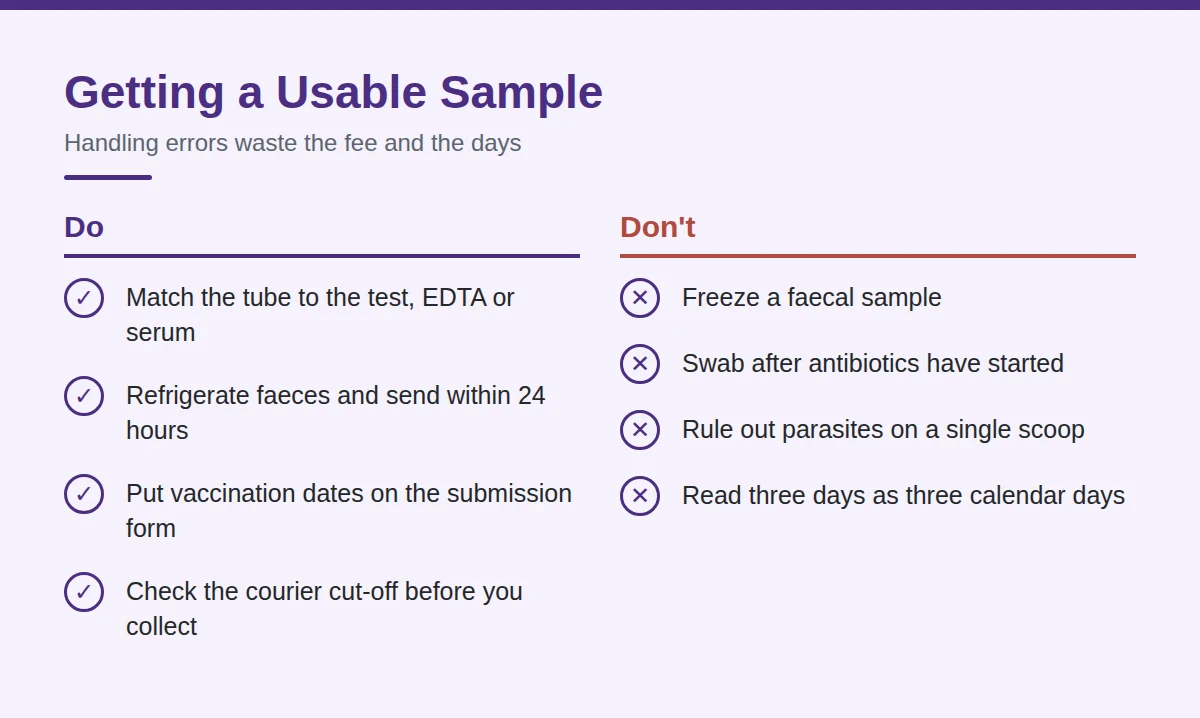
A rejected or degraded sample costs you the fee and the days, and you find out at the end rather than the beginning. The recurring failures are dull and avoidable: the wrong tube (EDTA for cell counts, plain or serum separator for chemistry and serology, and they are not interchangeable), serum left sitting on the cells so the potassium and glucose values drift, swabs dried out or sent in a medium the assay does not accept, faeces frozen, and labels that do not match the submission form.
The other thing that quietly stretches turnaround is logistics. A laboratory quoting three days means three business days from the moment the sample arrives, not from the moment you handed it over. Miss the afternoon courier on a Friday and the same test takes five days. Ask about the collection cut-off, and ask whether the laboratory offers a STAT option, as most large veterinary diagnostic centres do at a premium, when the answer genuinely changes what happens tomorrow.
When Testing Beats Isolating and Waiting
This is the decision an operator actually faces, and it has a clean test of its own: would the result change what you do?
Often it would not. A single cat with mild ocular discharge gets isolated, watched, kept eating and seen by a vet if it worsens, and that plan is identical whether the cause is herpesvirus, calicivirus or Mycoplasma. Spending $200 to name the virus four days later changes nothing about the four days you already spent managing it. Isolation is the intervention. The swab is a record.
The timescales are the crux. Respiratory PCR needs two to four business days plus transit, and an outbreak in a facility moves faster than that. Isolation has to start on clinical grounds on day zero, and any protocol that waits for laboratory confirmation before separating a sneezing cat has already lost. What the panel earns you is what comes next: whether doxycycline is worth starting, whether the pattern points at something your protocols missed, and a documented record if an owner later asks where their cat picked something up.
Testing is clearly worth it when:
- The result changes treatment. Bacterial targets respond to antibiotics; viral ones do not.
- The test is fast enough to matter. In-clinic answers in minutes, retrovirus status, blood glucose, packed cell volume, are a different category from a reference panel.
- Panleukopenia is on the table. A faecal parvovirus antigen test cross-detects feline panleukopenia and is a legitimate cage-side screen. A sudden-onset vomiting, profoundly depressed, unvaccinated cat justifies running it immediately, because a positive means locking the building down within the hour. Note that a cat vaccinated in the previous fortnight can give a weak positive.
- Several cats are affected and you need to know what you are actually fighting.
- A dispute is foreseeable and you want the record.
Testing is usually not worth it when the cat is a single mild case that will be managed identically regardless, when the sample was taken after treatment started, or when the request is really about reassurance. In that last case, say so plainly. An owner who understands they are buying peace of mind rather than certainty is a happier client than one who thought they had bought a guarantee.
That is the thread running through all of it. These tests are good tools and most of them are affordable. What none of them will give you is a certificate saying a cat is clean, because no such thing exists. What a well-chosen test gives you is a better-informed guess about one cat, on one day, which is worth having as long as nobody mistakes it for more.
Further reading (sources)
- Cornell Animal Health Diagnostic Center on how to build a testing strategy and when a STAT result is warranted
- Cornell AHDC Virology for the difference between antigen detection, PCR and antibody assays
- Journal of Feline Medicine and Surgery with the AAFP guidance on retrovirus testing and confirming a positive result
- Companion Animal Parasite Council covers why centrifugal flotation and repeat sampling beat a single scoop
- ABCD Cats and Vets notes the limited value of a coronavirus titre in judging an individual cat
- eClinPath (Cornell) for how sample collection and handling affect test results