When Your Cat Won't Eat at the Hotel: Boarding Strategies for Picky Eaters
Published on July 15, 2026
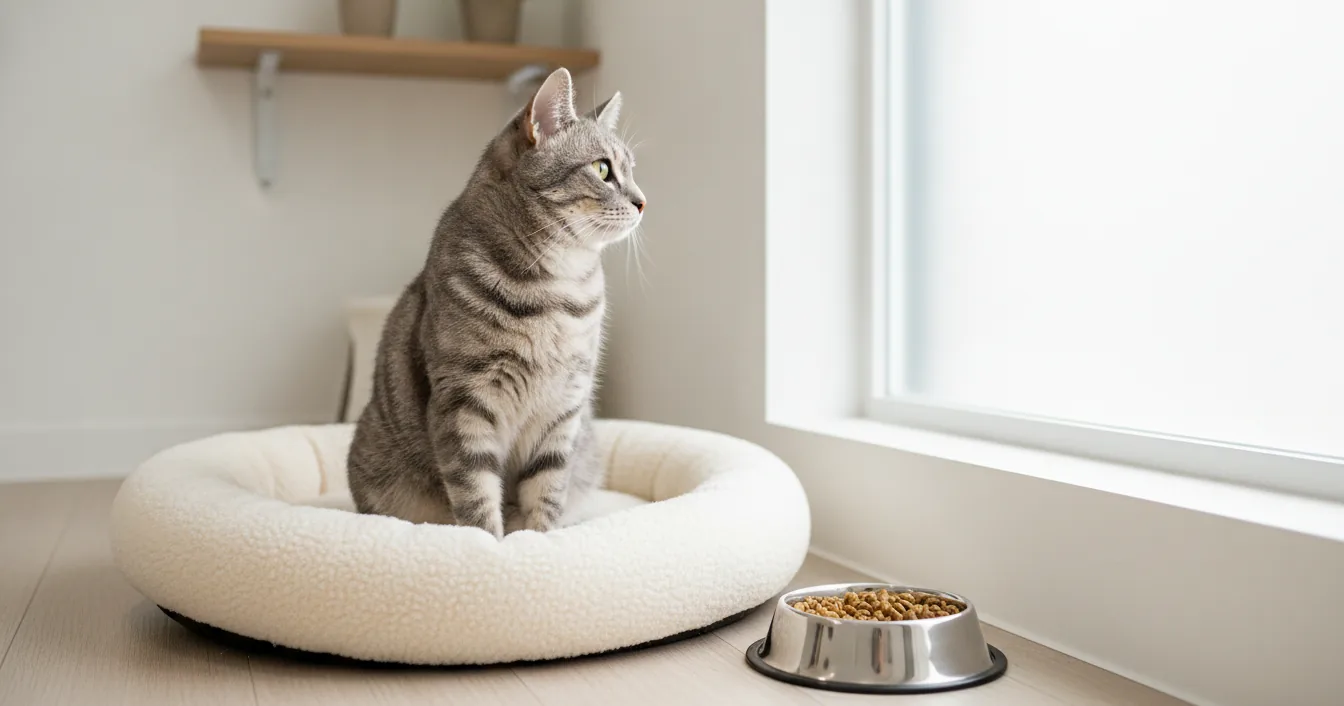
The bowl comes back full. On the first evening of a stay, a cat that turns up its nose at dinner looks like a fussy guest still settling in. By the second untouched meal, it is something else. A cat that stops eating in a strange place is not sulking, it is telling you it feels overwhelmed, and unlike a dog that skips a meal and bounces back, a cat that goes off its food for a few days can slide toward a genuine medical emergency. Stress-driven appetite loss is one of the most common reasons cats come home from boarding lighter than they left, and once in a while sicker.
This guide is for owners of fussy or anxious eaters, and for the facilities that care for them. It covers why cats stop eating away from home, the liver problem that turns food refusal from an annoyance into an urgent matter, and a practical playbook, from the owner’s suitcase to the veterinarian’s prescription pad, for getting a reluctant cat back to the bowl.
Why Cats Stop Eating in a Strange Place
A cat is wired to distrust anything new, a trait behaviorists call neophobia. In the wild that caution keeps a small hunter from eating something that might harm it, but it also means an unfamiliar room, an unfamiliar bowl, and unfamiliar background noise all register as reasons to be careful rather than to relax. Appetite is one of the first things stress switches off. The same surge of stress hormones that helps a frightened animal run also tells the gut this is no time to digest a meal.
Smell makes it worse. A cat’s sense of smell is far sharper than ours and does much of the work of deciding whether something even counts as food. A nervous cat sharing air with other cats and the faint scent of disinfectant is working against its own nose. Some cats slip into partial appetite loss, nibbling less than usual, which vets call hyporexia; others refuse food outright, a full anorexia. Both matter, and both are easy to miss in a cat that also hides, which is why appetite belongs on the list of stress signals every operator tracks. Our guide to reading feline stress signals at boarding walks through the quieter tells that usually appear before the empty bowl.
The Real Risk: Hepatic Lipidosis
Here is why a skipped meal in a cat is not the wait-and-see situation it would be in a dog. When a cat stops taking in enough calories, its body starts mobilizing fat for energy and sends it to the liver faster than the liver can process it. Fat floods and clogs the organ, a condition called hepatic lipidosis, or fatty liver disease. It can shut down liver function and, untreated, it can kill.
The cruel twist is that overweight cats, the ones with fat to spare, are at the highest risk, and they are common boarding guests. When an obese cat stops eating for as little as three or four days, the liver can become dangerously overwhelmed (Cornell Feline Health Center). Some thinner cats take a week or two to reach the same point, and a few never get there at all, but there is no way to know in advance which cat is which. Roughly 90 percent of cats that develop lipidosis have an underlying problem driving the anorexia in the first place, which is why the appetite loss always deserves a real look rather than a shrug. The good news is that the outlook is strong when it is caught: with aggressive nutritional support, more than 80 percent of affected cats recover, though many need weeks of assisted feeding to get there. All of that is far easier to avoid than to treat, and the way to avoid it is to notice early and act.
What Owners Can Do Before Drop-Off
Much of a cat’s willingness to eat is decided before it ever reaches the suite.
- Send the cat’s own food, and do not change the menu. A new diet plus a new environment is two shocks at once. Pack the usual brand and flavor, portioned and labeled, with a little extra.
- Bring the familiar bowl, and note the routine. Tell staff whether your cat grazes or eats at set times, prefers pate or chunks, and likes food warmed or at room temperature. Small details decide whether a stressed cat takes the first bite.
- Pack the scent of home. A worn t-shirt or an unwashed blanket in the suite gives an anxious cat something that smells safe, and a cat that feels safe is a cat that will eat.
- Do a trial overnight first. A single short stay before a long trip shows you how your cat handles boarding, appetite included, while the stakes are still low.
- Share your cat’s normal intake. Staff cannot flag a downward trend without a baseline. If your cat has a chronic illness or a history of stress-related appetite loss, talk to your veterinarian before booking, and pick a facility that asks the right questions, as our guide to choosing the right cat hotel lays out.
Tempting a Reluctant Eater in the Suite
When a cat is off its food, the facility’s job is to make eating feel easy and safe. A few techniques do most of the work.
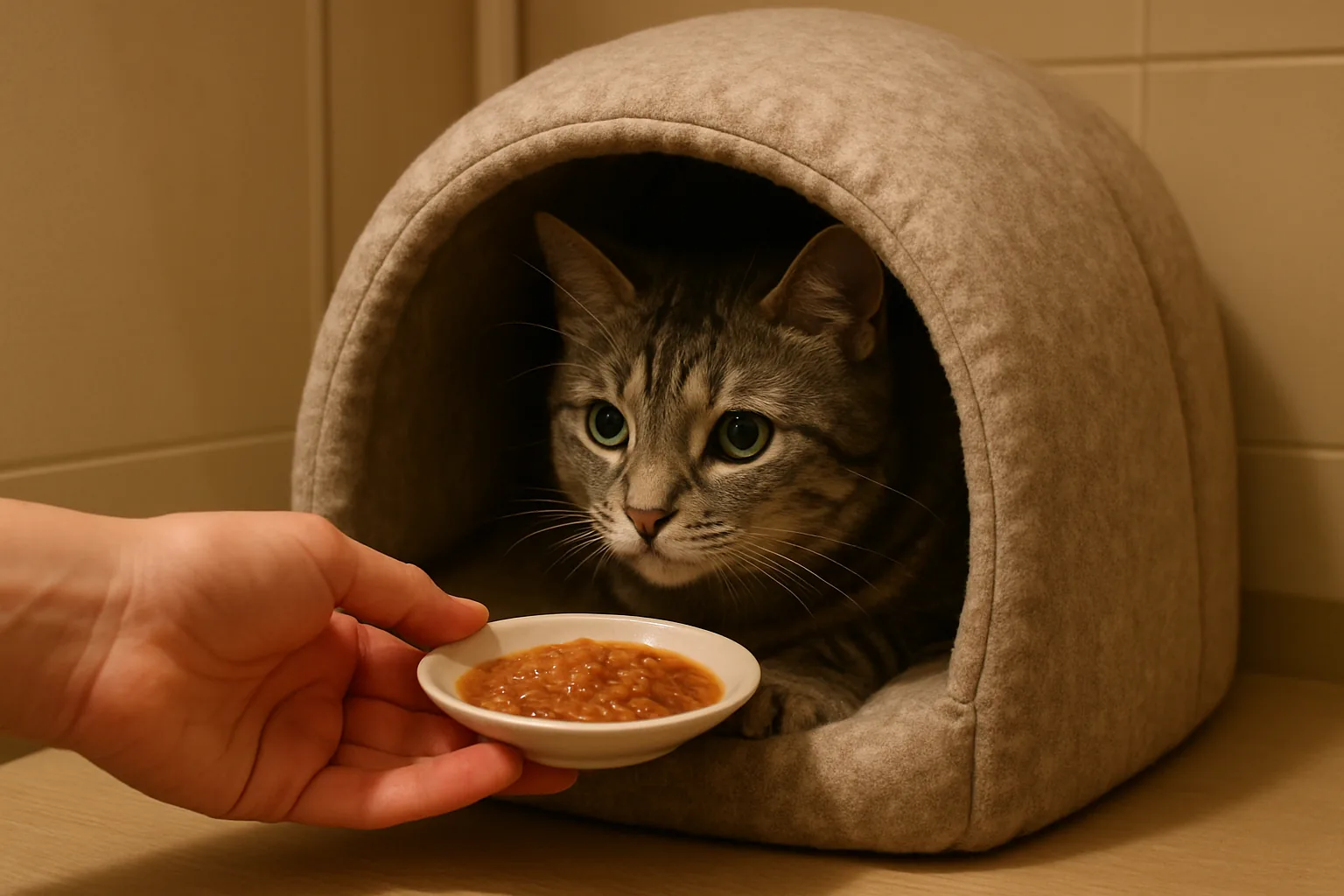
- Warm the wet food. Cats prefer food at around body temperature, close to the warmth of freshly caught prey, and warming a portion to roughly 37 degrees Celsius releases the aroma that cold food from the fridge keeps locked away (WALTHAM). Warm, never hot, and always test it first.
- Offer small, fresh amounts often. A large bowl sitting out goes stale and stops smelling like food. Little servings, refreshed through the day, keep the aroma alive and the offer tempting.
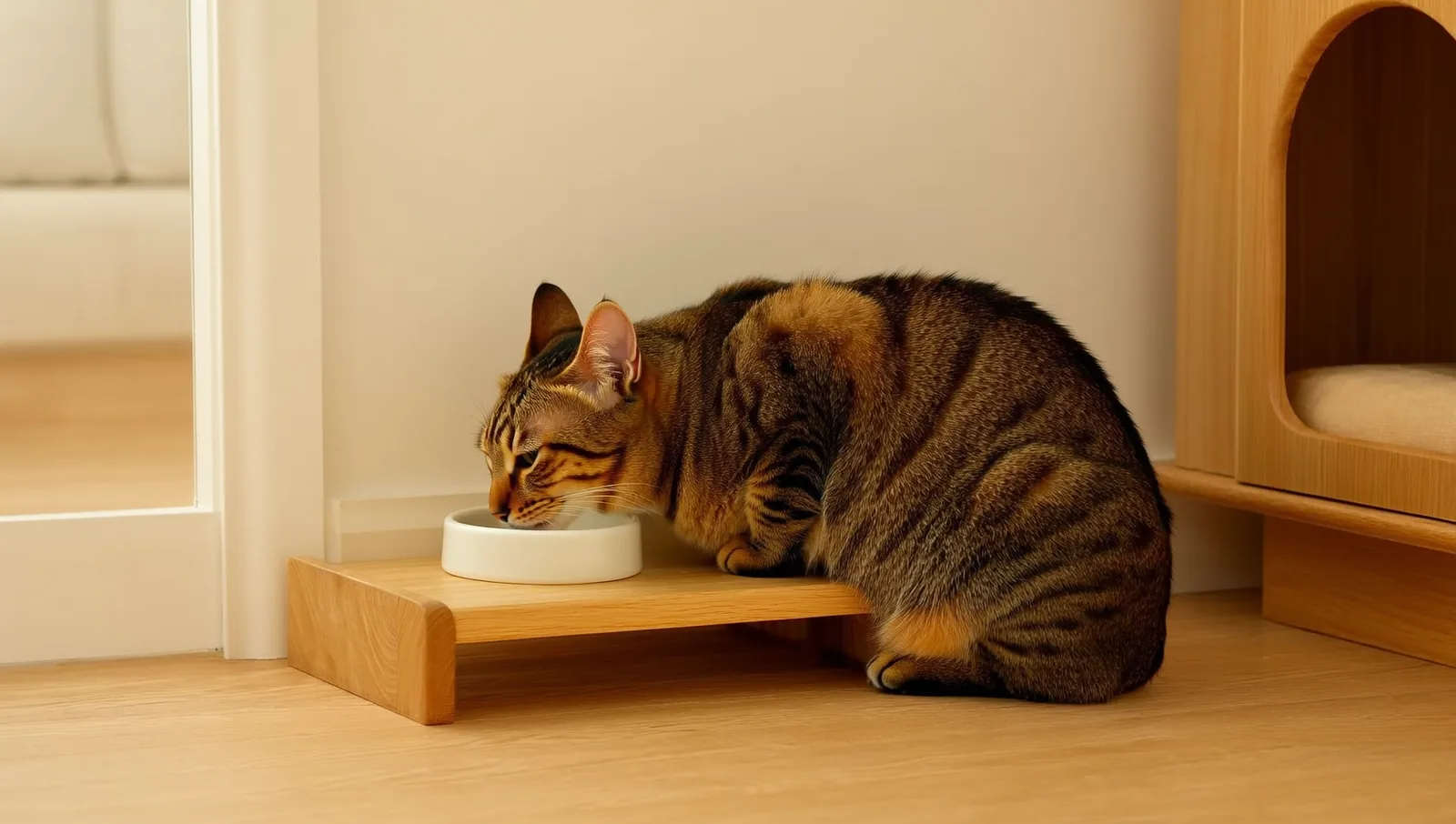
- Move the bowl away from the litter box, and up off the floor. Cats will not eat where they toilet, and a nervous cat eats more readily at a slightly raised, tucked-away station than in the open with its back exposed.
- Add a tempting topper. A spoonful of warmed wet food over the usual kibble, a little plain water from a can of tuna, an onion-free and garlic-free low-sodium broth, a lickable treat, or a probiotic palatability enhancer can all coax a hesitant cat into the first mouthful.
- Reduce the audience and let the cat hide. Some cats need privacy to eat. A quiet room, a covered feeding nook, calmer lighting, and a synthetic pheromone diffuser can lower the tension enough for hunger to win.
Hand-feeding, or a dab of food on a paw the cat then grooms off, can restart interest in a cat that has stalled. What matters is patience and a low-pressure setting, not coaxing the cat into stress.
Weighing Is the Early-Warning System
The single cheapest tool a facility has for catching a picky eater before it becomes a sick one is a kitchen scale. Recording how much food is offered against how much is actually eaten, paired with a daily weight, turns a vague sense that a cat is “a bit quiet” into a number that trends. A cat losing ground shows up on the scale days before it looks unwell in the suite. It is the same protocol we describe in the science of behavioral illness prevention at boarding, and appetite is exactly the metric it is built to catch. Any facility should be able to tell you, in numbers, how much your cat ate yesterday.
When to Escalate: Appetite Stimulants and the Vet
Every stay needs an agreed line that triggers a phone call, set before drop-off so nobody hesitates in the moment. A workable rule of thumb: flag a cat that has eaten little or nothing for 24 hours, treat 48 hours as a real concern, and involve a veterinarian by around 72 hours. For overweight cats and for older cats with less reserve, that clock runs faster, and the threshold sits lower, as our guide to boarding a senior cat explains.
A veterinarian has tools a boarding facility does not. Two appetite stimulants are approved specifically for cats: transdermal mirtazapine (Mirataz), a ribbon of ointment rubbed onto the inner ear that spares a nauseated cat a pill, and capromorelin (Elura), an oral liquid that mimics the natural hunger hormone ghrelin (Cornell Feline Health Center). Both are prescription medicines and belong in a veterinarian’s hands, not an owner’s guesswork.
Assisted or syringe feeding is sometimes the next step, but it is not a casual one. Done wrong it risks food going down the airway and can teach a cat to fear the bowl entirely, so it should use a proper recovery diet and follow veterinary guidance. Many facilities will, sensibly, escalate a non-eating cat to a vet rather than force-feed on their own. Expect medication and special feeding to carry an added charge, one of the line items covered in our cat boarding cost guide; a facility that treats careful feeding as routine is worth every cent of it.
Questions to Ask the Facility
Before you book, ask a facility how it actually handles a cat that will not eat:
- How do you record how much each cat eats, and do you weigh cats daily?
- Will you warm food, offer toppers, and feed small amounts often for a fussy cat?
- Where is the food placed relative to the litter box, and can a shy cat eat in private?
- At what point do you call me, and at what point do you call a veterinarian?
- Do you have a veterinarian on call, and is there a fee for medication or assisted feeding?
Specific, confident answers signal a facility that understands feline appetite. Vague reassurance that a cat “will eat when it is hungry” does not, because with a cat, that is precisely the assumption that gets one into trouble.
A full bowl on day two is a message, not a mood. Read it early, warm the food, and watch the scale, and know the hour count that turns a picky eater into a vet call. Most reluctant boarders then come home at the weight they left, having simply needed a little more coaxing than the easy ones.
Further reading (sources)
- Cornell Feline Health Center on why a cat that stops eating risks fatty liver disease
- University of Illinois College of Veterinary Medicine for how quickly hepatic lipidosis sets in when cats skip meals
- WALTHAM Petcare Science Institute with research on warming food to tempt fussy eaters
- Cornell Feline Health Center covers the FDA approval of a transdermal feline appetite stimulant
- U.S. Food and Drug Administration notes what Mirataz and Elura are approved to treat in cats