Why Are My Cats Fighting After One Came Home From Boarding? Non-Recognition Aggression and How to Reintroduce Them
Published on October 23, 2026
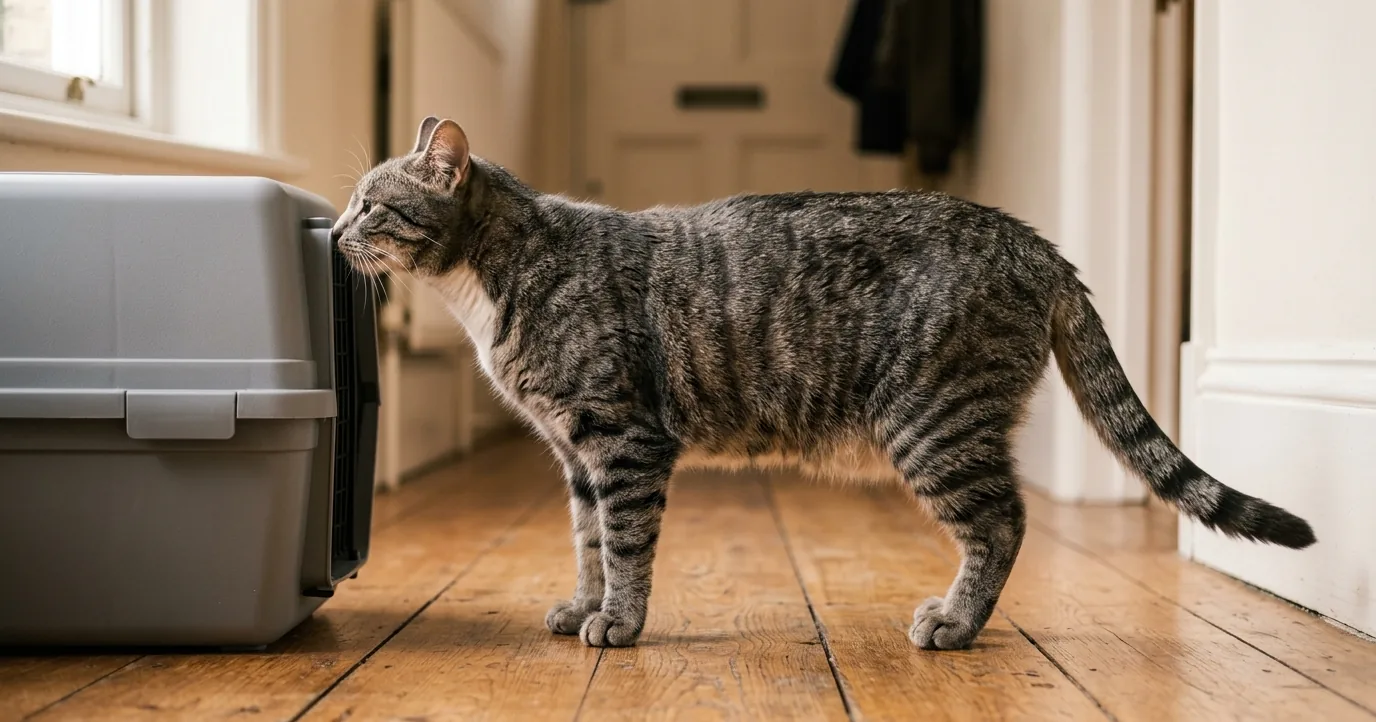
You set the carrier down in the living room and open the door, and the cat who stayed home comes over to say hello. It sniffs. Then its fur lifts, its ears go flat, and it hisses at a cat it has slept beside for years. Sometimes there is a swat or a chase down the hall, and an evening that was meant to be a homecoming ends with two cats behind two closed doors.
This is common, it is usually temporary, and it has a name. The returning cat smells of somewhere else, and to the cat who stayed home that smell reads as a stranger. What you do in the first hour and the first few days decides whether it blows over by morning or settles into weeks of tension. This guide covers why it happens, how to tell it apart from redirected aggression (which can land on a third cat, or on you), a staged plan for reintroducing the two, and the point at which the problem has outgrown home management. Cat hotels will find pickup-day advice to pass on at the end.
Why the Cat Who Stayed Home Treats Yours Like a Stranger
Cats keep track of who belongs largely by smell. Friendly housemates rub heads and groom each other, and the 2024 intercat tension guidelines from the American Association of Feline Practitioners (now the Feline Veterinary Medical Association) count allorubbing and allogrooming among the hallmarks of a friendly relationship. A head rub leaves scent from glands on the cheeks and chin, which is why the reintroduction plan below borrows the same trick with a cloth.
A week at a cattery interrupts all of that. The cat who comes home carries the smell of the cattery and of the cats boarded near it, of the staff who fed it, and sometimes of a vet clinic. International Cat Care, writing about cats coming home from the vet, explains the effect: unfamiliar smells can make a cat smell strange and mask its own scent, so the other cats struggle to identify it as part of the group. A boarding stay does the same thing, usually for longer than a vet visit.
The guidelines name the trigger directly. Among the things that can break up cats who have lived together for years, “even those who formerly had good affiliative bonds”, they list “a change in odor or behavior of a cat after a trip to the veterinarian”. The Cornell Feline Health Center files it under territorial aggression, noting that cats “may even attack resident cats that were previously accepted but were away from the home, such as for a hospital stay.” Behaviorists often call it non-recognition aggression.
Smell is not the only thing that changes. A cat that was sedated or given an anesthetic during the stay may come home quiet and unsteady, or occasionally unusually alert, and iCatCare notes that some cats’ behavior shifts for a while after an anesthetic in ways the other cats can read negatively. A cat that caught a cold at the cattery has another handicap: the guidelines point out that upper respiratory disease can disrupt the way cats communicate by smell. A congested cat may be reading the household no better than the household is reading it. If the sniffles started around the stay, our explainer on why URI risk spikes around a boarding stay covers what is going on.
What this is not, according to the guidelines, is a contest for dominance. They state that there is no evidence intercat tension arises because cats are trying to establish a hierarchy, and they ask vets to tell owners not to let cats “work it out themselves”. Leaving the two to settle who is boss is exactly what the guidelines warn against.
A sudden falling-out is also the unusual case, which is part of why it is so alarming. Surveys cited in the guidelines find signs of tension in somewhere between 62 and 88 percent of multi-cat homes, but in one large US survey of 2,492 households, only 3.1 percent of owners described an abrupt change in a relationship. Most tension starts with the arrival of a new cat. When two settled cats turn on each other overnight, look for what changed. Here, the answer is a week away.
Non-Recognition or Redirected Aggression? Watch Who Gets Hit
Two different problems look alike in the first chaotic minutes, and they call for slightly different handling.
Non-recognition aggression is aimed at the returning cat. It usually starts within moments of the carrier opening, often right after a sniff. The cat who stayed home puffs up, hisses, growls or swats, and the returning cat, which has done nothing, may hiss back in self-defense. The guidelines describe hissing as self-protective, so a hissing cat is a frightened cat asking for distance, not a spiteful one.
Redirected aggression is aimed at whoever is closest. A cat aroused by something it cannot reach, such as a strange-smelling cat behind a door, a stray at the window or a sudden loud noise, takes it out on the nearest body. In a case-control study from the veterinary school at the Autonomous University of Barcelona, loud noises or interactions with other cats set off 95 percent of 22 incidents of redirected aggression. The cats most often turned on their owners, and next most often on another cat in the household. Most had adopted a defensive posture just beforehand, which points to fear as the motive.
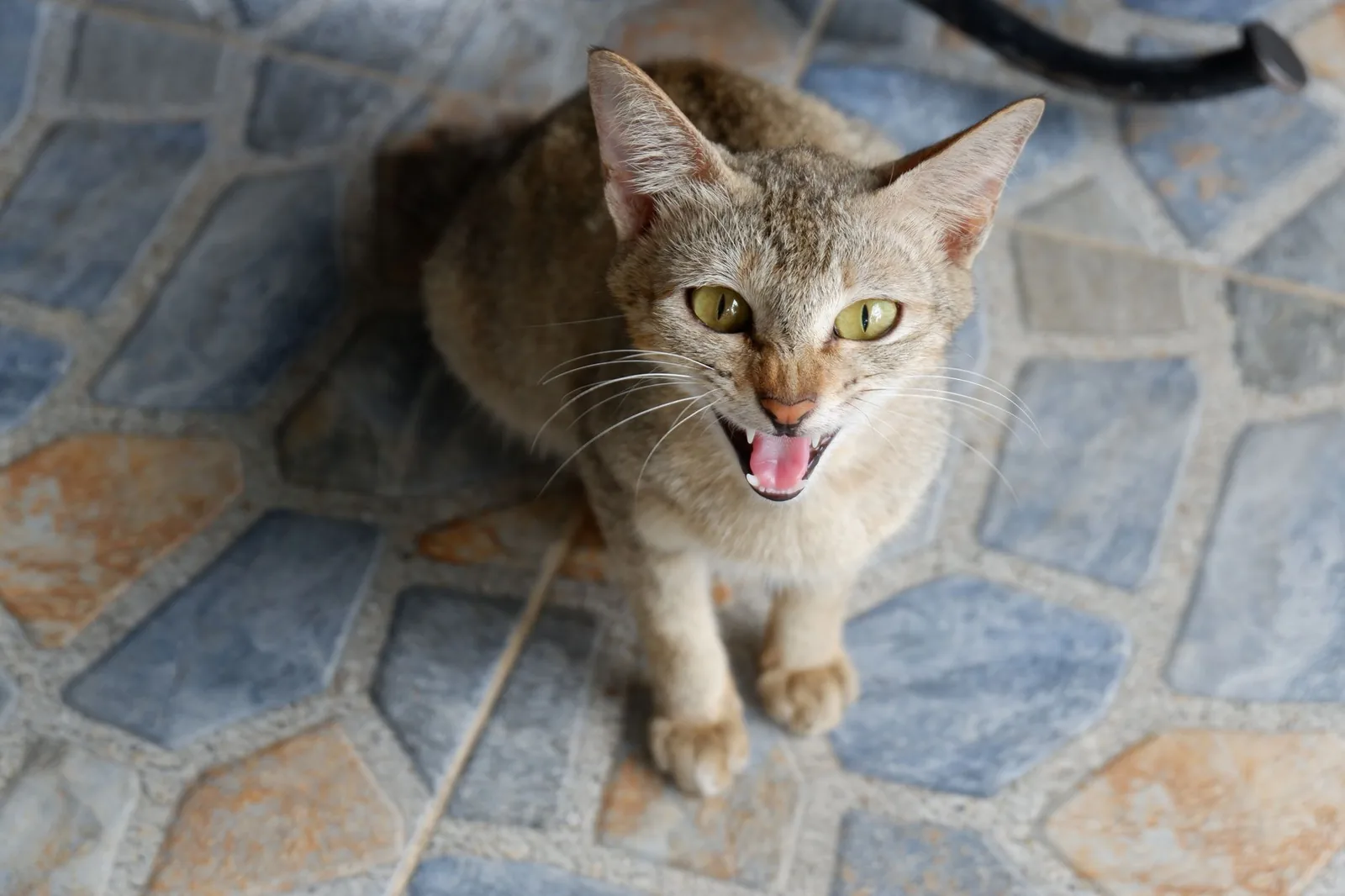
In a three-cat house, this is how a homecoming goes wrong in an unexpected direction. The cat who stayed home cannot get at the stranger behind the spare-room door, so it attacks the third cat instead, or the hand that reaches down to comfort it. The guidelines’ rule covers both cases: never interact with a cat that is hissing, growling or tail flicking, because a cat that cannot reach the cat it is fixed on “may readily redirect frustration onto the closest target”. An aroused cat can stay over threshold for hours after the trigger has gone, the same pattern our guide to behavior problems at the cat hotel describes in boarding suites.
The First Hour Home: Prevention Beats Repair
Most of this is avoidable, and the cheapest fix happens before anyone hisses.
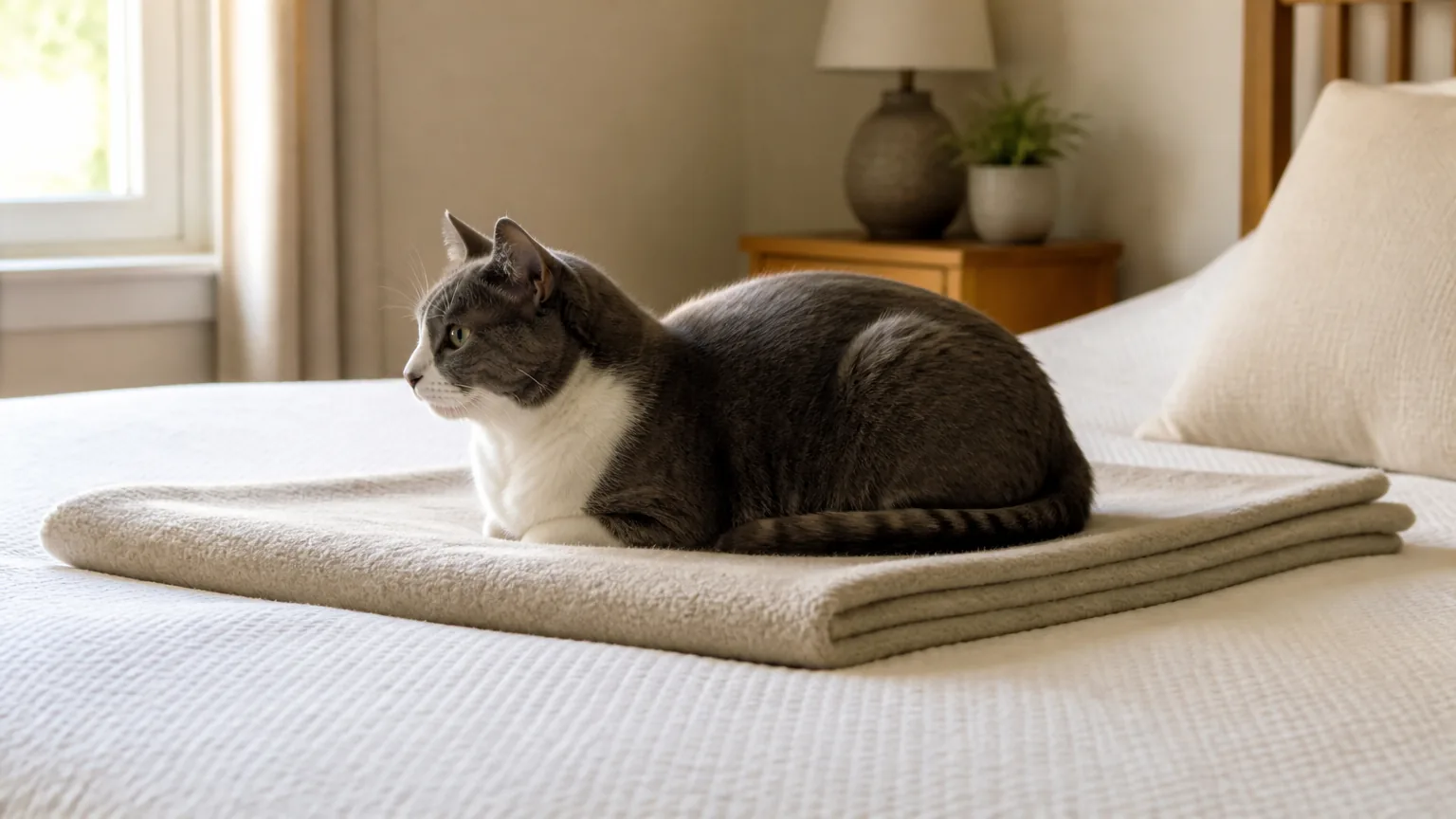
- Carry the carrier straight to a spare room. Do not open it in the hallway with the other cat watching. Give the room a litter tray, food and water, a bed and somewhere to hide, and let the returning cat come out when it chooses. Both the guidelines and Cornell start any reintroduction from a separate room with a full set of resources.
- Keep the welcome low-key. iCatCare’s advice is not to overwhelm a returning cat with attention from people or other animals.
- Wait a few hours, or a day or two. That is the separation iCatCare suggests before gradual, supervised contact. It gives the returning cat time to groom and pick up the smell of the house again.
- Wash what came back from the cattery. The carrier bedding, the blanket you packed and the toys that went with it all carry the cattery’s smell into your home.
- Borrow the household smell, but do not wash everything at once. iCatCare suggests giving the returning cat bedding from resting spots the cats share, and holding back freshly washed bedding until the two have been reintroduced. A laundry day that strips every bed in the house removes the very smell you are trying to restore.
- Keep the stay-at-home cat’s routine normal. Same meals, same play, same attention. It has had its own week of change.
Then let them meet at the door rather than in the middle of a room. If the cat who stayed home sniffs the gap under the door, or the returning cat’s bedding, without hissing or staring, open the door and supervise. For plenty of households that is the whole story, and our first-time boarding guide covers the rest of the coming-home routine.
If anyone hisses, growls or holds a hard stare, do not push on. Close the door and move to the staged plan below.
If They Have Already Fought
If the reunion has already gone wrong, stop the fight without putting your hands in it, and do not pick either cat up. The guidelines and the FelineVMA’s caregiver handout both suggest putting a cushion, a sheet of cardboard or a large towel between the cats to break eye contact, then moving them into separate rooms.
Leave them apart, each with its own tray, food, water and resting place, until both are calm and back to their usual routines. The guidelines put that at anywhere from a few hours to a couple of days. Do not scold or punish either cat. The guidelines warn that discipline-based training “is only likely to exacerbate the situation”, and the cat who hissed is the frightened one.
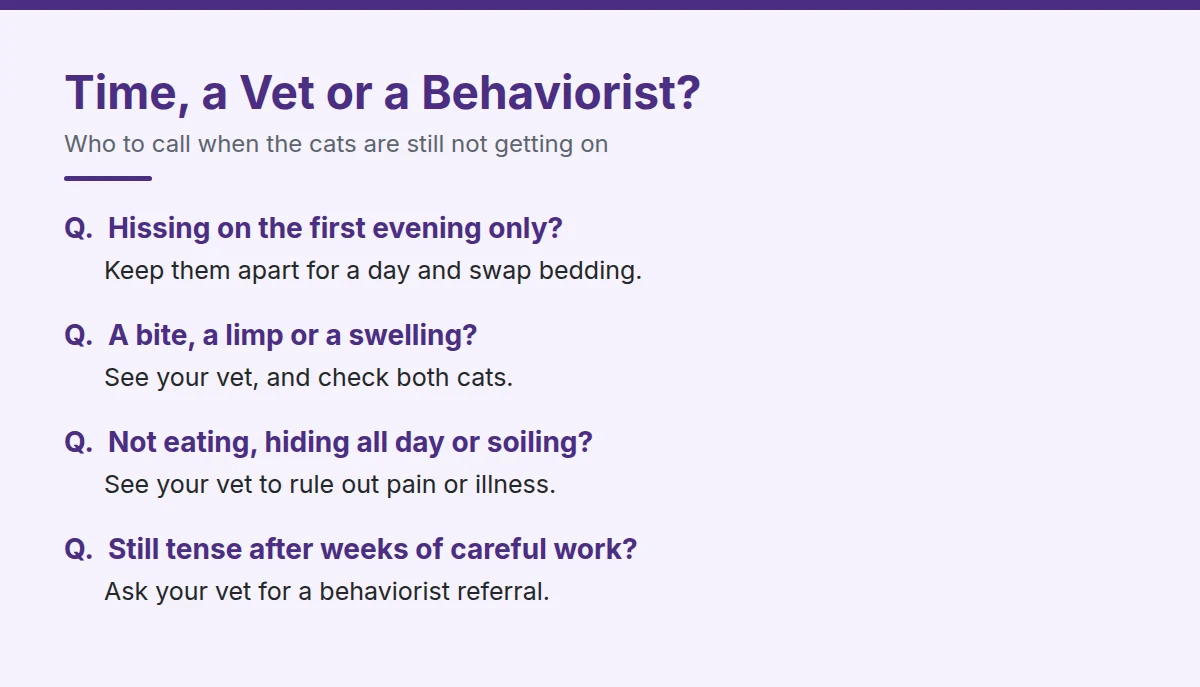
Once both have settled, look them over for bites and scratches. Puncture wounds are easy to miss under fur, so a limp, a swelling or a sore spot over the next few days is a reason to see your vet.
A real fight also changes the timescale. Reintroducing cats who have been kept apart after a fight follows the same steps as introducing a new cat, the guidelines say, but “may be more difficult and require even more patience because of the current emotional state of the cats.” Plan on the staged approach below, not a second attempt tomorrow.
A Staged Plan for Reintroducing Them
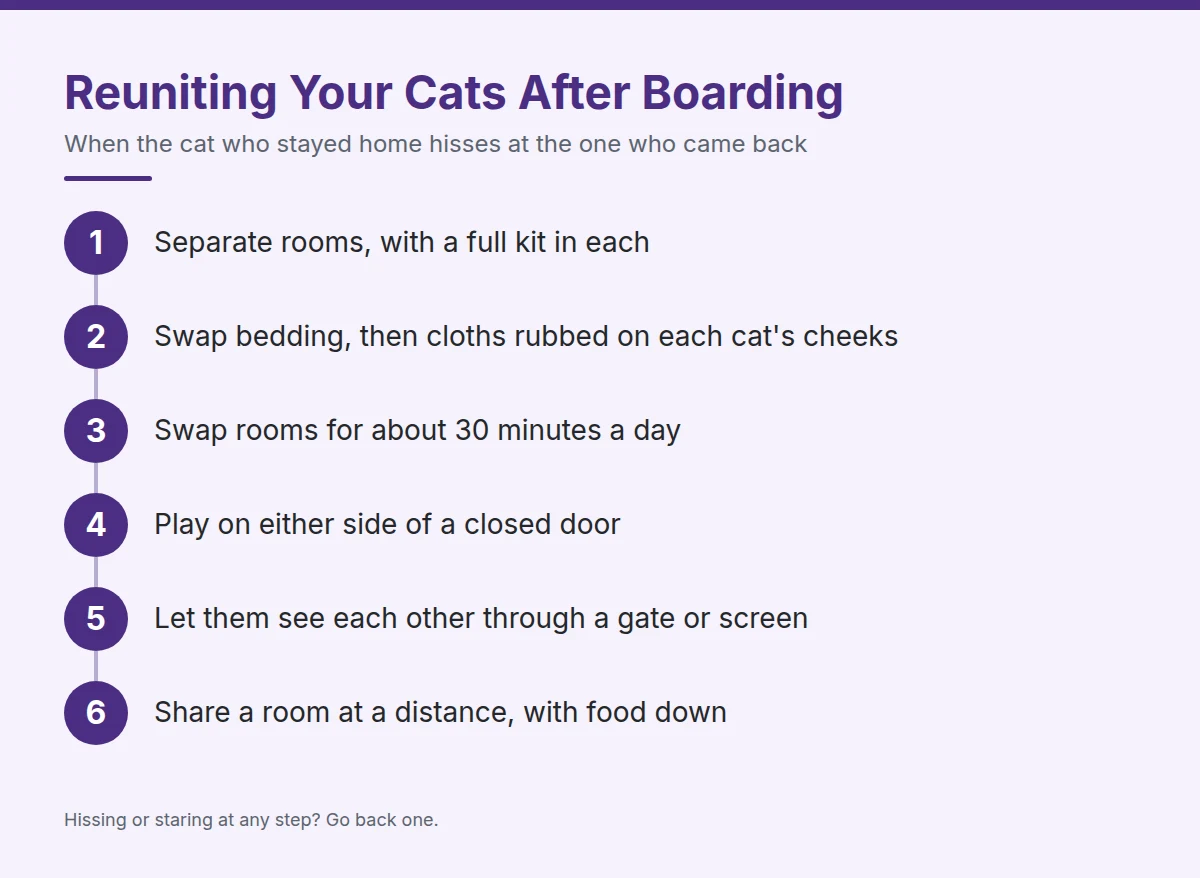
The 2024 guidelines lay out an eleven-step process for introducing a new cat to a home, and they use the same approach for cats that need reintroducing. Cornell’s protocol for a returning cat runs in the same order. Adapted for a cat back from boarding, it looks like this. Move on only when both cats are relaxed with the current step, which can take a day or several.
- Separate rooms, a full kit each. The returning cat keeps its room with a tray, food, water, a bed, hiding places, a perch and a scratching post. The cat who stayed home keeps the rest of the house.
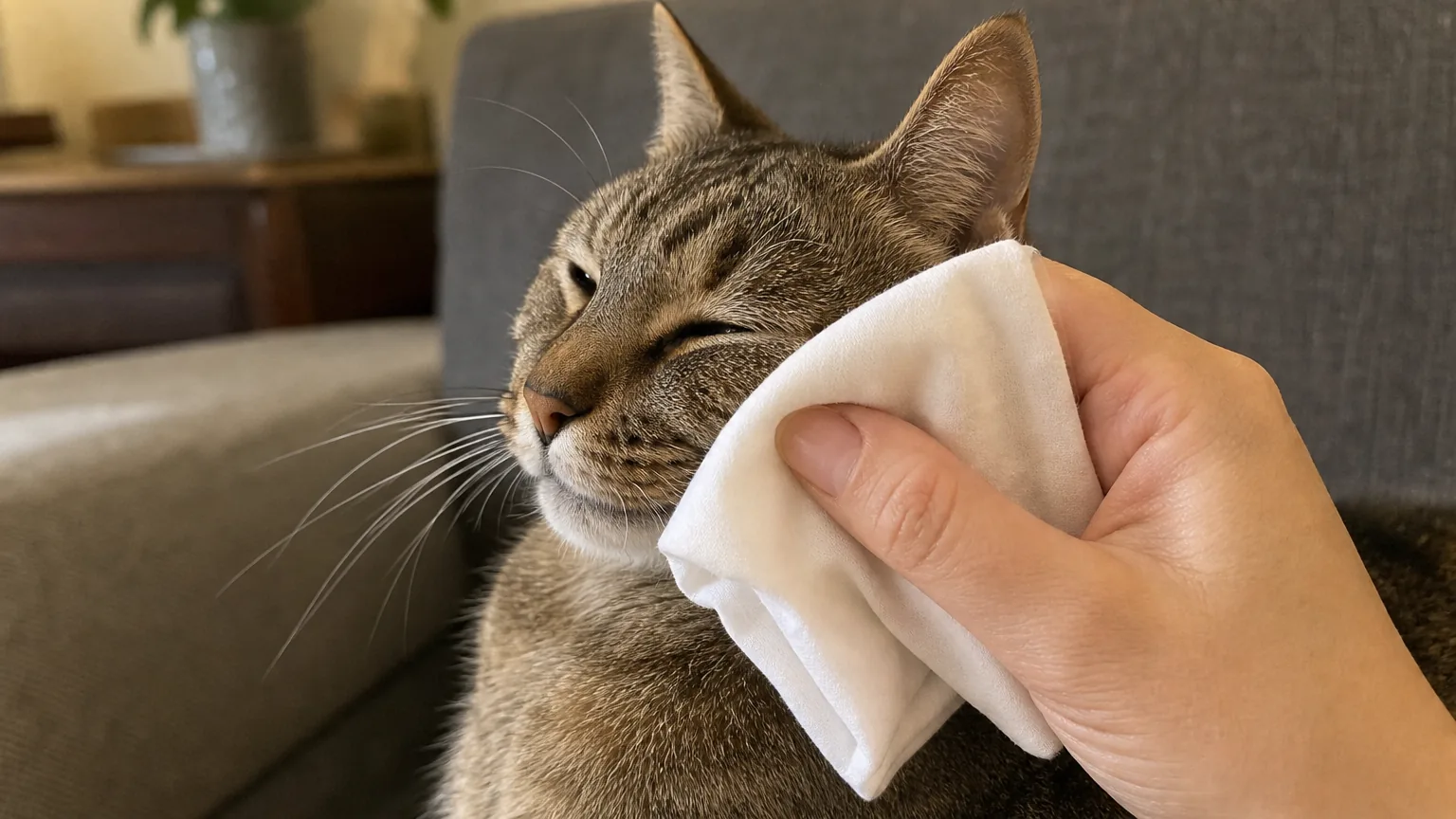
- Swap scents. Swap bedding between the two areas once a day and watch how each cat reacts. Keep going until neither hisses at it, avoids it or marks near it. Then rub a soft cloth over one cat’s cheeks and chin, where its scent glands are, and leave the cloth where the other cat will find it, alternating between the two.
- Swap rooms. Shut the cat who stayed home in the returning cat’s room, or in a favorite room with treats and a toy, and let the returning cat explore the rest of the house. Then put each back where it was. Cornell suggests about 30 minutes, repeated daily for several days.
- Play on either side of a closed door. Tie two toys to opposite ends of a strong string and put one on each side of the door, so the cats play together without seeing each other. Keep sessions to 5 to 20 minutes, as the guidelines suggest, and stop before either cat loses interest. If one hisses at the door, do not scold it. Put a barrier such as a screen or a few boxes in front of the door and give it more distance.
- Let them see each other through a barrier. A screen door, a glass door or a tall pet gate across the doorway lets them watch without touching. Keep sessions short and pair them with treats or play. If either cat tenses, end the session and go back to steps 3 and 4 for a few days.
- Share a room, at a distance. Cornell’s version places the cats at opposite ends of a room, in carriers or on harnesses, and feeds them so that the other cat’s presence predicts something good. If one will not eat, they are too close. Bring them nearer each day, then let them loose at a distance with food down. The guidelines add that a carrier only works for a cat that already likes its carrier, and a harness only for a cat that has been trained to one. From there, lengthen the time together and gradually supervise less.
The rule that matters most comes straight from the guidelines: if tension shows up at any step, go back a step. Pushing forward through hissing “can result in long-term tension”. Watch for the quiet signs as well as the loud ones. In the US survey of 2,492 households, staring was the most common conflict sign, seen at least daily in 44.9 percent of homes, and our guide to feline stress signals and body language shows what a tense cat looks like before it hisses.
How long does it take? When the problem is purely smell, steps 1 and 2 are often enough, and it is over in a day or two. After a real fight, plan in weeks. Cornell says the process can take weeks to months, and in the guidelines’ own case reports, reintroductions after moderate or severe tension took several months, one of them more than a year. That is a strong argument for going slowly the first time.
A few things make every step easier:
- Enough resources, out of each other’s sight. One litter tray, water bowl, food bowl, bed and scratching post per cat, plus one extra, spread around the house. The FelineVMA’s handout calls a shortage of visually separated resources “the most common cause of tension between cats”.
- Daily play. The guidelines suggest two or more play sessions a day of at least 5 minutes for a high-energy cat, so its energy goes into a toy rather than into its housemate.
- Something to break a stare. A piece of furniture or a wall shelf that blocks the line of sight between two favorite resting spots takes the heat out of a staring match.
- Pheromone diffusers, with modest expectations. Synthetic feline pheromones may help, but the guidelines are candid that the effect can be subtle and is easily overridden when a cat feels threatened.
If Both Cats Boarded
If both cats went to the cattery and shared a suite, they come home smelling of the same place, which helps. It does not guarantee a smooth return: a vet visit, a medicated bath or one cat being handled far more than the other can still pull their scents apart. Our guide to boarding bonded pairs covers that, and how to decide whether two cats should share a suite at all. Cats that boarded in separate suites both come home smelling of strangers, so give them the same first-hour routine.
When the Problem Is Bigger Than Smell
See your vet first if either cat has a wound, a limp or a swelling, stops eating, hides most of the day or starts soiling outside the tray, or if the tension does not ease with the plan above. The guidelines say any cat whose behavior changes should be checked by a vet, because pain and illness make cats irritable, and Cornell lists hyperthyroidism, osteoarthritis and dental disease among the conditions that can drive aggression. Have the cat who stayed home checked too, not only the one who traveled.
Bring in a behavior specialist early. For mild tension treated promptly, the guidelines put the prognosis as generally excellent. The longer two cats have had a tense relationship, and the more open the hostility, the harder they are to reintegrate and “the more likely a board-certified veterinary behaviorist is needed”. So do not wait months. Ask your vet for a referral if there has been a fight with injuries, if you keep dropping back a step without making progress, or if the tension is still there after a few weeks of careful work.
In the US, that specialist is a board-certified veterinary behaviorist, a vet who is a diplomate of the American College of Veterinary Behaviorists. In the UK, the Animal Behaviour and Training Council keeps a register that includes Clinical Animal Behaviourists, who take cases on veterinary referral, and Veterinary Behaviourists, who are clinical behaviourists and vets as well.
Medication is the specialist’s call, not a shortcut. The guidelines note that no psychoactive drug is licensed for intercat tension, that medication belongs alongside changes to the home and behavior work rather than in place of them, and that there is no good evidence for CBD oil, which they say should not be used.
For Cat Hotels: What to Say at Pickup
Most owners have never heard of non-recognition aggression until it happens in their living room. A two-minute conversation at pickup can save them the evening, and save you a confused phone call asking what happened to their cat.
- Ask at booking. Record whether other cats live at home. It turns a generic checkout into a specific one.
- Time the groom. For a cat going home to another cat, book any bath or groom early in the stay rather than on checkout morning, so the cat is not handed back smelling of shampoo.
- Tell the owner what changed. A vet visit, a medicated wash, a sedative or any sneezing changes how a cat smells or behaves, and the owner needs to know before they open the carrier at home.
- Hand over a short note. Four lines will do: carry the carrier straight to a spare room, keep the cats apart for a few hours or a day, wash the carrier bedding, and give the returning cat bedding from a spot the cats share. For the full version, point owners to the FelineVMA’s step-by-step guide.
- Call two days later. Ask how the reunion went, whether the cat is eating and whether anyone is sneezing. One call catches a slow reunion and an early cold.
Do not diagnose over the phone. If a fight has drawn blood or a cat has stopped eating, the answer is the owner’s vet.
The Short Version
The cat who stayed home is not jealous and not being difficult. It is reacting to a cat that smells like a stranger. Bring the returning cat home to its own room, give it a day to smell like home again, and reunite them slowly. If they fight, separate them without using your hands, go back to the start and move one step at a time. If anyone is hurt, or the tension outlasts a few weeks of careful work, call your vet.
Further reading (sources)
- Rodan and colleagues on the 2024 AAFP intercat tension guidelines, from scent triggers to reintegration
- Feline Veterinary Medical Association with a step-by-step caregiver guide to introducing cats
- International Cat Care on reintroducing a cat that comes home smelling of the clinic
- Cornell Feline Health Center for territorial and redirected aggression, and a reintroduction protocol
- Amat and colleagues on what triggers redirected aggression and who it lands on
- Elzerman and colleagues with how often staring and hissing turn up in multi-cat homes
- Animal Behaviour and Training Council on the types of behaviour practitioner on its UK register