Can My Cat Catch COVID or a Cold From People at the Cat Hotel? Reverse Zoonosis and Staff Sick Policies
Published on October 11, 2026
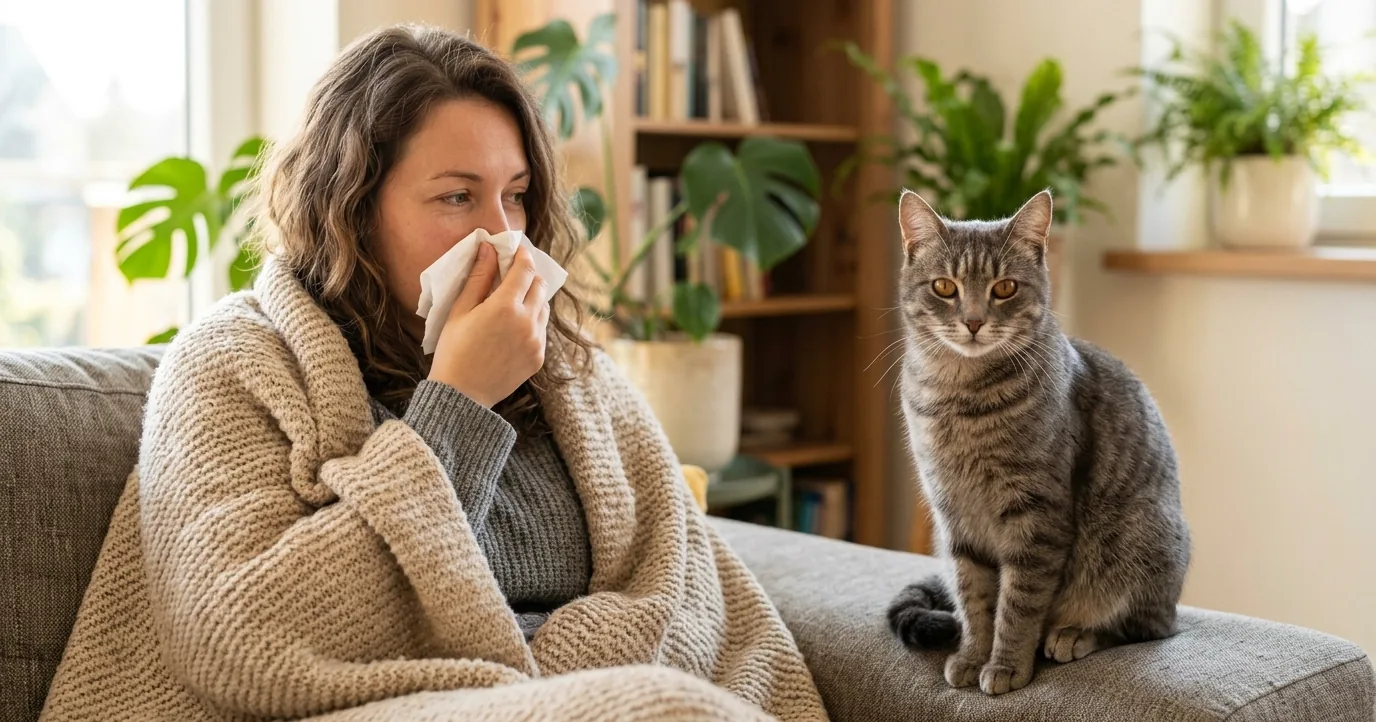
“Can my cat catch this from me?” Cattery staff hear it every winter, usually from an owner with a streaming nose and a cat carrier at the front desk. The question also runs the other way: if a member of staff has COVID, could they pass it to the cats in their care? Both are fair questions, because some human infections really can cross into cats. Scientists call it reverse zoonosis. An ordinary zoonosis passes from animals to people; this one passes from people to animals.
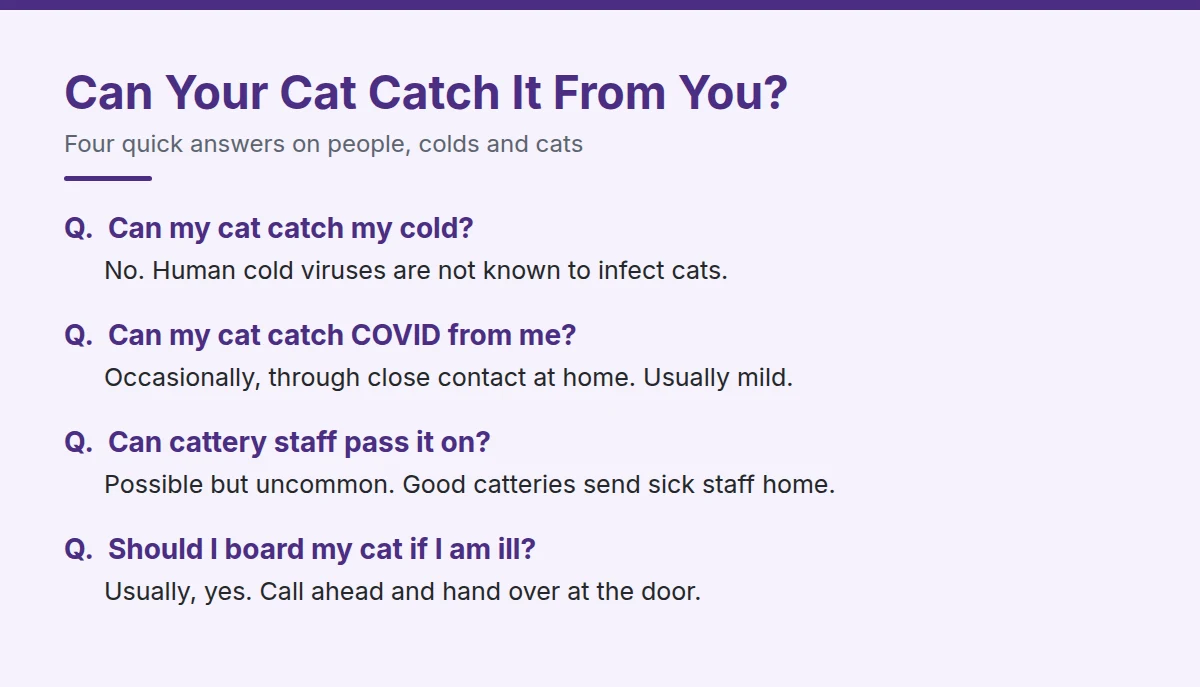
The research gives a clear and mostly reassuring answer. The ordinary human cold is not a risk to your cat. COVID and flu occasionally do cross, nearly always inside a home where a sick person and a cat share a bed or a face, and nearly always mildly. That pattern tells owners what is worth worrying about, and it tells a cattery what its staff sick policy needs to cover.
Which Human Illnesses Can Reach a Cat
Run through the illnesses people actually bring to a drop-off desk and the answers differ a lot:
- The common cold: no. Rhinoviruses, the classic cause of the common cold, were not known to infect any species other than humans until 2013, when one killed wild chimpanzees in Uganda, and chimpanzees are among our closest relatives. Cat colds come from feline germs, chiefly feline herpesvirus and calicivirus, that spread from cat to cat, which is why our cat cold prevention guide is about other cats rather than people.
- COVID-19: yes, occasionally. The virus can spread from people to animals during close contact, and cats are highly susceptible to it. Infections are usually mild or silent.
- Flu: occasionally. Cats can catch human influenza, usually with no signs or a mild fever, though a few cases have been fatal.
- Bird flu (H5N1): yes, but rarely from people directly. Cats catch it from infected birds, raw poultry and unpasteurized milk, and it is often deadly. People matter mainly when they carry it home from work.
If you want a cross-species respiratory bug to worry about at a boarding facility, the better candidate is Bordetella, the kennel-cough bacterium that passes from dogs to cats. It is one more reason cats and dogs should never share air or handlers.
What a Dutch Shelter Study Found
Early in the pandemic, one fear was that cats in shelters and other group housing might become a hidden reservoir, catching the virus, passing it among themselves and handing it back to people. A Dutch team led by van der Leij tested that idea at scale. They took blood from 240 cats in 28 animal shelters between August 2020 and February 2021, while the Netherlands went through a second wave in which daily human infections rose more than tenfold.
Two thirds of the cats had arrived as strays, and most were living in groups when they were sampled. The team used a strict definition of a positive result: antibodies on two separate tests against the virus’s spike protein, confirmed by a third test showing that those antibodies could actually neutralize the virus. Only two cats qualified, 0.8 percent. Swabs from both, and from eight more cats with borderline results, found no virus being shed.
The two positive cases are the instructive part. One, an eight-year-old indoor cat, had spent 80 days in group housing before her positive test, yet none of her tested group mates had antibodies, so the virus had not spread through the group. The other, an elderly stray of roughly 15 years, tested positive three days after arriving, with antibody levels high enough that he had almost certainly been infected before he came in. Eight of the 27 shelters that answered a questionnaire had taken in pets from homes with COVID. Two of those cats were tested, including one whose owner had died of the disease, and both were negative.
The authors concluded that shelter cats were unlikely to be a reservoir of the virus or a significant risk to public health. The European Advisory Board on Cat Diseases (ABCD) cites the study for the same conclusion: stray cats with little or no human contact are at negligible risk. Shelters still spread plenty of feline infections, which is why a cattery that works with a rescue needs a firm biosecurity line, but this virus was not one of them.
One technical choice in the study matters for anyone reading headlines about cats and COVID. The team avoided antibody tests built on the virus’s N protein, because earlier work had found that eight of nine cats infected with ordinary feline coronavirus, and never exposed to COVID, reacted to it. Feline coronavirus, the common gut virus behind FIP, is not related to the virus that causes COVID, yet on the wrong test it can pass for COVID exposure.
Where Cats Actually Catch It: Their Own Sick People
The contrast comes from studies that went looking inside homes where someone had COVID.
In Texas, Hamer and colleagues followed 76 cats and dogs living with at least one infected person across 39 households. At the first visit, 7 of 16 cats tested carried neutralizing antibodies, and 3 of 17 were positive on PCR swabs; the team grew live virus from one cat’s swab. The genetic sequences matched the strains circulating among people in Texas, which points to the owners as the source. Most infected pets showed nothing at all. Across 17 infected animals, owners reported one cat that sneezed for about three days, one lethargic cat and one sneezing dog.
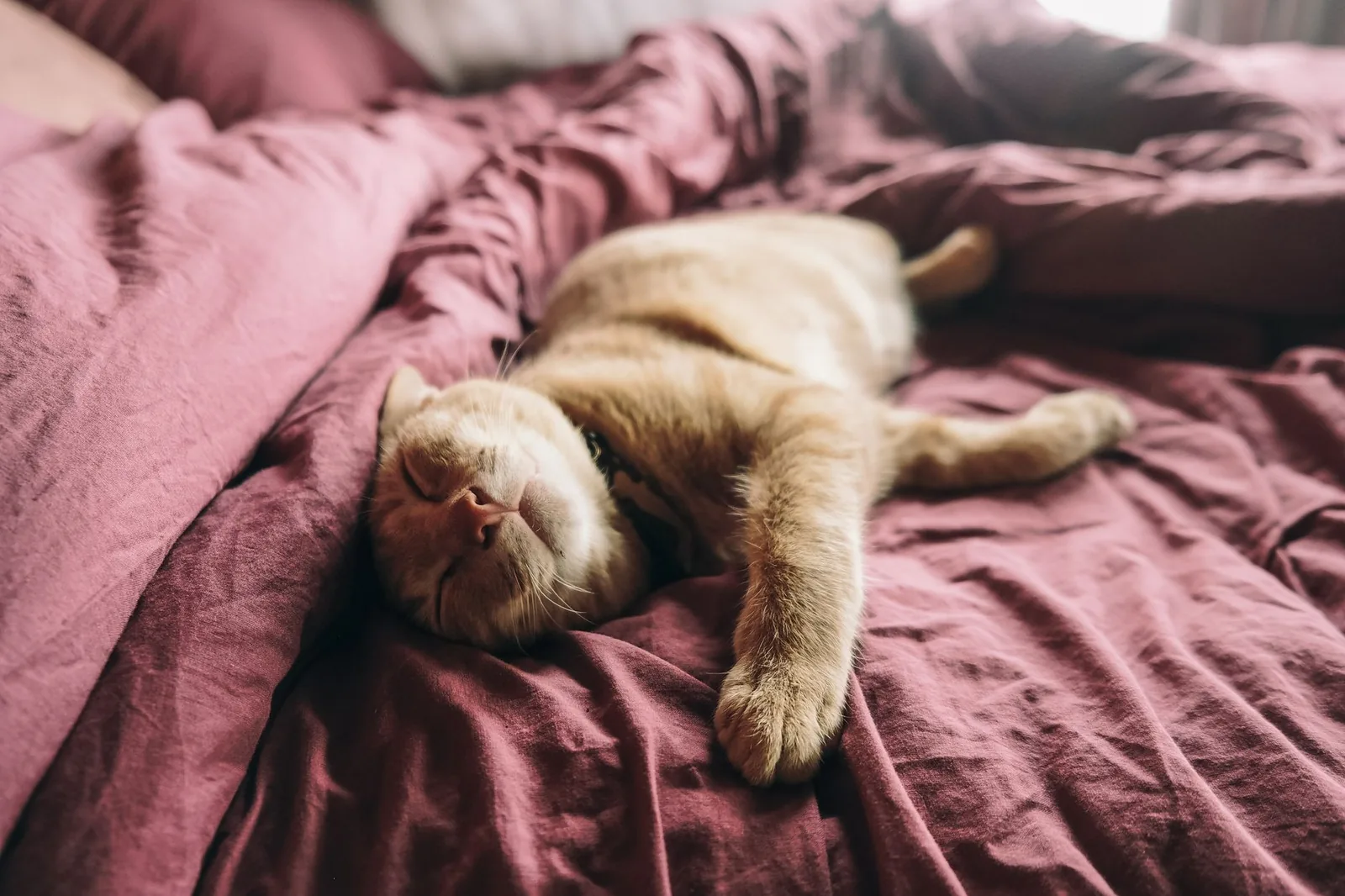
In Ontario, Bienzle and colleagues found antibodies in 52 percent of cats from households with COVID. Closeness predicted infection. Sleeping on the owner’s bed was the clearest risk factor: 23 of the 27 cats with antibodies slept there, against 5 of the 10 cats without, and being kissed by the owner was also linked to infection. Cats with antibodies were more likely to have developed a new illness around the time of their owner’s, mostly respiratory or digestive signs or lethargy, a reminder that mild does not always mean invisible.
Wider surveillance tells the same story. The ABCD’s guideline says infected cats generally show mild respiratory signs and then recover, and it cites a US national study in which half of 55 infected cats showed signs, most often sneezing and lethargy. Serious illness does happen, but the CDC calls it extremely rare. The reported cases include severe pneumonia and heart inflammation, and the ABCD suggests that cats with hypertrophic cardiomyopathy may be more vulnerable. Experiments with Omicron, the variant first detected in November 2021, found it caused milder disease in cats than earlier strains, with far less virus shed.
An infected cat can shed the virus for up to a week, according to the ABCD, and in laboratory studies cats sharing a cage passed it to each other within days. That is the reason a cattery never mixes cats from different households, whatever the infection. The risk running back to people is low, according to the CDC, and fur is not the route: the Texas team could not grow virus from any of the PCR-positive fur samples, and the CDC says there is no evidence the virus spreads to people from a pet’s skin, fur or hair.
The best-documented cat-to-human case came from southern Thailand in August 2021. A cat that had been sleeping in its infected owners’ beds sneezed in a veterinarian’s face while she swabbed its nose. She was wearing gloves and an N95 mask but no eye protection, and she fell ill three days later. The ABCD now advises eye protection as well as gloves, a mask and a gown when vets examine cats that may be infected.
Flu and Bird Flu Can Cross Too
Influenza follows the same household pattern. The ABCD’s influenza guideline says cats can catch flu from people or from other animals, especially birds, and that ordinary strains usually cause no signs or a mild fever. During the 2009 swine flu pandemic, cats in several countries were infected, probably by their owners. Two in Oregon died of severe pneumonia. One had an owner who had been hospitalized with confirmed pandemic flu; the other lived with a child who had been badly ill with flu-like symptoms a week earlier, and four other cats in that home fell ill and recovered. There is no commercial flu vaccine for cats, and because influenza can pass from cat to cat, a cat with flu-like signs belongs in isolation like any other respiratory case.
Bird flu is the dangerous exception. Highly pathogenic H5N1 can cause severe pneumonia or brain inflammation in cats, with a high death rate, and the ABCD lists the risk factors as contact with poultry, wild birds or their droppings, raw poultry meat and unpasteurized milk. People come into it as carriers. In May 2024, Michigan investigated two indoor-only cats in different households that fell ill with H5N1. Both lived with dairy workers. One worker hauled unpasteurized milk between farms, was often splashed with it and did not change out of work clothes before going home. The source was never confirmed, but the published report encouraged farmworkers to remove work clothing and footwear before entering their homes, and advised vets in states with infected livestock to ask about household members’ jobs when a cat has respiratory or neurological illness.
For a cattery the lesson is narrow and practical: a member of staff who keeps backyard poultry or works around poultry or dairy cattle should change clothes and footwear before a shift.
For Operators: A Staff Sick Policy That Protects Cats
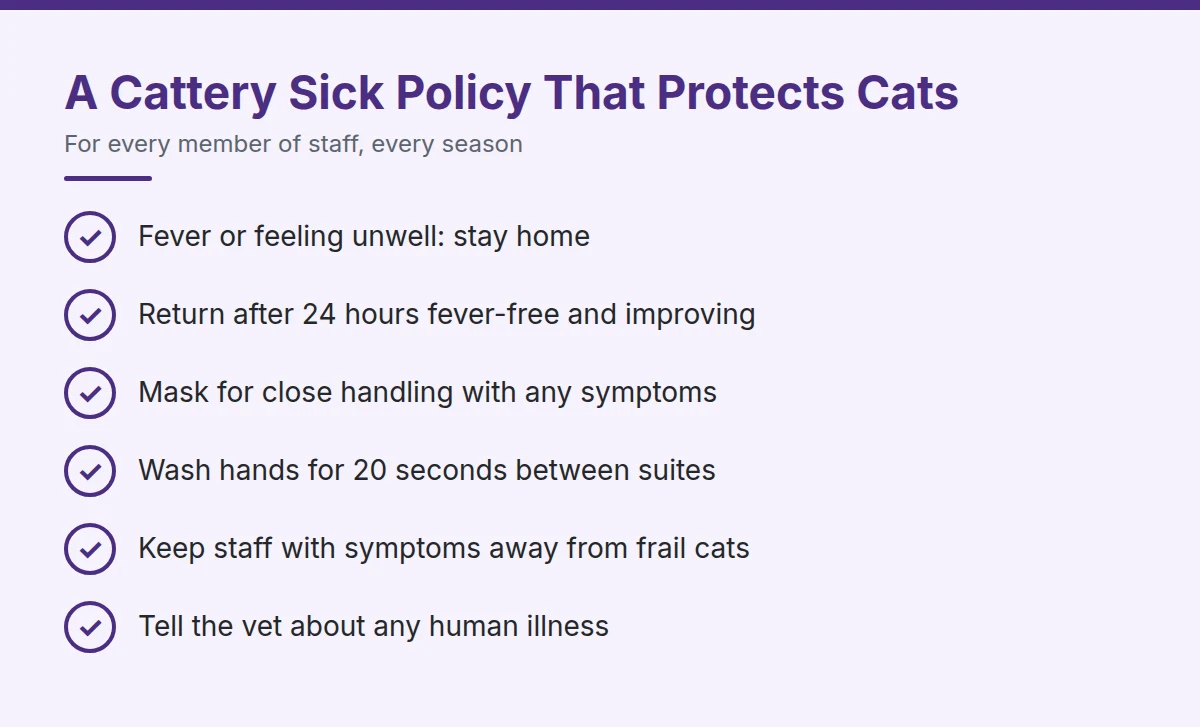
Put the evidence together and the realistic risk to a boarded cat is not the cats in the other suites. It is the people who handle it. Every member of staff touches every cat on their round, and close, face-to-face contact is exactly what drives infection in homes. In England, the licensing conditions for catteries already require operators to take all reasonable precautions to prevent and control the spread of infectious disease “among the animals and people”, so a written sick policy is part of meeting the licence rather than an extra.
A workable policy has seven parts:
- Fever or feeling unwell means staying home. Borrow the rule public health bodies already give for people. The CDC advises staying away from others with respiratory symptoms and going back to normal activities only when, for at least 24 hours, symptoms are improving overall and there has been no fever without fever-reducing medicine, then taking extra precautions such as a well-fitted mask for the next five days. The UK Health Security Agency’s version: stay home with a high temperature or if too unwell to work, and for five days after a positive COVID test.
- Make calling in sick affordable. A policy that docks pay or leaves a round uncovered teaches people to work through a fever. Keep a relief list, and if you run a one-person cattery, train a backup before peak season, not during it.
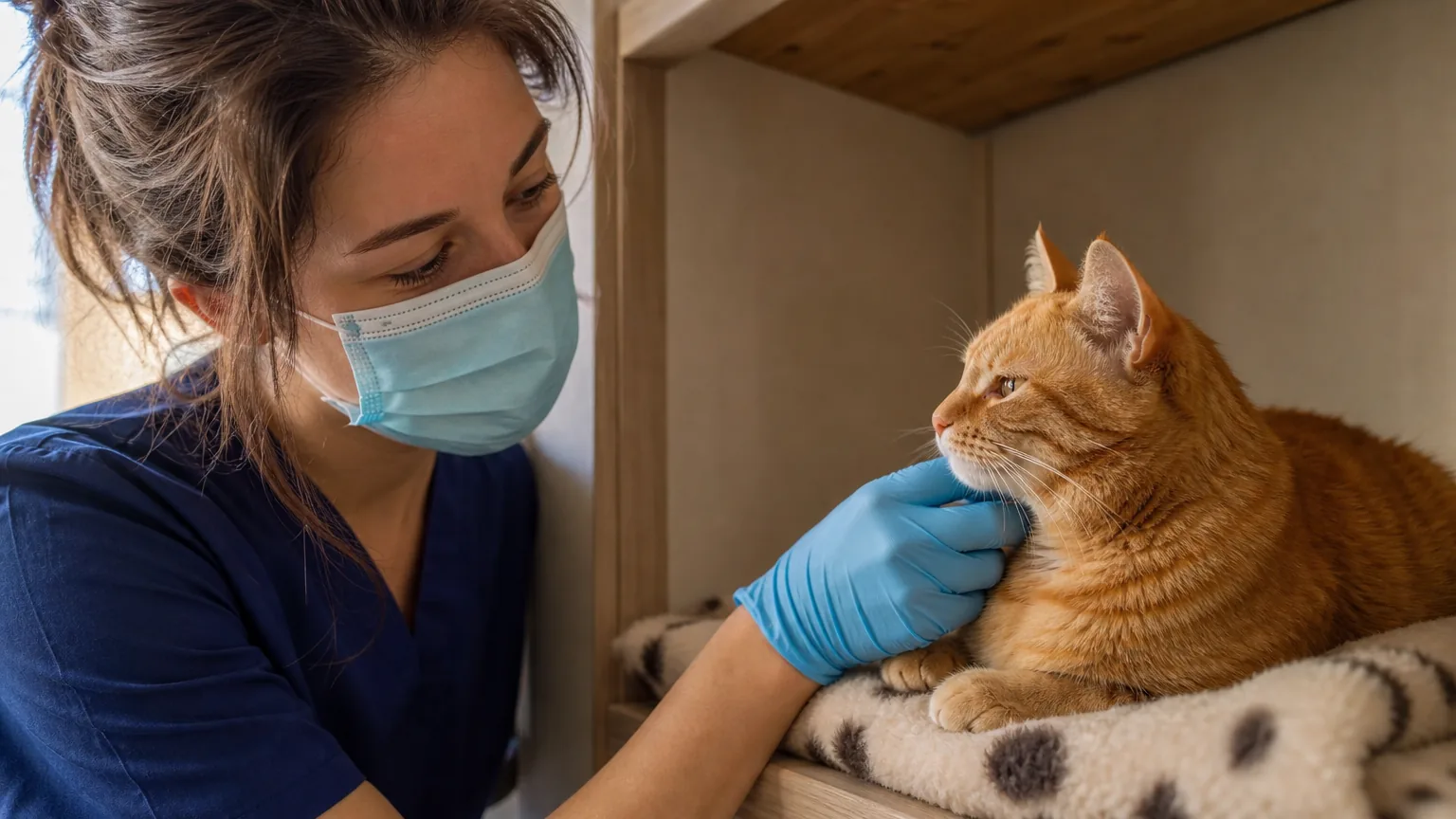
- Mask up for close handling when something is coming on. A scratchy throat without a fever may not need a day off, but it does call for a mask during the face-to-face jobs: medicating, grooming and cuddles. No kissing or nuzzling boarders, ever; kissing was among the contacts linked to infection in the Ontario homes.
- Wash hands between suites, every time. Twenty seconds with soap and water, before and after each cat. The ABCD points out that the COVID virus has a fragile outer envelope that soap and common disinfectants destroy. Defra’s guidance already requires a separate staff hand-wash basin with hot and cold water, soap and hygienic drying.
- Never mask or disinfect a cat. The CDC warns that masks could harm a pet and that pets should never be wiped with disinfectants, alcohol or hand sanitizer. Clean hands and clean surfaces do the job.
- Keep the most vulnerable boarders away from anyone under the weather. Where the rota allows, a member of staff with symptoms should not handle kittens, seniors or cats with heart disease. In experiments the virus replicated more efficiently in young kittens than in adult cats, and the ABCD flags hypertrophic cardiomyopathy as a possible risk for severe illness.
- Tell the vet about human illness. If a boarder develops respiratory signs after a staff member or its owner has been ill, say so when you call; the ABCD advises vets to consider SARS-CoV-2 in cats with respiratory disease. Isolation rules then apply as for any infectious case. Defra requires protective clothing and footwear in the isolation unit, and isolated cats are visited after the others unless a separate person cares for them.
When the Owner Turns Up Ill at Drop-Off
An owner with COVID or flu raises a different question, because the cat has been living with the infection. The household studies suggest there is a real chance it has already been exposed, and an infected cat can shed virus for up to a week. Yet the ABCD judges the risk beyond the household to be negligible, because transmission needs close contact, and both the CDC and the ABCD tell sick owners to keep their distance from their pets. Boarding the cat as planned is reasonable, and it puts some welcome space between the cat and the sickbed.
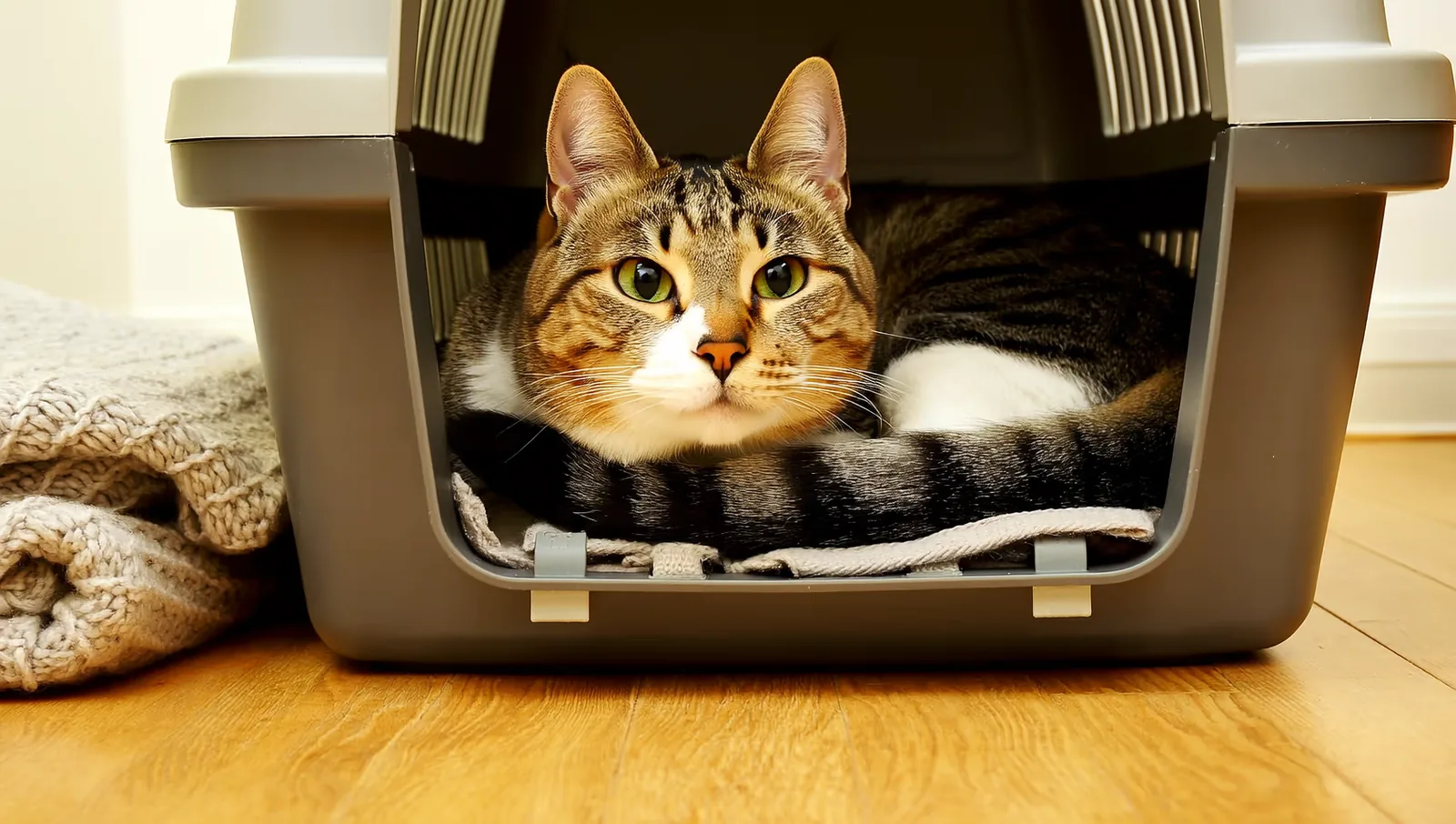
For the owner, the handover is simple:
- Call ahead. Tell the cattery before you set off, so it can plan the handover.
- Send someone who is well, or hand over at the door. A healthy friend or household member can do the drop-off. If nobody else can, stay outside, wear a mask and let staff collect the carrier at the door.
- Keep the goodbye brief. The CDC’s list of contact to avoid while sick includes petting, snuggling and kissing, so this is one time a long farewell does the cat no favors.
- Choose the right comfort item. A familiar blanket or toy still helps a cat settle, so pack one, just not one that has been on your sickbed.
- Do not worry about the carrier. There is no evidence the virus spreads from a pet’s fur, and staff will wash their hands after handling it anyway.
On the cattery’s side:
- Treat the first week as observation. The cat goes in its own suite, as every boarder should, and is visited last on the round. Staff wear gloves and a mask for close handling, wash their hands afterward and watch for sneezing, lethargy or a poor appetite.
- Call the vet at the first sign of illness, and mention the household illness when you do.
- If the cat itself has tested positive, postpone. The CDC’s rule for ending a pet’s isolation is no symptoms for 72 hours without medical care, plus either 14 days since the last positive test or negative follow-up tests, and the vet’s sign-off.
- Ask on the booking form. One question covers most of it: has anyone in the household had COVID, flu or a fever in the past week, and does anyone work with poultry or dairy cattle?
What a Good Cattery Says When a Client Asks
Clients rarely want a lecture on antibody surveys. They want to hear that someone has thought about it. A good answer sounds something like this:
Your cold can’t be passed to your cat. COVID and flu occasionally can, mostly in homes where a cat shares a bed with someone who is ill, and it is usually mild. Our staff stay home when they have a fever, wear a mask for close handling if they have any symptoms, and wash their hands between every suite. Every cat has its own suite, bowls and bedding, and if a cat seems unwell we move it to isolation and call the vet.
If the answer is a shrug, or a confident “cats can’t get COVID”, that tells you how the place thinks about infection generally. Four questions are worth asking any cattery:
- What happens when a member of staff is ill?
- Do staff wash their hands between suites?
- Where does a sneezing cat go, and who looks after it?
- Will you call me, and a vet, the same day if my cat seems unwell?
Our guide to choosing the right cat hotel covers the rest of the tour.
The Short Version
Your cold will not give your cat a cold. COVID and flu can cross from people to cats, but nearly always inside a home, through the close contact of a shared bed or a kiss, and usually mildly. The Dutch shelter cats showed how little the virus moved among cats without that contact. So the person who matters most at a cat hotel is whoever is holding your cat. A cattery that sends sick staff home, washes hands between suites and gives a cat from a sick household a week of extra care has dealt with the realistic risk. If your cat has heart disease or another chronic condition, talk to your vet before booking any stay.
Further reading (sources)
- van der Leij and colleagues on antibody screening of 240 Dutch shelter cats during the second wave
- Hamer and colleagues for repeated testing of cats and dogs living with infected owners in Texas
- Bienzle and colleagues with household risk factors, including cats sleeping on the owner’s bed
- Sila and colleagues on the suspected cat-to-human case in southern Thailand
- Löhr and colleagues for two Oregon cats killed by pandemic H1N1 flu
- Naraharisetti and colleagues on H5N1 in indoor cats from Michigan dairy workers’ homes
- Scully and colleagues with a human cold virus that killed wild chimpanzees
- European Advisory Board on Cat Diseases on its SARS-CoV-2 guideline, from household risk factors to protective equipment and its guideline on influenza in cats, including H5N1
- Centers for Disease Control and Prevention for what owners sick with COVID should do around pets and when people with a respiratory illness can return to normal activities
- Defra sets the isolation and infectious disease conditions for licensed catteries in England
- UK Health Security Agency on staying home with symptoms of a respiratory infection