Boarding a Senior Cat: Special Needs Older Felines Have in Cat Hotels
Published on June 4, 2026
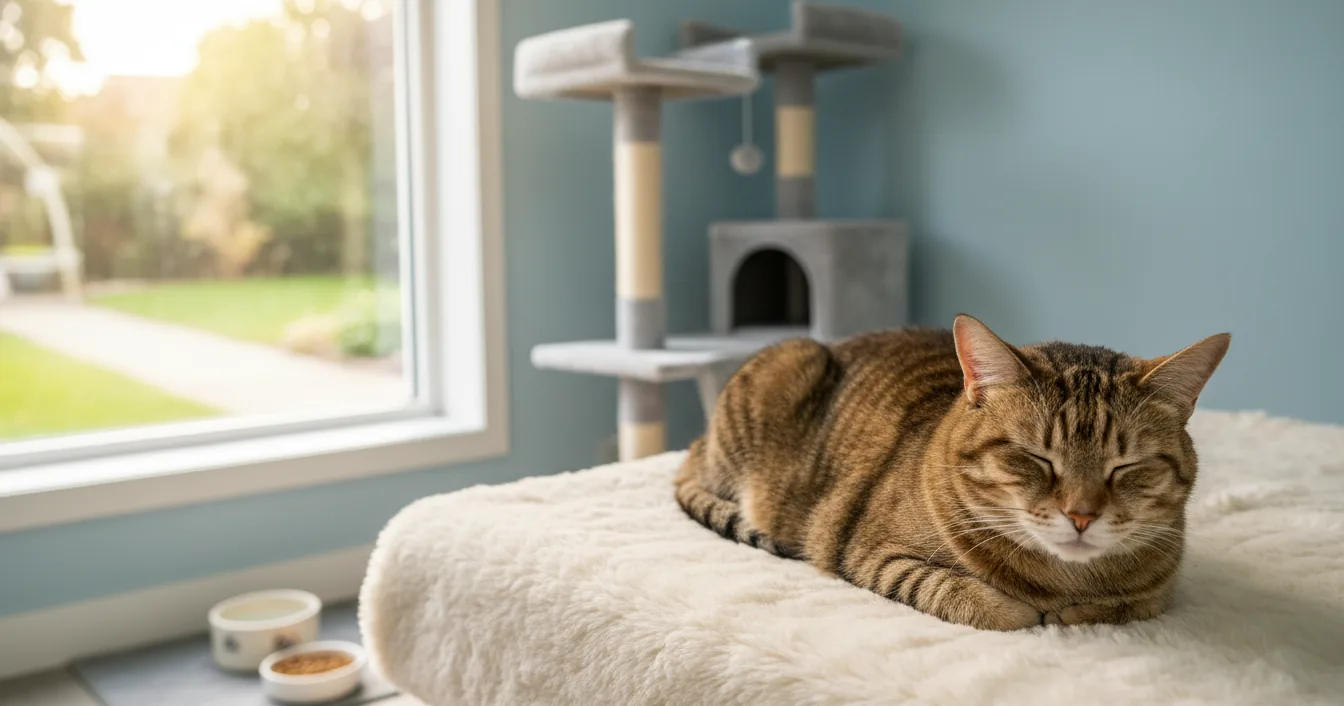
A cat that has crossed into its senior years is not simply a younger cat with a few grey hairs and a slower step. Aging changes how a cat handles stress, often arrives alongside a chronic condition or two, and frequently comes with a daily medication schedule that cannot lapse for a long weekend. The general advice in our guide to choosing the right cat hotel gets you most of the way there, but an older cat needs a few extra layers of planning. This guide covers what changes with age, how to manage medications during a stay, the mobility and comfort accommodations that matter, and the exact questions to ask before you hand over a cat in its second decade.
When Is a Cat “Senior”?
The 2021 AAHA/AAFP Feline Life Stage Guidelines draw the line clearly: a cat is a mature adult from 7 to 10 years, and senior from age 10 onward (AAHA/AAFP, 2021). Many veterinarians now reserve the word geriatric for cats of 12 to 14 and older, reflecting how much longer cats live with good care (Cornell Feline Health Center, 2024).
The exact number matters less than what is happening inside the body. By 10, a large share of cats carry early, often silent disease: chronic kidney disease, hyperthyroidism, high blood pressure, and arthritis lead the list. Boarding is a stress event, and stress has a way of unmasking conditions that looked stable at home. That is why a recent veterinary exam matters so much for an older cat. The guidelines recommend senior cats be seen at least every six months (AAHA/AAFP, 2021), and a check-up with current bloodwork shortly before a stay gives both you and the facility a baseline. If your cat has a diagnosed chronic illness or a behavioral issue, talk to your veterinarian before you book at all.
How Aging Changes the Stress Response
A younger cat has reserve. An older cat has less of it, so the same unfamiliar room, the same strange smells, and the same break in routine land harder. Stress hormones suppress the immune system, which is one reason older cats are more prone to flare-ups of upper respiratory infection and reactivation of latent herpesvirus in a busy facility. We go deep on that biology in how stress drives cat colds at boarding, and the short version is that seniors sit at the vulnerable end of that curve.
Aging also brings cognitive and sensory change. A cat with early cognitive decline can become disoriented in a novel space and may vocalize at night. Fading vision or hearing makes an unfamiliar room more frightening, not less, so consistency and gentle handling count for more (Cornell Feline Health Center, 2024). Older cats hold less muscle and body fat and regulate their temperature less efficiently, so they feel the cold sooner. Appetite is fragile too, and a senior that stops eating under stress can slide toward serious trouble quickly. The practical takeaway is that an older cat wants a quieter, lower-stimulation corner of the facility, well away from young, boisterous cats and always separated from dogs.
Medication Management: the Heart of a Senior Stay
This is where boarding an older cat differs most from boarding a healthy young one. A senior may arrive on methimazole for an overactive thyroid (a pill or a gel rubbed into the ear), amlodipine for high blood pressure, insulin injections for diabetes, subcutaneous fluids for kidney disease, or gabapentin and other vet-prescribed pain relief for arthritis. None of these tolerate a missed dose well.
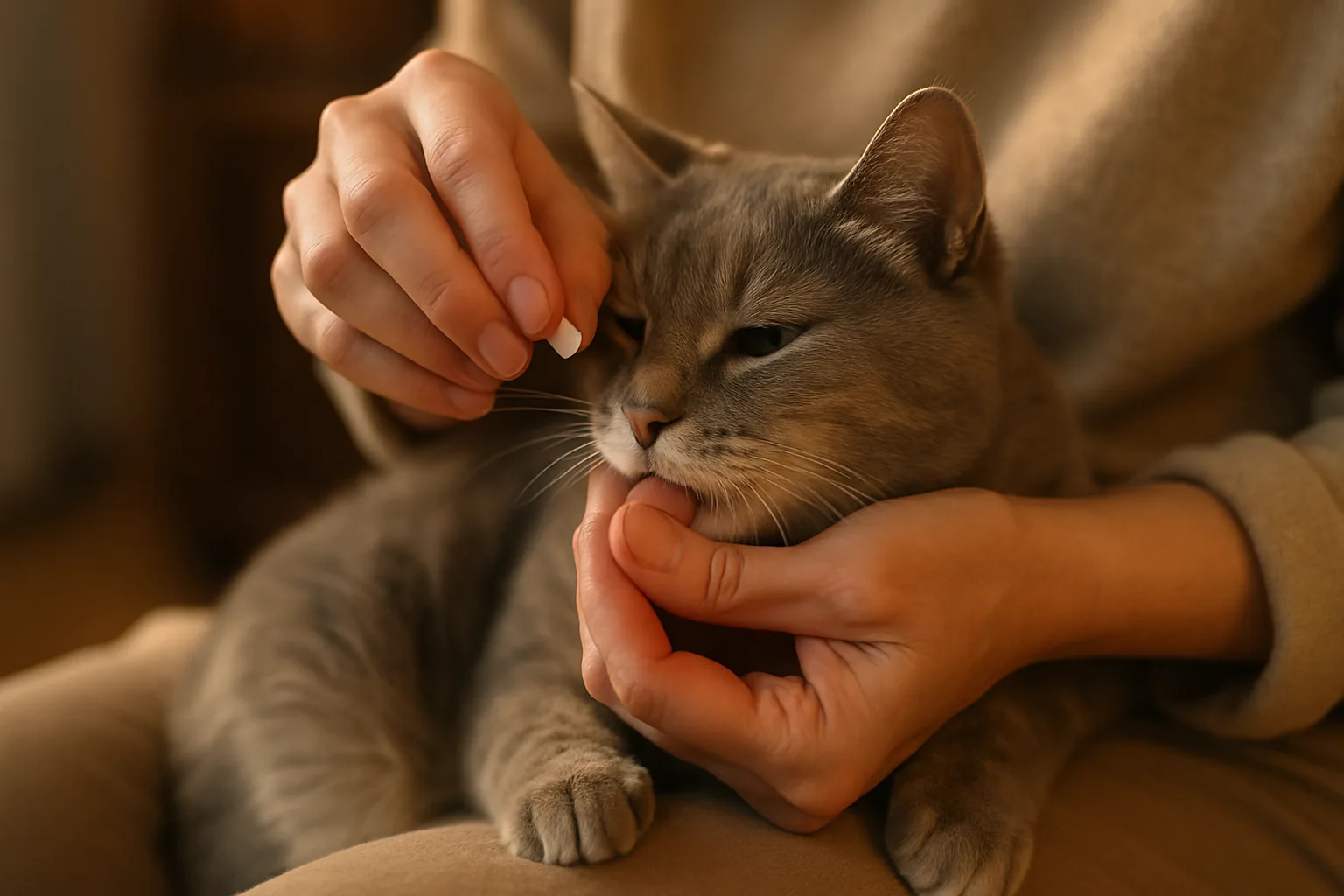
Before you book, ask the facility precisely what it can do, not whether it “handles medications” in general:
- Can staff reliably give pills, and apply transdermal gels?
- Can they give injections, such as insulin, on a fixed schedule?
- Can they administer subcutaneous fluids if your cat needs them?
- Who on staff is trained, and how do they log each dose?
- Is there an additional fee for medical care?
Send medications in their original labeled packaging, pack more than the stay requires, and include a written schedule listing each drug, the dose, the time, and how it is given. Cats are expert pill-dodgers, so ask how the staff confirm a dose was actually swallowed rather than spat out behind the litter box. A facility that cannot give injections is simply the wrong facility for an insulin-dependent cat, no matter how lovely the suites are. A well-run cat hotel, by contrast, will take a detailed medication plan as a matter of routine.
Mobility and Comfort: Design the Suite Down, Not Up
Feline arthritis is badly under-recognized. Radiographic studies estimate that roughly 90 percent of cats over 12 show signs of degenerative joint disease, most of it never formally diagnosed. The tall climbing towers and high perches that delight a young cat can be a wall for a stiff older one. The best facilities design senior suites downward, and a thoughtful operator builds these options into the facility plan from the start, as covered in our founder’s playbook on running a cat hotel.
For an older cat, ask whether the suite can offer:
- Food, water, litter, and a resting spot all at ground level, with no jumping required.
- A litter box with low sides for easy entry (Cornell Feline Health Center, 2024).
- Ramps or shallow steps to any raised area, rather than a single high leap.
- Soft, supportive bedding and a warm resting place out of any draft, since older cats chill easily.
- Non-slip flooring so stiff joints find traction.
- A nightlight and a consistent layout, which help a cat with failing vision feel oriented (Cornell Feline Health Center, 2024).
For most seniors, a larger ground-level suite beats a tall cage condo every time.
Diet, Hydration, and Daily Monitoring
Older cats are often on a therapeutic diet, such as a renal formula, and many eat less than they used to. Do not let the facility switch foods during the stay. Bring your cat’s usual diet, portioned and labeled, so nothing changes on the menu at the same moment everything else does. Encourage hydration with wet food and fresh water, because dehydration comes on faster in a senior, especially one with kidney disease.
Monitoring is the quiet half of good geriatric boarding. Staff should track appetite, water intake, and litter box output, watching for changes in urine volume in a kidney patient and for the constipation that is common in older cats. Daily weighing is a simple early-warning tool, the same protocol we describe for catching illness early in the science of behavioral URI prevention. Agree on a clear threshold in advance: if your cat refuses food for a defined period or seems unwell, the staff should call the veterinarian, and call you. Loss of appetite in an older cat is not a wait-and-see situation.
Questions to Ask About Geriatric Care
Work through these before you commit:
- Have you boarded cats with my cat’s condition, and how often?
- Which medications can you give, at what exact times, and how do you record each dose? Can you give injections or subcutaneous fluids?
- Is there an extra fee for medication or special care?
- Can you provide a ground-level suite with a low-entry litter box and no climbing required?
- How do you keep a suite warm and free of drafts?
- How often will someone record appetite, water intake, and litter output?
- What is your protocol if my cat stops eating or seems unwell, and at what point do you call my veterinarian?
- Is there a quiet area away from young, active cats and well away from any dogs?
- Can I get daily updates or a webcam check-in?
A facility that is genuinely comfortable with older cats answers these specifically and without hesitation. Vague reassurance, the breezy “oh, she’ll be fine,” is a red flag for a senior.
Is Boarding Right for Your Older Cat?
For many seniors, a capable cat hotel is actually the safer choice over an inexperienced sitter. Reliable injections, trained eyes watching for subtle change, and an established relationship with a veterinarian are hard for a casual pet sitter to match. Our comparison of daycare and boarding options at cat hotels walks through the facility types worth considering. For a frail, end-stage, or severely anxious cat, though, an in-home sitter who removes the stress of transport and a strange environment may be the kinder option. Make that call with your veterinarian, not alone.
Whichever way you go, prepare deliberately. Schedule a vet check before booking if there is any chronic illness in the picture. Pack familiar items that carry the scent of home, such as a worn t-shirt, a favorite blanket, or a well-loved toy, to anchor your cat in the new space. Try a single trial overnight before a longer stay. And sort out vaccinations early, since older indoor cats are often overdue and a lapsed booster can mean a restarted series rather than a quick top-up, as we explain in our cat boarding vaccination guide.
A senior cat can board very well when the facility plans down to its body and its medication clock. The right questions, a thorough veterinary check, and a hotel that treats geriatric care as routine rather than an exception turn an anxious separation into a safe, comfortable stay, for the cat and for you.
Further reading (sources)
- AAHA and AAFP on the 2021 feline life stage guidelines and senior definitions
- American Association of Feline Practitioners for the updated feline senior care guidelines
- Cornell Feline Health Center with loving care for older cats and home accommodations
- Journal of Veterinary Internal Medicine on the radiographic prevalence of degenerative joint disease in cats
- Catster for six vet-approved ways to help a cat live longer