How Much Does Cat Boarding Cost? A Complete Pricing Guide
Published on July 3, 2026
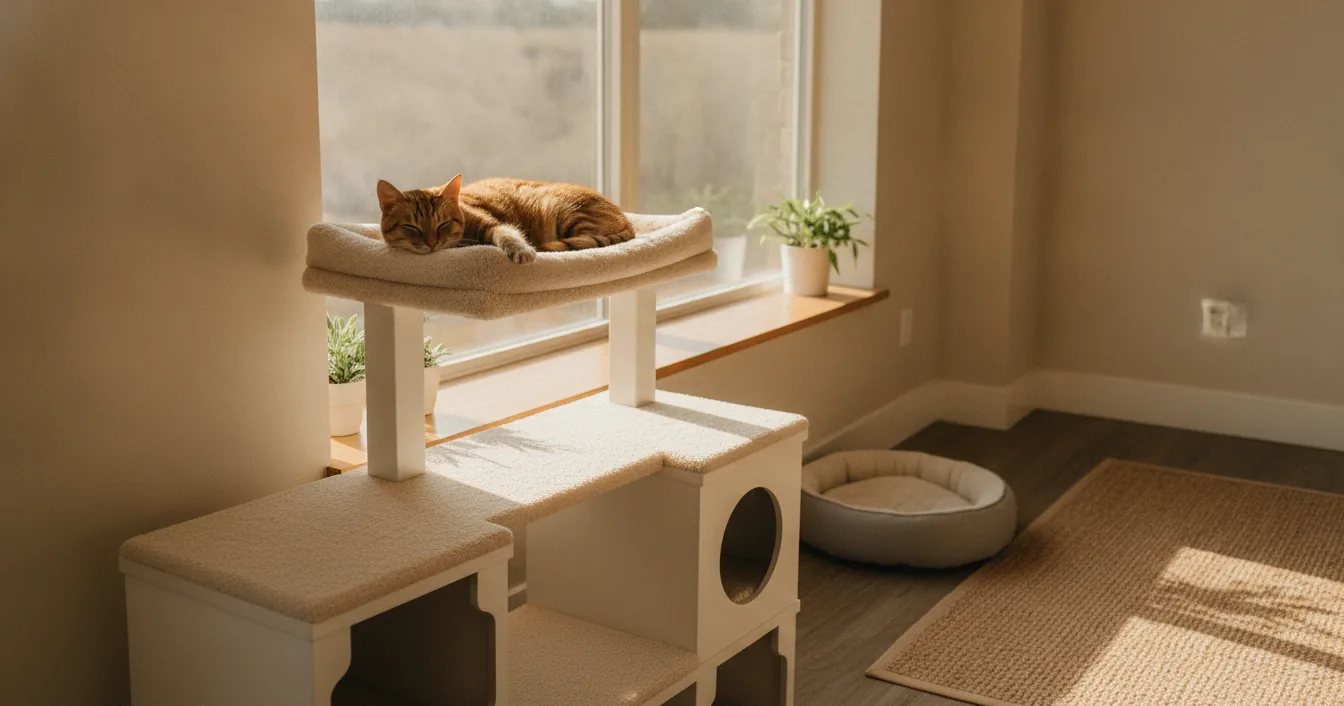
Ask three cat owners what they pay to board their cat and you will get three wildly different answers. One spends fifteen dollars a night for a clean cage at the vet clinic. Another pays fifty for a multi-level suite with a window. A third flies home from vacation to a cat that spent the week in a themed room being served freshly poached shrimp. Cat boarding is not one product with one price, it is a ladder of very different experiences, and the rung you choose decides the bill. This guide maps the full spectrum so you know what each tier costs, what it actually buys, and where the real value sits.
Cat Boarding Costs at a Glance
In the United States, the national average sits around 30 dollars per night, with most owners spending 25 to 40. The true range is far wider once you include both ends of the market, roughly 15 dollars a night for the most basic care up to 150 or more for the top luxury rooms. Where you land depends on four things: the type of facility, its location, the size and style of the space, and the add-on services you choose. Understanding those four levers is the whole game.
The Four Price Tiers
Budget: The Cage or Basic Cattery
At the entry level, expect roughly 15 to 25 dollars per night in the US and about 15 to 20 pounds in the UK. This is often a wire cage or a small condo at a veterinary clinic or a mixed dog-and-cat kennel. Your money covers the essentials: shelter, food, fresh water, a litter box, and a daily spot-clean. There is little vertical space, limited quiet, and usually no dedicated enrichment. Budget boarding is functional and, at a reputable clinic, perfectly safe for a short, uneventful stay. Its weakness is stress, because cats are territorial and a small enclosure near barking dogs is a hard place to relax.
Mid-Tier: The Cat Condo
The middle of the market, commonly 30 to 40 dollars per night in the US, buys a proper multi-level cat condo in a cat-only room. Your cat gets more square footage, a raised perch or two, separation from dogs, and a bit of daily attention from staff. This tier is the sweet spot for a lot of owners: noticeably calmer than a cage, without the premium price of a private suite. If you are still deciding whether your cat needs overnight care at all, our look at daycare versus boarding for cats is a useful frame.
Premium: The Walk-In Suite
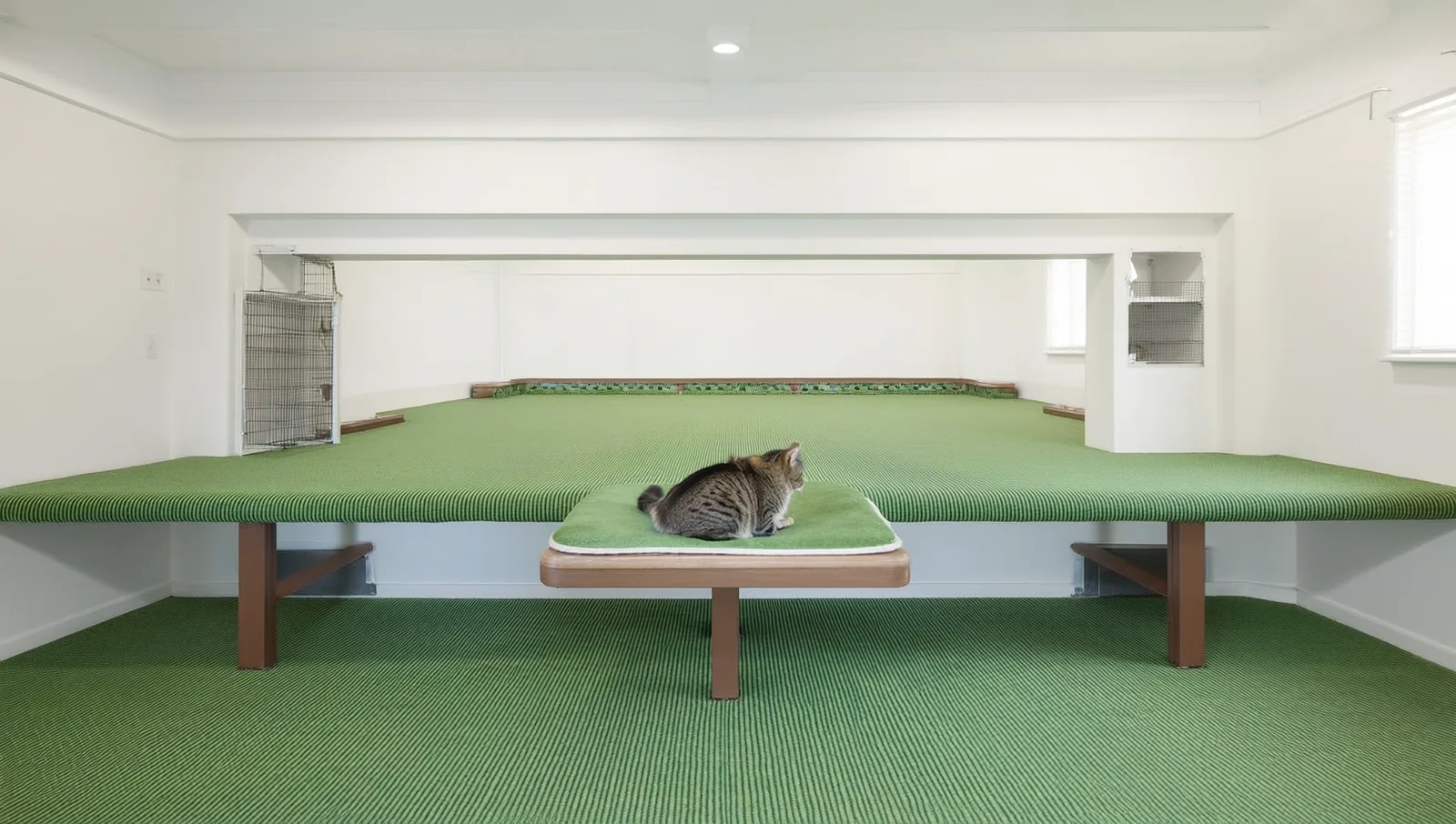
Premium cat-only boutiques generally run 40 to 75 dollars per night in the US and 25 to 40 pounds in the UK. Here you are paying for a walk-in room rather than a box: exterior windows, floor-to-ceiling climbing shelves, scheduled play sessions, and often a webcam so you can check in. Facilities like Happy Cat Hotel and Spa build themed private rooms and price each one by size and by whether it has an exterior window, which is exactly why two rooms in the same building can carry different rates.
Ultra-Luxury: The Feline Resort
At the top, nightly rates climb past 75 dollars and can reach 150 or more. Catopia in Wilton, Connecticut offers themed suites as large as 115 square feet with one-on-one playtime and gourmet meal enhancements. Longcroft, a UK chain of 26 boutique cat hotels, gives every guest a climate-controlled bedroom plus a private play area and will send a “five-star feline chauffeur” on request. High-end facilities in Singapore run from around 98 up to 188 Singapore dollars a night for rooms with private solariums, and Dubai’s premium catteries reach comparable heights. This tier sells an experience: space, personal attention, biosecurity, and peace of mind, wrapped in a hotel-grade guest presentation.
What Actually Drives the Price
The tier labels come down to a few concrete cost drivers. Space is the biggest: a 100-square-foot walk-in room simply costs more to build and heat than a stacked cage. Staffing ratios matter next, because one-on-one play and medication rounds take trained hands. Then comes disease control, the ventilation zoning and dedicated isolation rooms that keep illness from spreading, which is expensive infrastructure that owners never see on the invoice but very much pay for. If you want to understand why a premium quote is higher, our founder’s guide to running a cat hotel breaks down the cost base behind the nightly rate.
The Add-Ons That Grow the Final Bill
The advertised nightly rate is rarely the final number. Watch for these common line items, most of which are billed on top of the room:
- Medication administration: typically 5 to 10 dollars per day. Many facilities add a fee for pilling, insulin, or fluids.
- Extra play or cuddle sessions: around 10 to 15 dollars each, beyond whatever baseline interaction is included.
- Webcam access: sometimes free, sometimes 5 to 10 dollars per day for a live in-room feed.
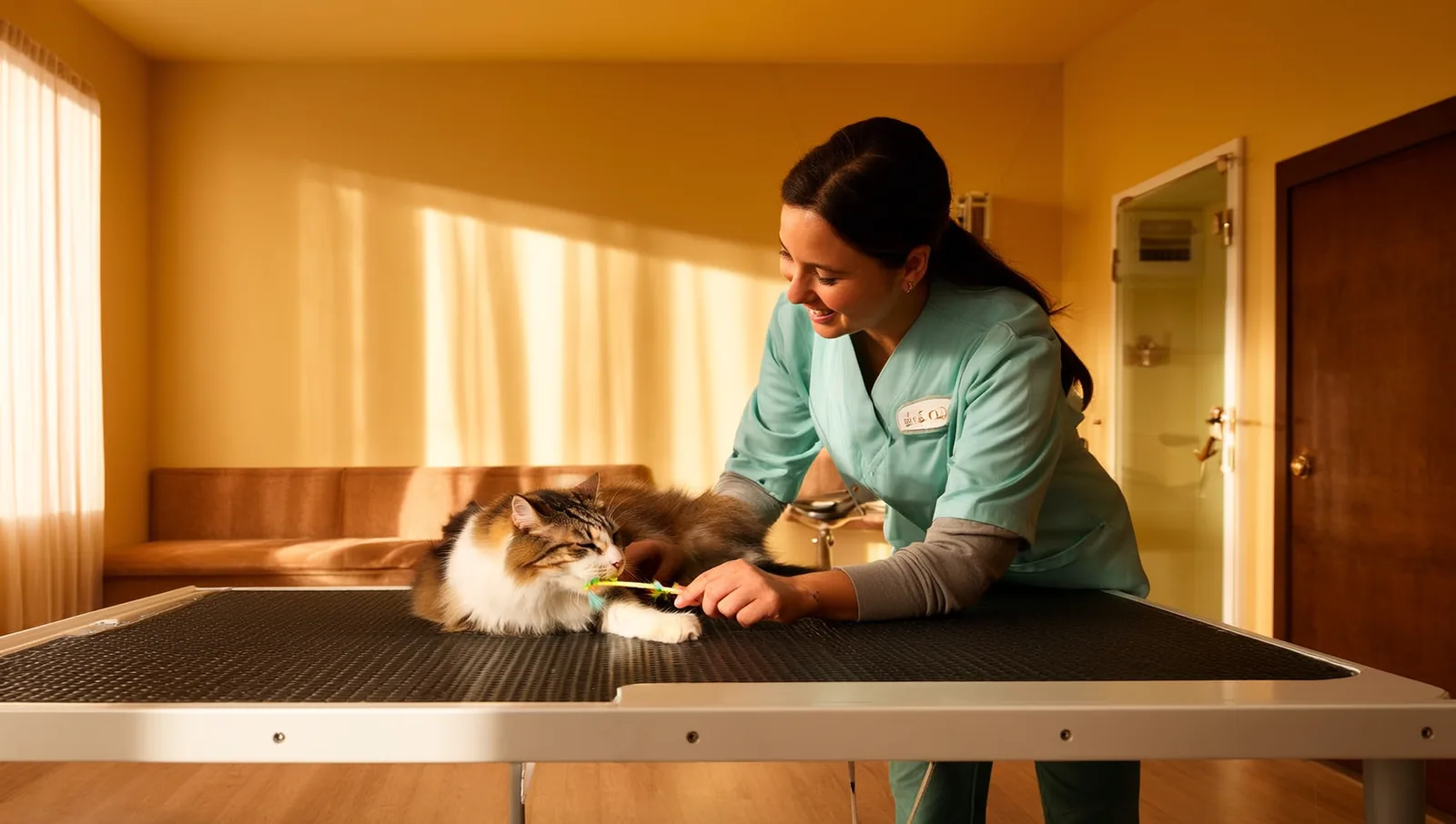
- Grooming: a quick tidy may be 10 to 20 dollars, while a full bath and blow-out from a feline specialist costs more.
- Gourmet meals and treats: the poached-shrimp end of the menu is an upsell, not standard.
- Transport or chauffeur: door-to-door pickup and drop-off is priced per trip and can be significant.
- In-room television: a small novelty charge at some luxury hotels.
Add two or three of these to a premium room and a 60-dollar night can quietly become 85. Always ask for an itemized quote before you book.
Regional Pricing: US, UK, Asia, and the Middle East
Geography moves the numbers a lot. In the US, rural facilities may charge 20 to 25 dollars a night while major metro areas run 40 to 60 and up. The UK skews lower for standard care, with single-cat rates often starting near 15 pounds a night, though some catteries add a small winter heating surcharge. In Singapore, cosy suites start around 38 Singapore dollars and luxury rooms reach nearly 190. In Dubai, boarding commonly falls between 50 and 150 dirhams per night, with high-season rates layered on top. Wherever you are, city facilities cost more than rural ones for the same tier, because rent and wages flow straight into the rate.
Holiday Surcharges, Multi-Cat Discounts, and Long Stays
Three pricing policies can swing your total more than the base rate does.
Holiday surcharges are near-universal. Over Thanksgiving, Christmas, and other peak weeks, expect either a flat holiday fee, a per-night premium of a few dollars per cat, or a surcharge of 15 to 30 percent. Many facilities also require a minimum stay and a non-refundable deposit over holidays, and the best rooms sell out months ahead.
Multi-cat discounts work in your favor. Two bonded cats sharing one suite usually cost far less than two separate rooms, with a second cat often 10 to 25 percent off and additional cats discounted further. If your cats get along, sharing is both cheaper and less stressful for them.
Long-stay discounts reward extended trips, commonly around 10 percent at 14 nights and rising toward 15 percent past a month. If you travel for weeks at a time, ask whether the rate drops.
Red Flags in a Cat Boarding Quote
A suspiciously low price can signal corners being cut. Be cautious when a facility will not separate cats from dogs, cannot show you the boarding area, has no dedicated isolation room for sick guests, or waves off questions about ventilation and cleaning. A quote that does not require proof of vaccination is a serious warning sign, not a convenience, and our complete guide to boarding vaccinations explains why every legitimate facility insists on it. Thin biosecurity is how outbreaks spread, from ordinary cat colds to the more serious pathogens covered in our piece on feline coronavirus and FIP at cat hotels. Cheap is not a bargain if your cat comes home sick.
Getting the Most for Your Money
The right price is the one that matches your cat, not the lowest number you can find. A young, easygoing cat may be perfectly content in a clean mid-tier condo, while an anxious, elderly, or medicated cat is worth every dollar of a quiet private suite with attentive staff. Decide what your individual cat needs first, then shop within that tier and compare itemized quotes rather than headline rates. Before you commit, walk through our checklist for choosing the right cat hotel, tour the space in person, and confirm exactly what the nightly figure does and does not include. Pay for the things that lower your cat’s stress and protect its health, and skip the novelties that mostly reassure the human.
Further reading (sources)
- HomeGuide on what cat boarding costs per night across the US
- Catster for a 2026 breakdown of cat boarding prices and add-ons
- Patch with a look inside Catopia’s luxury themed suites in Wilton
- 42 Freeway on how Happy Cat Hotel prices its themed rooms and services
- Norwich Evening News covering Longcroft’s boutique suites and chauffeur service
- Pet Lovers Centre for luxury cat boarding rates in Singapore