How to Start a Cat Hotel Business: The Complete Founder's Playbook
Published on June 1, 2026
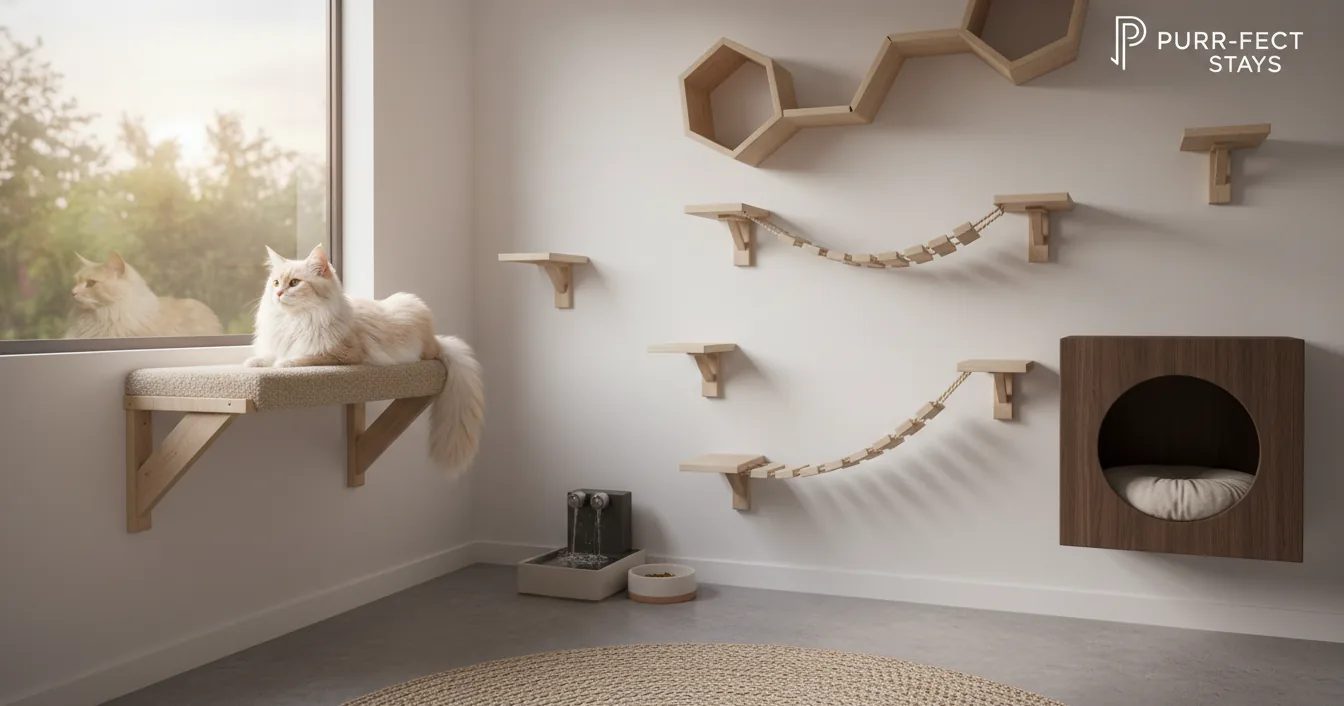
A wave of new cat hotels is opening, and the founders are arriving from everywhere. A Bournemouth banker traded a finance career to care for other people’s cats. A Seattle technologist left more than a decade at Amazon, Microsoft, and Xbox to open a cat-only lodge. A County Durham woman held a childhood dream for years before she finally built her own luxury cattery. What they share is a read on the same market gap: dog boarding is everywhere, and good cat boarding is scarce. This playbook walks through what it actually takes to open a cat hotel, from the business plan and licensing to facility design, staffing, software, pricing, and the first-year numbers that decide whether you make it.
Start With the Gap, Then Write a Real Plan
The opportunity is specific. Cats are the underserved side of pet boarding. When Jill Hathaway opened The Cat’s Pajamas in Grand Rapids, she put it plainly: there are plenty of places to board a dog, and far fewer that take good care of a cat. That gap is your wedge.
A real plan turns the gap into numbers. You need a target capacity, a nightly rate, a projected occupancy, your fixed and variable costs, and the month you expect to break even. Most independents start small and grow into demand. A rural UK cattery may house up to ten cats; a new US cat hotel might open with fourteen suites split across two pods; and the largest luxury builds go straight to twenty-five themed rooms and capacity for around a hundred guests.
The revenue math is simple and unforgiving: nightly rate times suites times occupancy. Ten suites running half full is a very different business from the same ten booked solid over the holidays, so model conservative occupancy for year one. A new facility builds its repeat base slowly.
Buy a Franchise or Build Your Own
There are two routes in. A franchise hands you a proven brand and template. The largest UK cat-hotel franchise, founded in 2010, now runs twenty-six boutique locations, and incoming operators take on a tested design (six suites, each with a climate-controlled bedroom and a private, secure play area with multi-storey viewing platforms) plus established booking systems, in exchange for franchise fees.
Building independently means full creative control. Independent operators have built their brands on themed rooms styled after popular shows and destinations, with the larger ones running thirty or more distinct rooms. The trade-off is that you design every system yourself. A franchise lowers the learning curve and de-risks the build; an independent build maximizes your margin and your brand. Choose based on your capital, your risk appetite, and how much you want to build from scratch.
Licensing, Zoning, and Insurance
This is where founders most often underestimate the timeline. Cat boarding is a licensed activity in most places, and the paperwork can take months.
Plan for several layers at once:
- A boarding or kennel license from your state, county, or local authority, usually with an annual inspection of the premises.
- Zoning approval. Confirm the site is zoned for commercial animal care before you sign a lease or buy a building. A quiet rural property operates under different rules than a retail plaza.
- A vaccination policy on day one. Rabies is a legal requirement for boarded cats in nearly every US state and Canadian province, not a preference you can waive. Set FVRCP and rabies as your floor. Our complete guide to cat boarding vaccinations covers exactly what to require and why.
- Insurance and structure. General liability, animal bailee or care-custody-control coverage, and property insurance, wrapped around a proper business entity and a written owner contract that authorizes veterinary care and spells out who pays for it.
Design the Building Around the Cat
Cats are not small dogs, and the facility has to be built around feline biology rather than borrowed from a dog kennel.
Vertical space comes first, because cats use height to feel safe. Multi-storey viewing platforms, climbing shelves and window perches are standard for a reason. Privacy comes next: think private suites, not cages. Sizes vary widely in the market, from thirty to sixty square foot suites at the mainstream end up to rooms as large as a hundred and fifteen square feet at the luxury end.
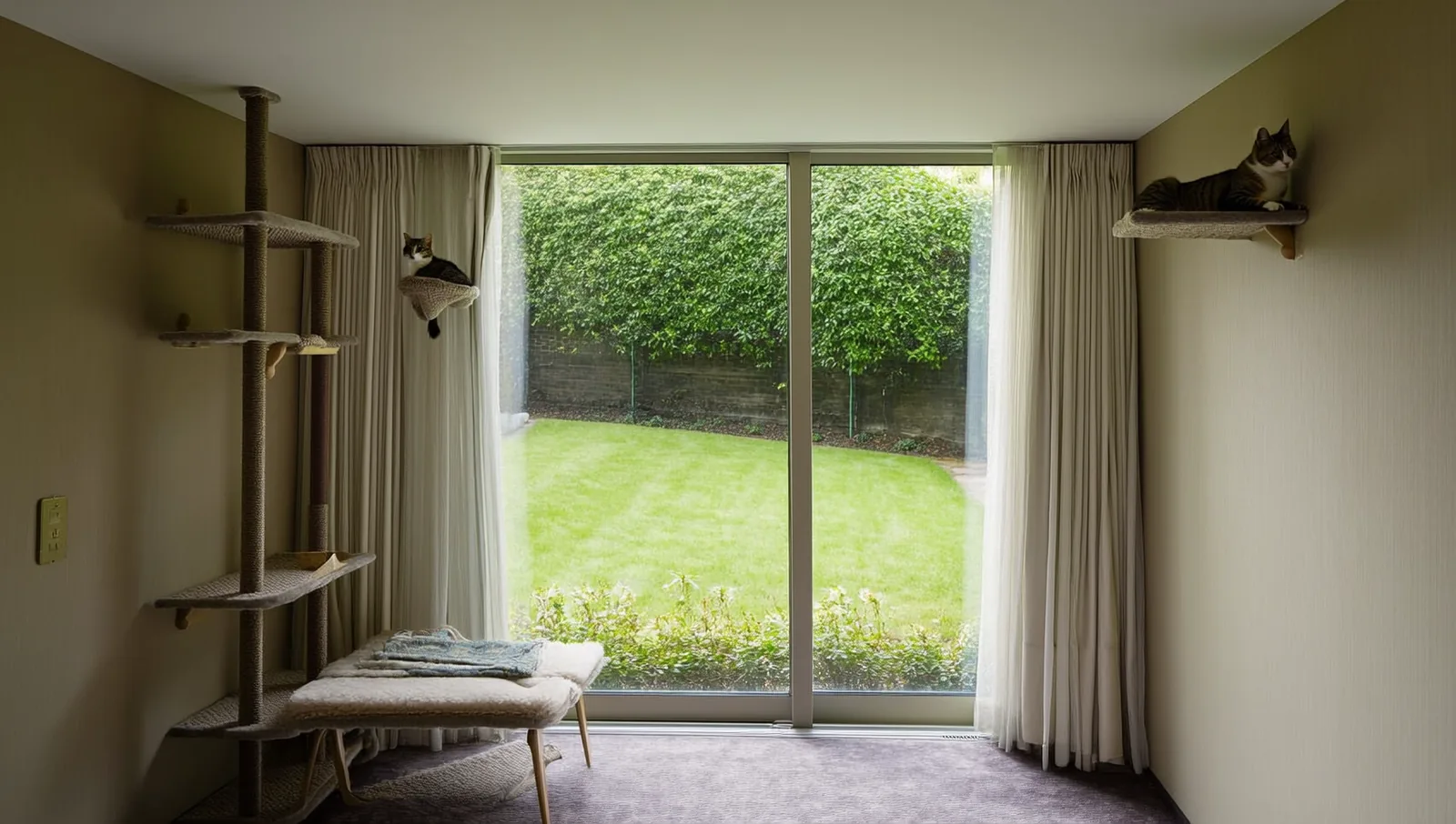
Three systems matter more than the decor. HVAC zoning is the single biggest lever for disease control: give the cat area its own ventilation, separate from any dog space or busy lobby, which is the foundation of the URI prevention every cat hotel needs. A dedicated isolation room with its own ventilation lets you separate a cat that arrives sick or falls ill mid-stay. And basic safety infrastructure, fire alarms and suppression, a secure double-door entry so no cat can bolt, and surfaces that sanitize quickly, protects guests and your license alike. Through all of it, the rule is cat-only: cats are never mixed with unfamiliar animals.
Build Low-Stress Operations From Day One
Stress is the core operational risk in a cattery. It drives illness, poor appetite, and the kind of stay that earns a bad review, which is why stress reduction sits at the center of feline boarding. Design your daily operations to minimize it from opening day.
The better new builds are designed explicitly for calm, low-stress environments. Staff use shoe coverings between suites and fully sanitize each enrichment area between uses, and the pod model means cats take turns in a shared play space rather than ever overlapping with strangers. Predictable routines, quiet handling, owner-provided food and bedding, and a familiar-scent item from home all lower the baseline anxiety of a new guest.

Enrichment is the other half of the equation, and it doubles as a service you can schedule and sell. Premium operators sell one-on-one playtime and scheduled enrichment sessions as named services, and one Downers Grove facility built its whole pitch around daily play and exercise. Structure it, and it becomes a line item rather than an afterthought.
Staff, Train, and Find Your Vet Partner
Cats need fewer walks than dogs, but they need careful, individual observation. Staff your facility so that feeding, medicating, cleaning, and enrichment all happen on schedule without anyone rushing. Some guests arrive on medication, and the stronger facilities administer owner-provided medicines on each owner’s schedule, up to and including breathing treatments, which takes trained hands rather than a casual hire.
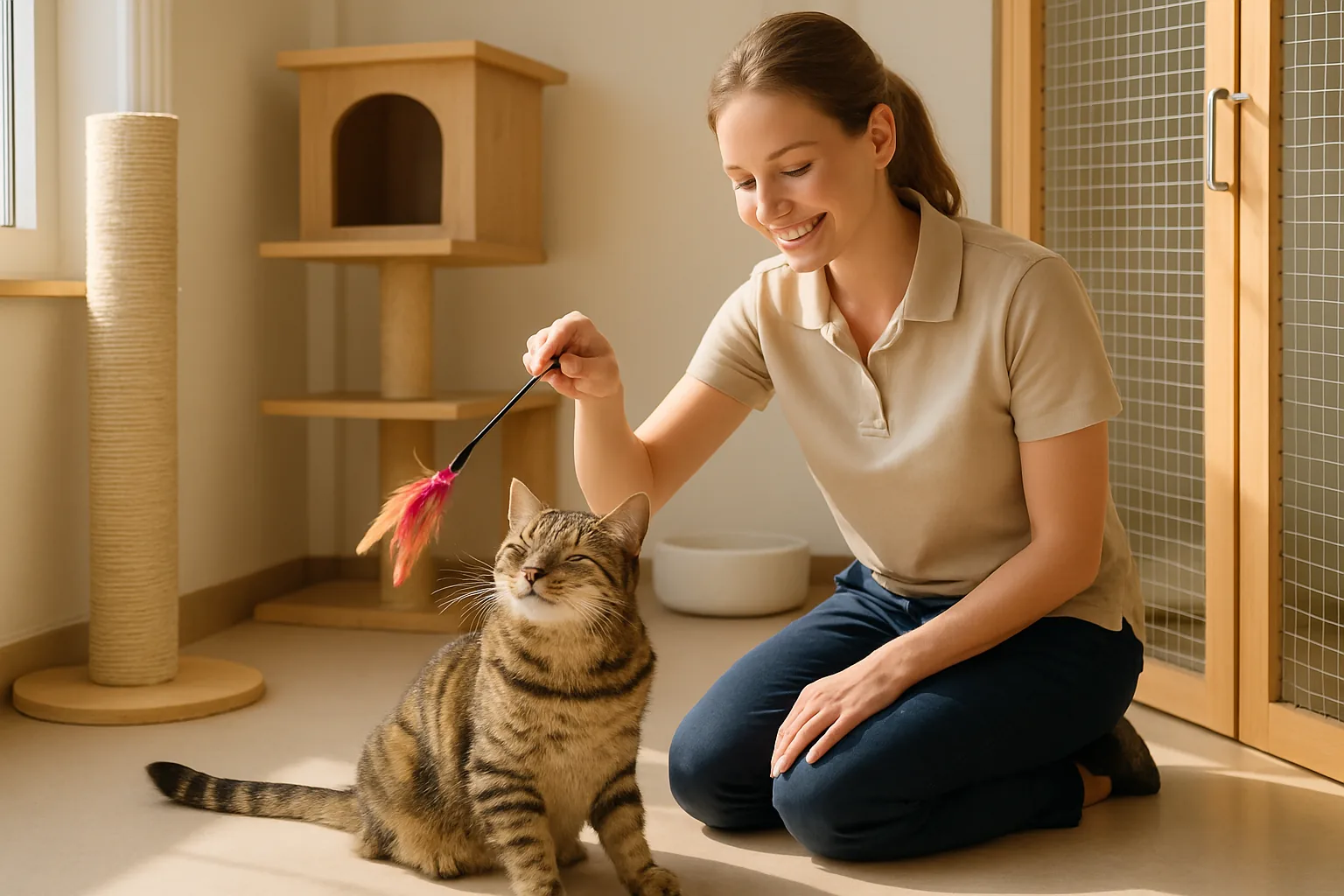
Train every staff member in low-stress, fear-free handling, because one rough intake can undo a week of calm. And treat the veterinary partnership as non-negotiable. A common arrangement is a formal partnership with a clinic within about ten minutes, with clients given priority booking so they can stay current on FVRCP and rabies. Establish your on-call vet, and your emergency protocol, before you take a single booking.
Software, Pricing, and Upsells
Booking software is table stakes now. You want online reservations, stored vaccination records, a live capacity calendar, automated reminders, and integrated payments, so you are not running a holiday rush out of a paper diary. Owners also increasingly expect to see their cat, and premium operators now run 24-hour webcams in every room and send daily text updates.
Price in tiers. Classic and deluxe suites, with peak and holiday rates layered on top, lets you capture the dates when demand spikes. Set your prices against your local market and your real costs, not the cheapest kennel in town.
Upsells are where margin lives. Grooming (some operators keep a certified feline groomer on staff), gourmet meals (poached shrimp, salmon treats), room service, and even a pickup or chauffeur service all add revenue per stay. Local partnerships extend your reach too: one operator works with a local toy maker, a smokehouse, and a florist, which adds value for guests and marketing reach for the business.
Marketing and the Realistic First Year
The cat-only angle is your strongest marketing asset, so lead with it. Local press loves a new cat hotel, and nearly every founder in this sector earns a feature simply by opening. From there, word of mouth and repeat visits become the engine. Small rural catteries regularly stay full on returning guests alone, and that loyal base is what a first-year facility is really building toward. Our guide to choosing the right cat hotel doubles as a checklist of what your own facility should get right.
Be honest about the ramp. Occupancy starts low, climbs as reviews and repeat bookings accumulate, and peaks around holidays and summer travel. Break-even commonly takes time once you account for lease, build-out, and staffing, so keep fixed costs lean early, open with a suite count you can realistically fill, and expand as demand proves itself. If you are still weighing the service model, our look at daycare versus boarding for cats is a helpful frame.
The people opening cat hotels right now are not all lifelong cattery operators. They are bankers, technologists, and shelter volunteers who saw the same gap and built carefully around the cat. Do the same. Start with a sober plan, secure the right licenses, design a feline-first building, train your staff, keep a vet on call, and offer a clear service that owners will come back to. Get those right, and the purring takes care of the rest.
Further reading (sources)
- Bournemouth Echo on the banker who left finance to care for cats
- Consett Magazine for how Denise built a luxury cat hotel from a childhood dream
- My Ballard with a look inside a new cat hotel’s low-stress pod design
- Patch on the rise of high-end themed cat suites
- Norwich Evening News covering a boutique cat-hotel franchise model and its standards
- WZZM for why a cats-only hotel found an open market