Reading Your Cat at Boarding: Feline Stress Signals, Body Language, and What to Do
Published on June 7, 2026
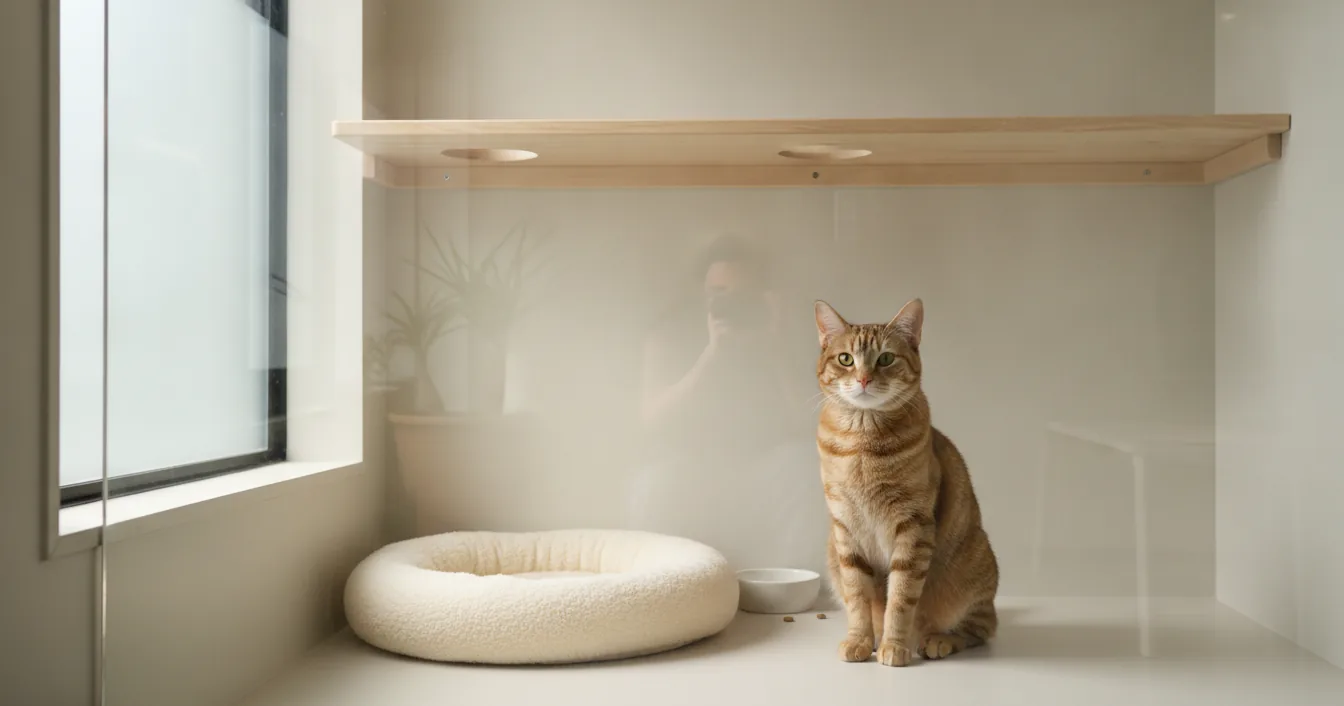
A cat in a boarding suite rarely announces that it is struggling. Unlike a dog that paces and whines at the gate, a stressed cat tends to go quiet, fold itself into the smallest shape it can manage, and wait. That stillness is easy to mistake for calm, and it is the single most common reading error owners and staff make. By the time a cat shows the obvious signs, refusing food for a second day, a thinning patch of over-groomed fur, a swat at the hand that opens the door, it has usually been signaling distress for hours or days in quieter ways. Learning to read those earlier signals is what separates a stay that ends with a relaxed cat going home from one that ends with a vet visit.
This guide walks through the feline stress signals worth watching at boarding, from the tip of the tail to the litter box, and what to do at each stage. It is written for owners deciding where to leave a cat and for operators who want to catch a decompensating cat before things escalate.
Why Cats Hide What They Feel
A cat is both a small predator and a prey animal, and that double identity shapes how it handles fear. In the wild, an animal that advertises weakness invites attack, so cats evolved to conceal pain and stress almost reflexively. Drop that instinct into an unfamiliar room full of strange smells, sounds, and other cats, and the result is a creature working hard to look like nothing is wrong while its nervous system runs hot.
This is why a quiet cat is not always a calm cat. The crouched, motionless cat at the back of the suite may be far more stressed than the one pacing the front. Reading feline body language means learning to tell shutdown apart from contentment, and the difference lives in small details: the set of the ears, the size of the pupils, the way the body holds its weight.
The Stress Ladder, From Subtle to Obvious
Researchers Kessler and Turner gave the field a practical tool for this in 1997, the Cat Stress Score, a seven-point scale that runs from fully relaxed at one end to terrorized at the other. It reads stress not from a single tell but from the whole cat at once: head, body, belly, legs, tail, eyes, pupils, whiskers, ears, and vocalization, scored together. Catteries and shelters still use it because it captures something important, that stress is a ladder, not a switch. A cat climbs it rung by rung, and each rung has its own signals.
The value for a boarding facility is in catching the lower rungs. A cat sitting at a three or four can often be brought back down with a few changes to its environment. A cat that has climbed to a six or seven, frozen, flat to the floor, pupils huge, is in crisis and much harder to settle. The whole point of reading body language is to act early.
Reading the Signals, Nose to Tail
No single body part tells the whole story. Read them together, and watch for change over time in the same cat, which matters more than any one snapshot.
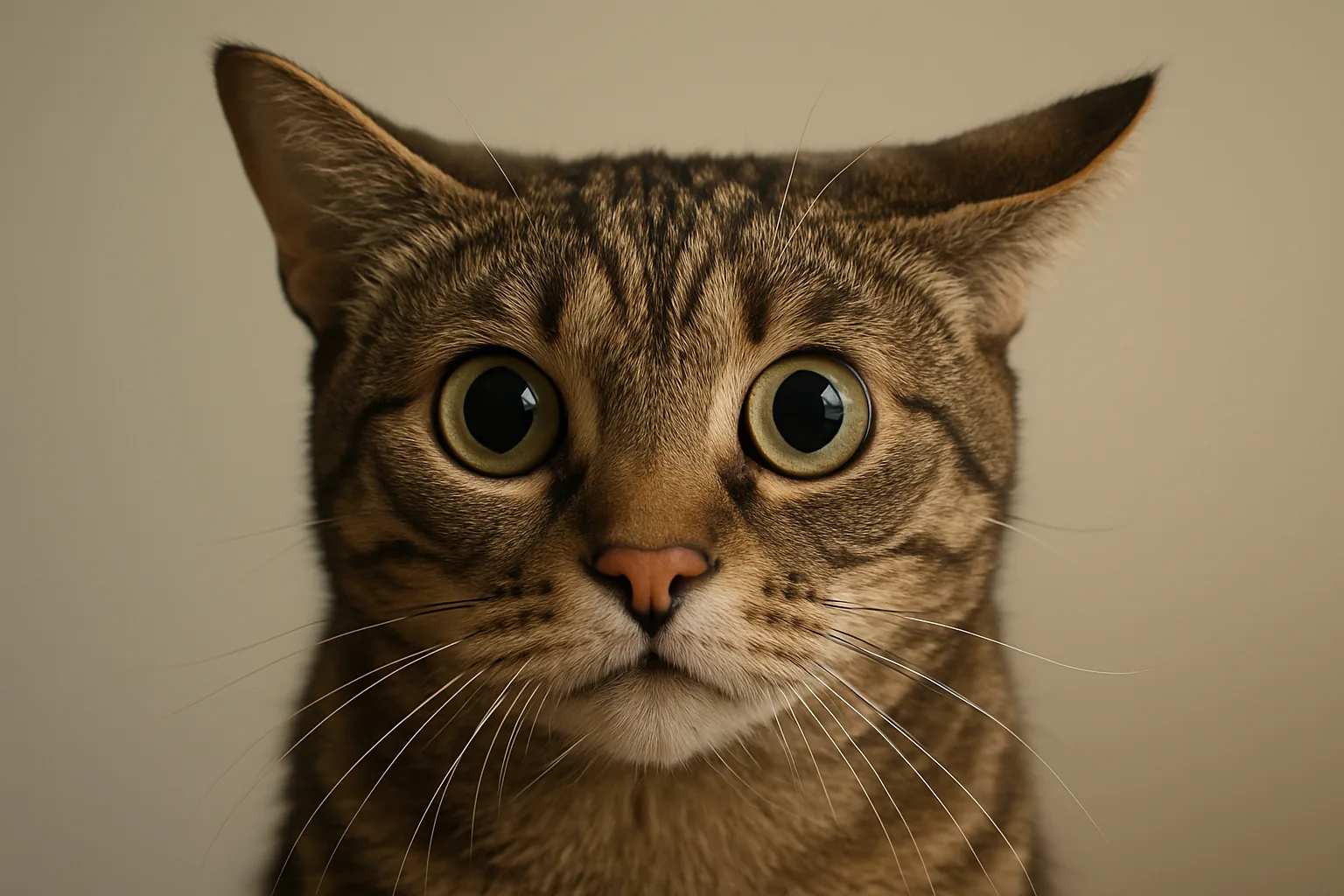
Eyes and pupils. A relaxed cat has soft, almond-shaped eyes and normal pupils. Wide, round, fully dilated pupils in ordinary room light signal fear or high arousal. A hard, unblinking stare is tension, not affection. The opposite, a slow blink, is one of the few clearly positive signals. A 2020 study by Humphrey and colleagues found that cats narrow their eyes and half-blink more in response to a person’s slow blink, and seem to treat it as friendly communication. A cat that slow-blinks back at a staff member is telling you it feels reasonably safe.
Ears. Forward or gently swiveling ears are normal. As stress rises, ears rotate to the side into the “airplane” position, then flatten and pin back against the skull. Pinned ears, especially paired with a lowered head, mean a frightened cat that may lash out if pushed.
Tail. On the ground, a tail tucked tight against a crouched body is a classic anxious posture. A tail thrashing or thumping side to side is irritation building toward a swat, very different from a dog’s happy wag. Fur standing up along the tail and spine (piloerection) is a cat trying to look bigger because it feels threatened.
Body posture. The compact “loaf,” with paws tucked under, can mean contentment in a familiar home but often reads as guarded in a strange suite. Watch instead for the tense crouch with the body held low and the muscles ready to move, or the frozen cat pressed into a corner. A cat that rolls and shows its belly in a relaxed sprawl is comfortable. A cat on its back with claws out and ears flat is defensive, not inviting a rub.
Voice. Vocalization cuts both ways. A normally chatty cat that goes silent may be shutting down. Growling, hissing, and low yowling are clear distress and warning. Persistent loud meowing can signal a cat that is frustrated or calling for its owner, the feline edge of the loneliness that PetMD and others describe in cats left without their people.
The Slower Signals: Litter Box and Appetite
Body language changes by the minute. The next tier of signals unfolds over hours and days, and these are the ones that most often tip a stay from stressful into medical.
Appetite is the big one. Stress suppresses a cat’s drive to eat, and a boarding cat that stops eating is both telling you it is not coping and putting itself at real physical risk, since cats that go without food can develop serious liver trouble within a few days. We go deep on the appetite-and-weight link in how stress drives cat colds at boarding, where daily weighing turns out to be one of the cheapest early-warning tools a facility has. Litter box behavior matters too. Diarrhea, straining, or a cat that stops using the box can all reflect a gut reacting to stress. And over-grooming, a cat licking one patch of belly or leg until the fur thins, is a self-soothing behavior that points to sustained anxiety rather than a passing fright.
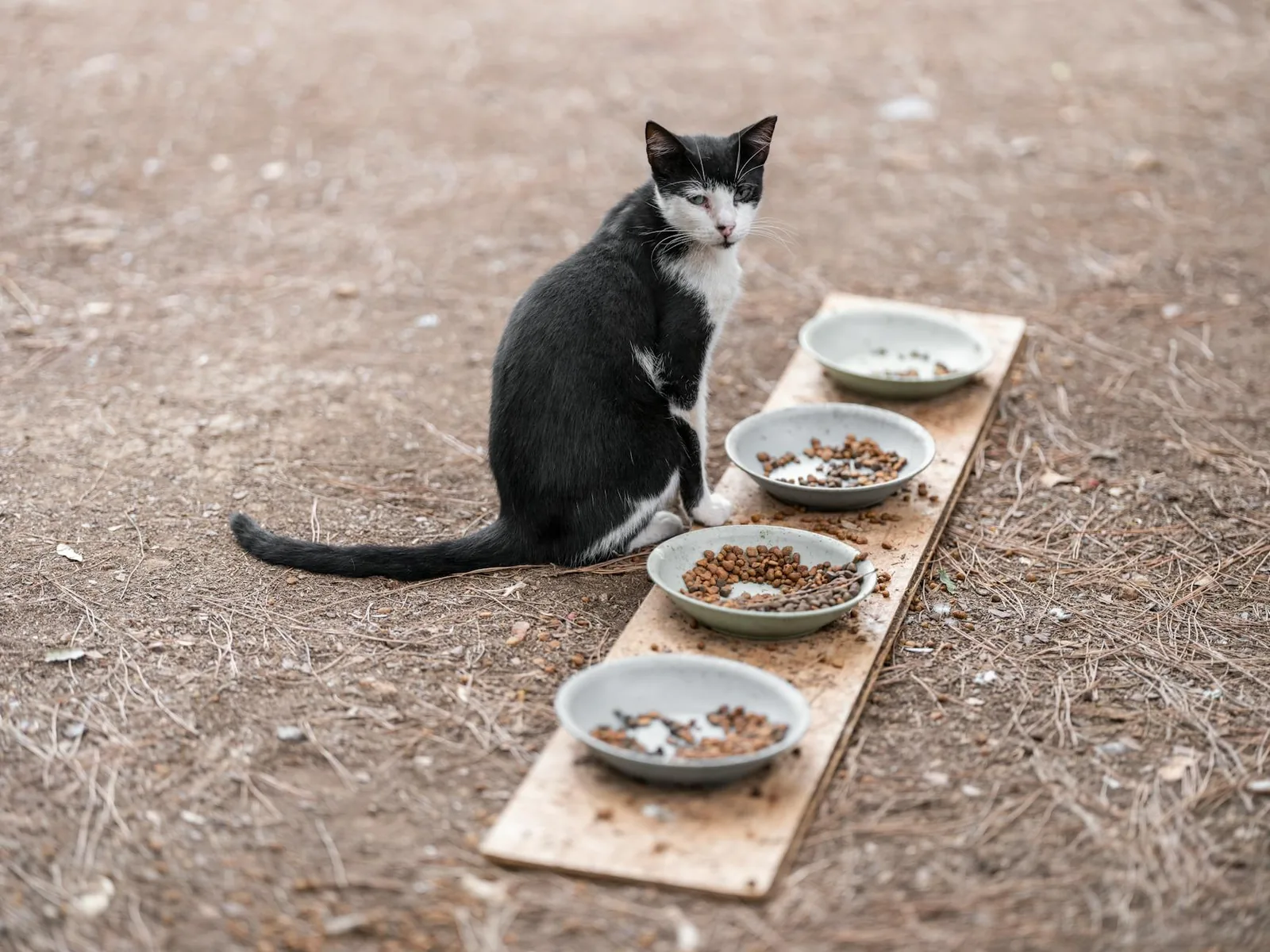
These slower signals deserve a written log. A facility that records food eaten, litter output, and a daily weight will see a downward trend long before the cat looks visibly sick.
What to Do in the Suite
Reading the signals is only useful if it changes something. When a cat is climbing the stress ladder, the first move is to change the room, not to handle the cat more.
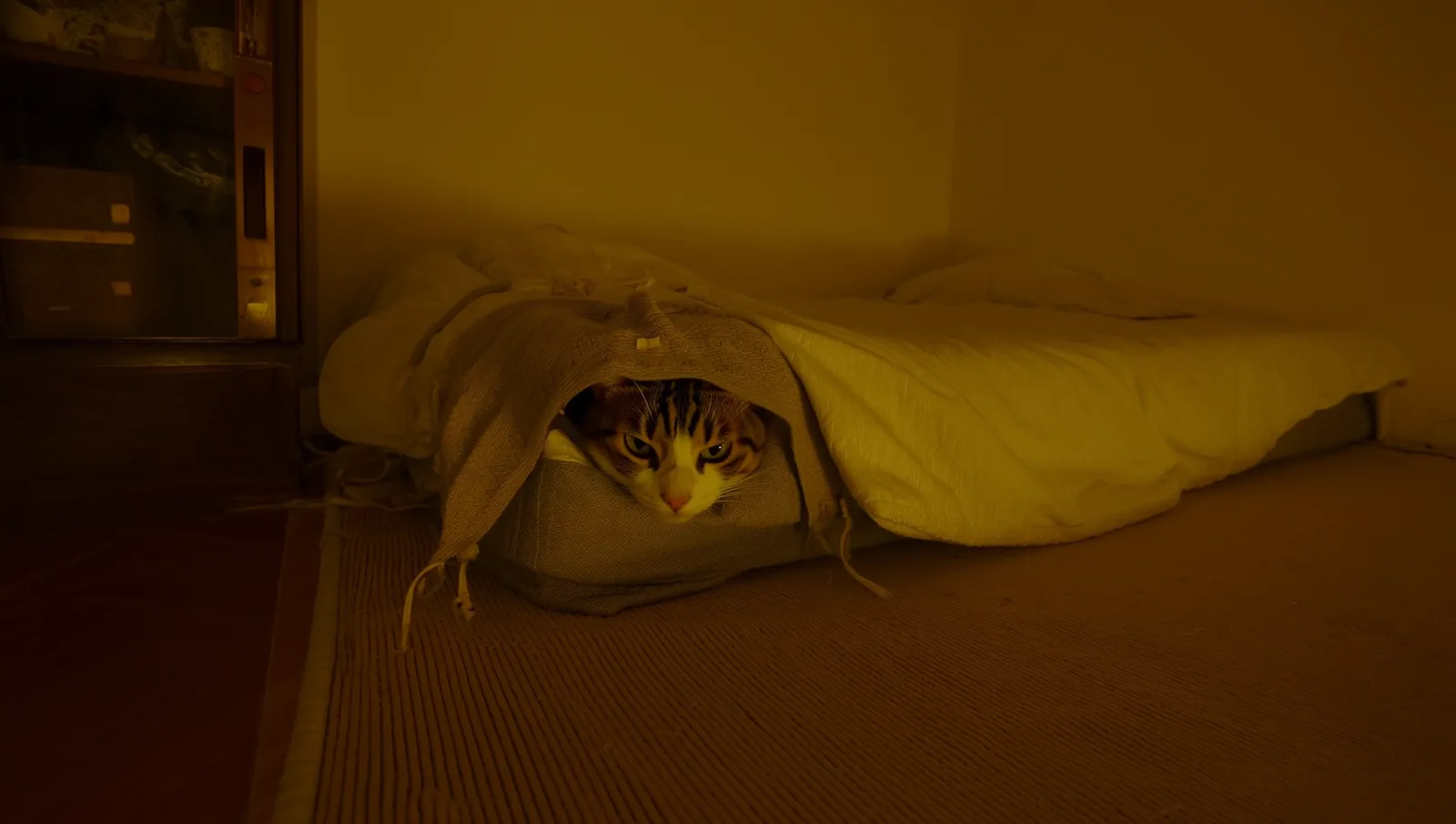
- Give it somewhere to hide. A covered bed, a box, or a raised shelf lets a cat feel concealed, and a cat that can hide can calm down. Vertical retreat space, a high perch away from foot traffic, helps a cat survey the room from a position of safety.
- Lower the sensory load. Soften the lighting, cut the noise, and place an anxious cat well away from busy walkways and from any line of sight to dogs. Cats should always be boarded separately from dogs.
- Try a pheromone diffuser, with realistic expectations. Synthetic feline facial pheromones may take the edge off for some cats, though the evidence for them as a population-wide fix is weak, so treat them as a small adjunct rather than the main intervention.
- Adjust how staff approach. The AAFP and ISFM feline-friendly handling guidelines are clear here. Move slowly, avoid looming or staring directly, let the cat set the pace, and offer a slow blink rather than a reaching hand. A familiar blanket or a worn t-shirt that smells of home, sent along by the owner, anchors the cat in the strange space.
When to Call the Owner or the Vet
Some signals are not a cue to adjust the lighting. They are a cue to pick up the phone. A cat that has not eaten for roughly 24 hours, is losing weight steadily, shows signs of illness such as discharge from the eyes or nose, or has tipped into genuine aggression that makes safe care difficult, needs a conversation with the owner and often the veterinarian. The threshold should be agreed in advance, before drop-off, so nobody hesitates in the moment. For older cats, who have less reserve and often a chronic condition in the background, that threshold sits lower still, as our guide to boarding a senior cat explains. Loss of appetite in any cat is not a wait-and-see situation for long.
What Owners Can Do Before the Stay
Much of a cat’s stress is set before it ever reaches the suite. Choosing well is half the work. A cat-only or cat-separated facility removes the loudest stressors, and the questions in our guide to choosing the right cat hotel help you judge whether the staff actually understand feline behavior. Bring familiar-smelling items, send the cat’s usual food, and consider a single trial overnight before a longer trip so the first separation is short. Ask the facility how it monitors appetite and weight, and how it would reach you if something changed.
A cat will rarely tell you in plain words that it is struggling. It tells you in the angle of its ears, the size of its pupils, the food left in the bowl, and the corner it will not leave. Owners and operators who learn that quiet language catch trouble while it is still small, and that is what turns a boarding stay into a safe one.
Further reading (sources)
- PetMD on whether cats get lonely when their owners travel
- Catster for vet-approved ways to help a cat live a longer, lower-stress life
- Kessler and Turner with the seven-point cat stress score used in catteries
- Humphrey and colleagues on the slow blink as positive cat-to-human communication
- AAFP and ISFM for feline-friendly handling and reading fear, anxiety, and stress