Does L-Lysine Actually Prevent Cat Colds? The Evidence For and Against a Popular Boarding Supplement
Published on June 16, 2026
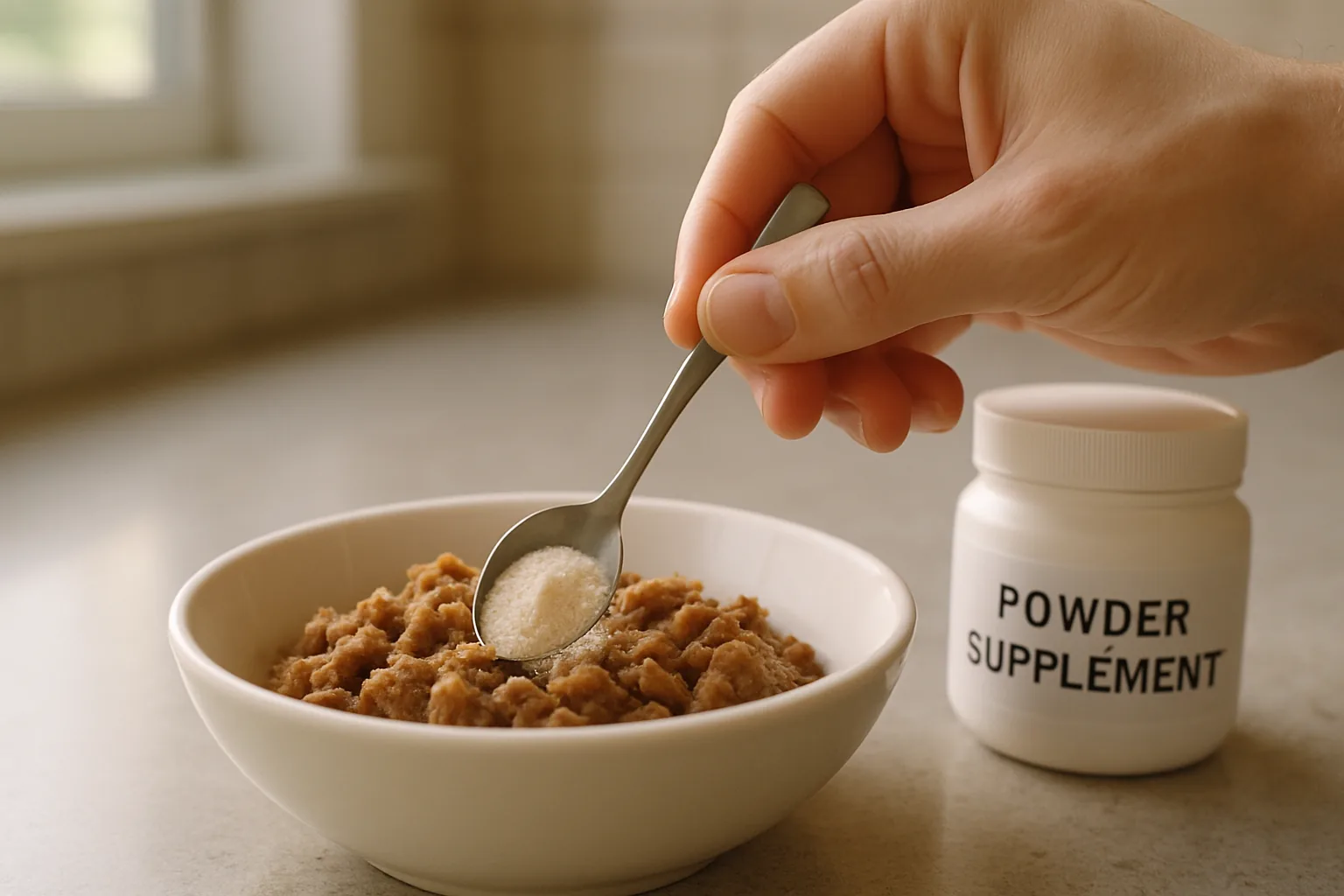
A small tub of L-lysine powder, or a tube of lysine paste, is one of the most common things you will find in a boarding cattery’s intake kit. For years it has been treated almost as a default, sprinkled into food at check-in the way you might hand out a welcome mint. The logic sounds reasonable: lysine is cheap, it is an amino acid cats eat anyway, and it is supposed to keep feline herpesvirus, the main cause of cat colds, from flaring up under the stress of boarding. So does it actually work?
The honest answer, after two decades of research, is that the evidence has turned against it. This is a closer look at where the lysine idea came from, the studies that seemed to support it, the studies that did not, and what a cattery should be doing instead.
The Theory: Why Lysine Was Supposed to Work
Most cat colds are caused by feline herpesvirus type 1 (FHV-1) and feline calicivirus. FHV-1 is the relevant one here, because like all herpesviruses it stays in the body for life and reactivates under stress, which is exactly what boarding delivers.
The lysine theory rests on a piece of biochemistry borrowed from human cold-sore research. Herpesviruses need the amino acid arginine to build new viral particles. Lysine and arginine compete for the same absorption and metabolic pathways, so the thinking went that flooding a cat with extra lysine would crowd out arginine, starve the virus, and reduce both shedding and symptoms. It is a tidy story, and it spread fast. In one survey of feline veterinary practices, more than 90% recommended lysine supplementation (Bol & Bunnik, 2015).
There is one problem with the tidy story, and we will come back to it: nobody has reliably shown that giving a cat extra lysine actually lowers its arginine in the first place.
The Case For: Early Studies That Looked Promising
The enthusiasm was not baseless. The earliest work was genuinely encouraging. In a small, tightly controlled experiment, cats given lysine before being deliberately infected with FHV-1 developed less severe conjunctivitis than cats given a placebo (Stiles et al., 2002). The cats were housed individually, dosed by hand twice a day, and watched closely. Under those conditions, lysine looked like it helped.
That is the study people remember, and it is the foundation of lysine’s reputation. The catch is that those conditions (one cat, a guaranteed dose, controlled timing) look nothing like a busy cattery or shelter.
The Case Against: What Happened in Real Catteries and Shelters
When researchers tested lysine in the messy reality of group housing, the benefit evaporated.
A shelter trial gave 144 cats a daily dose of lysine in canned food and compared them with 147 cats that got none. There was no difference between the groups in conjunctivitis or upper respiratory infection, on any measure (Rees & Lubinski, 2008). The authors concluded that shelters would be better off spending their resources on reducing stress and tightening infection control than on lysine.
A larger study went further and found a signal that lysine might make things worse. Researchers fed 261 shelter cats either a normal diet or a high-lysine diet for four weeks. Not only did the high-lysine group fail to do better, more of them developed moderate to severe disease, and FHV-1 DNA was detected more often in the lysine-fed cats at certain points (Drazenovich et al., 2009). A high-lysine diet, in other words, was associated with more shedding and more illness, not less.
This is the opposite of what the supplement is sold to do, and it is not a one-off. A systematic review that pooled the trials noted cases where ocular and respiratory disease were more common among lysine-fed cats (88%) than controls (60%) (Bol & Bunnik, 2015).
Why the Results Diverged
How can one study show benefit and others show nothing, or harm? A few reasons:
- Individual dosing versus the food bowl. The promising study hand-dosed each cat on a schedule. In a cattery, lysine is usually mixed into shared or free-choice food, so the stressed cats that eat poorly (the ones most at risk) get the least.
- Controlled infection versus real life. Experimental studies infect cats on a known day, so timing the lysine is easy. In a boarding setting, exposure and reactivation happen on no schedule at all.
- The endpoint measured. Some studies tracked viral shedding, others tracked visible illness. The two do not always move together.
- The mechanism may not exist in cats. This is the big one. The whole theory depends on lysine lowering arginine, but the systematic review found no evidence that it does. In the trials, plasma arginine in supplemented cats simply did not drop (Bol & Bunnik, 2015). If lysine does not move arginine, the proposed antiviral effect has nothing to stand on. And because cats are exquisitely sensitive to low arginine, deliberately lowering it would be dangerous anyway.
The Verdict
In 2015, a systematic review gathered the laboratory work, the cat trials, and the parallel human research and reached a blunt conclusion. The authors recommended “an immediate stop of lysine supplementation because of the complete lack of any scientific evidence for its efficacy” (Bol & Bunnik, 2015). That remains the best-evidence position today.
To be clear, lysine is not a poison, and a cat that has eaten it has not been harmed by your cattery. But it is not the free insurance policy it is marketed as, and the data showing it can coincide with worse outcomes in group settings means “it can’t hurt” is no longer a safe assumption.
What This Means for Boarding Your Cat
If lysine is not the answer, what is? The same studies that cleared lysine pointed straight at the things that genuinely reduce cat colds, and none of them come in a tub.
- Vaccination first. Current FVRCP is the single most important protection against the viruses behind cat colds. Our guide to cat boarding vaccinations covers what to confirm and when.
- Lower the stress. Because stress is what reactivates FHV-1, calm handling, hiding spots, vertical space, and quiet matter more than any supplement. This is not a soft nicety, it is the actual mechanism of prevention, as we explain in how stress drives cat colds at boarding.
- Screen and isolate. Good intake screening and fast isolation of sick cats stop one sniffle from becoming an outbreak. These are core pillars in our complete URI prevention guide.
- Watch for early signs. The sooner a developing cold is spotted, the better the outcome. Knowing how to read your cat’s stress and illness signals helps you and your cattery catch trouble early.
Questions to Ask Your Cattery
If your facility still leans on lysine, that is not a dealbreaker, but it is a useful conversation starter. Ask:
- Do you rely on lysine, or on vaccination, ventilation, and isolation as your main defenses?
- What is your protocol if a cat starts sneezing or stops eating during a stay?
- How do you reduce stress for new arrivals?
A cattery that talks about airflow, screening, and stress reduction understands where cat colds actually come from. One that points to a tub of lysine as its main safeguard has been sold the same tidy story everyone else was.
Further reading (sources)
- Rees and Lubinski on why oral lysine failed to prevent infection in a shelter population
- Drazenovich and colleagues for the dietary lysine trial that found more disease, not less
- Bol and Bunnik with the systematic review that recommended stopping lysine altogether
- dvm360 covers whether lysine helps or hinders feline herpesvirus in practice