Why Cat-Only Boarding Facilities Are on the Rise
Published on August 20, 2026
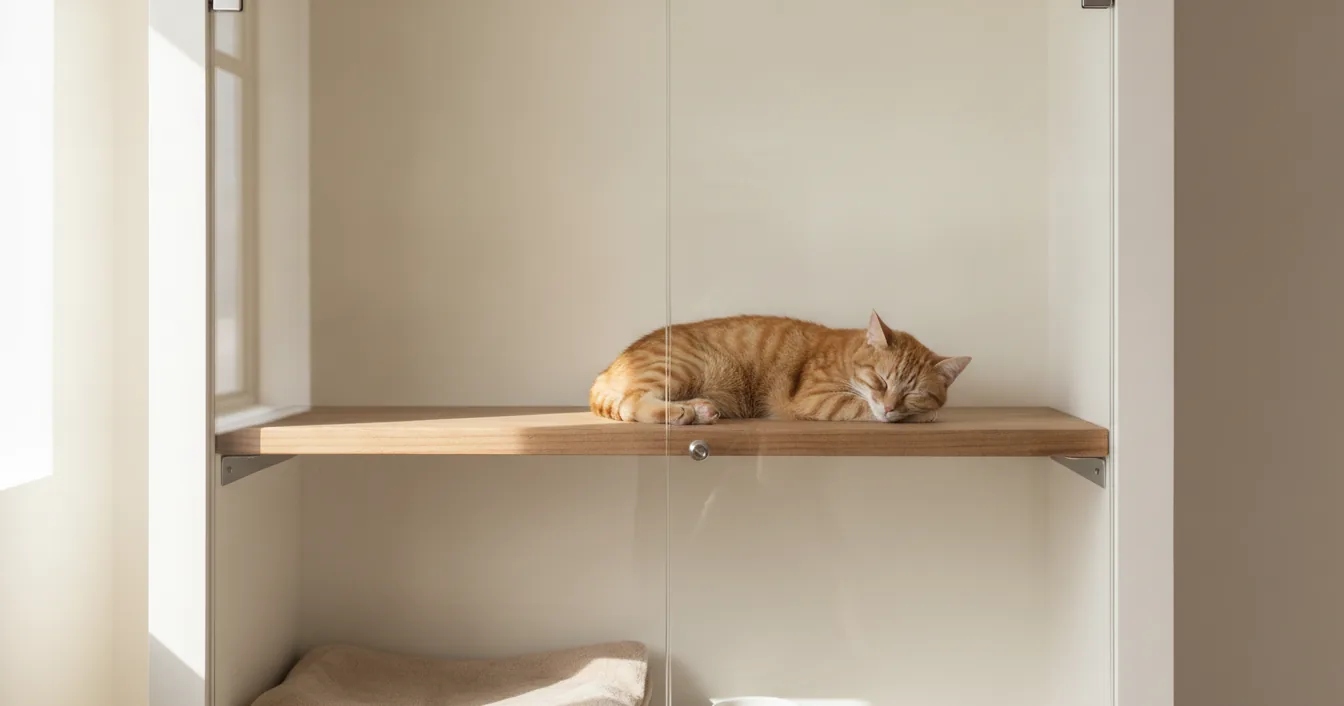
On April 6, 2026, a cat-only boarding hotel called Whiskers Lodge opened on Aurora Avenue in Seattle’s Fremont neighborhood. The owner, Kip Brookbank, left a career at Amazon, Microsoft, and Xbox to build it, bringing 17 years of hands-on cat care with him. The layout says a lot about where this corner of the industry is heading: two separate “pods” of suites, Whispering Cedar and Ginkgo Perch, each with its own dedicated enrichment room that cats use one family at a time. Unfamiliar animals are never mixed.
Ten years ago, a facility like that would have been an outlier. Today it is part of a visible pattern. Cat-only boarding has gone from a niche within a niche to a category that owners actively search for, and the growth is not driven by luxury marketing. It is driven by a fairly simple realization: the things that make a boarding kennel work for dogs are the same things that make it miserable for cats.
Cats Used to Be an Afterthought in the Boarding Business
For decades, cat boarding was something dog kennels did on the side. The cats went in a back room, or a converted office, or a bank of small cages along one wall of a building otherwise organized around canine guests. It was not malice. Dogs were the volume business, and the cats came along as a convenience for two-pet households.
What has changed is that cat-only operators now exist in real numbers, including in ordinary midsize markets rather than just major metros. A 2024 local roundup of boarding options in Thurston County, Washington, a county of roughly 300,000 people, listed four separate cat boarding options in a single column: Kitty Komfort Inn, advertising a “dog free” environment with individually vented themed rooms and heated tiled windowsills; The Cats Pajamas, a cat-only facility in Olympia operating since 2014 with a daily cat atrium rotation; PNW Cat Boarding, indoor cats only; and one mixed facility that houses cats in a separate room with its own enclosed outdoor space. When a county that size supports three dedicated cat operations and forces the fourth to compete on separation, the category has stopped being an experiment.
Why Separating Cats From Dogs Is Not a Style Preference
The case for cat-only facilities rests on feline sensory biology, not on aesthetics.
Cats hear into the ultrasonic range, well past 60 kHz, which is far above what humans register and meaningfully above dogs. A kennel that sounds noisy to you is a genuinely hostile acoustic environment to a cat. Sustained barking in kennel settings has been measured above 100 decibels, and that noise does not stay politely in the dog wing. It travels through shared walls, shared ductwork, and shared corridors.
Then there is the part owners tend to miss. A cat is both a predator and a prey animal, and its entire stress-coping repertoire is built around concealment and control of territory. A dog under stress often escalates outward, barking or pacing. A cat under stress withdraws: it stops eating, stops using the litter box normally, stops grooming, and presses itself into the back of the enclosure. Because the response is quiet, it is easy to mistake for a cat that is settling in. It is usually the opposite. If you want to read those signals accurately, we cover them in detail in our guide to feline stress signals at boarding.
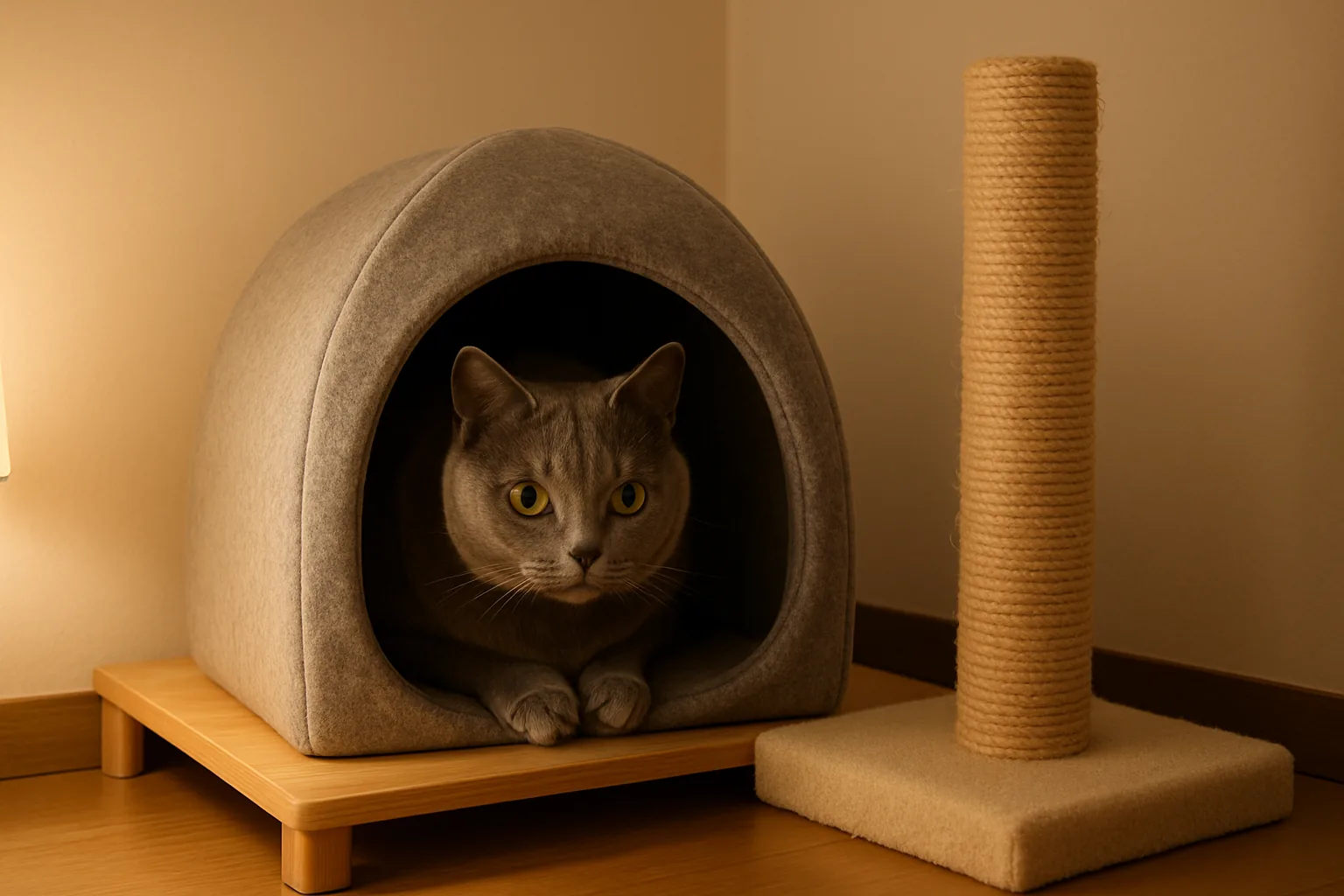
Scent matters as much as sound. Cats navigate and reassure themselves through smell, and a facility carrying dog odor in the air handling and on staff clothing tells a boarding cat, continuously, that a predator is nearby. That is a background stressor no amount of enrichment programming can cancel out.
The stakes are not just emotional comfort. Sustained stress raises cortisol, cortisol suppresses immune function, and immunosuppressed cats shed and catch respiratory virus more readily. The link between stress and illness at boarding is well documented, and we walk through the research in how stress drives cat colds at boarding. Reducing ambient stress is an infection control measure, not a spa amenity. As a firm rule, cats should never be housed where they can see, hear, or smell dogs.
What Cat-Only Design Actually Looks Like
Purpose-built cat facilities share a recognizable design vocabulary, and it differs from dog boarding in almost every dimension.
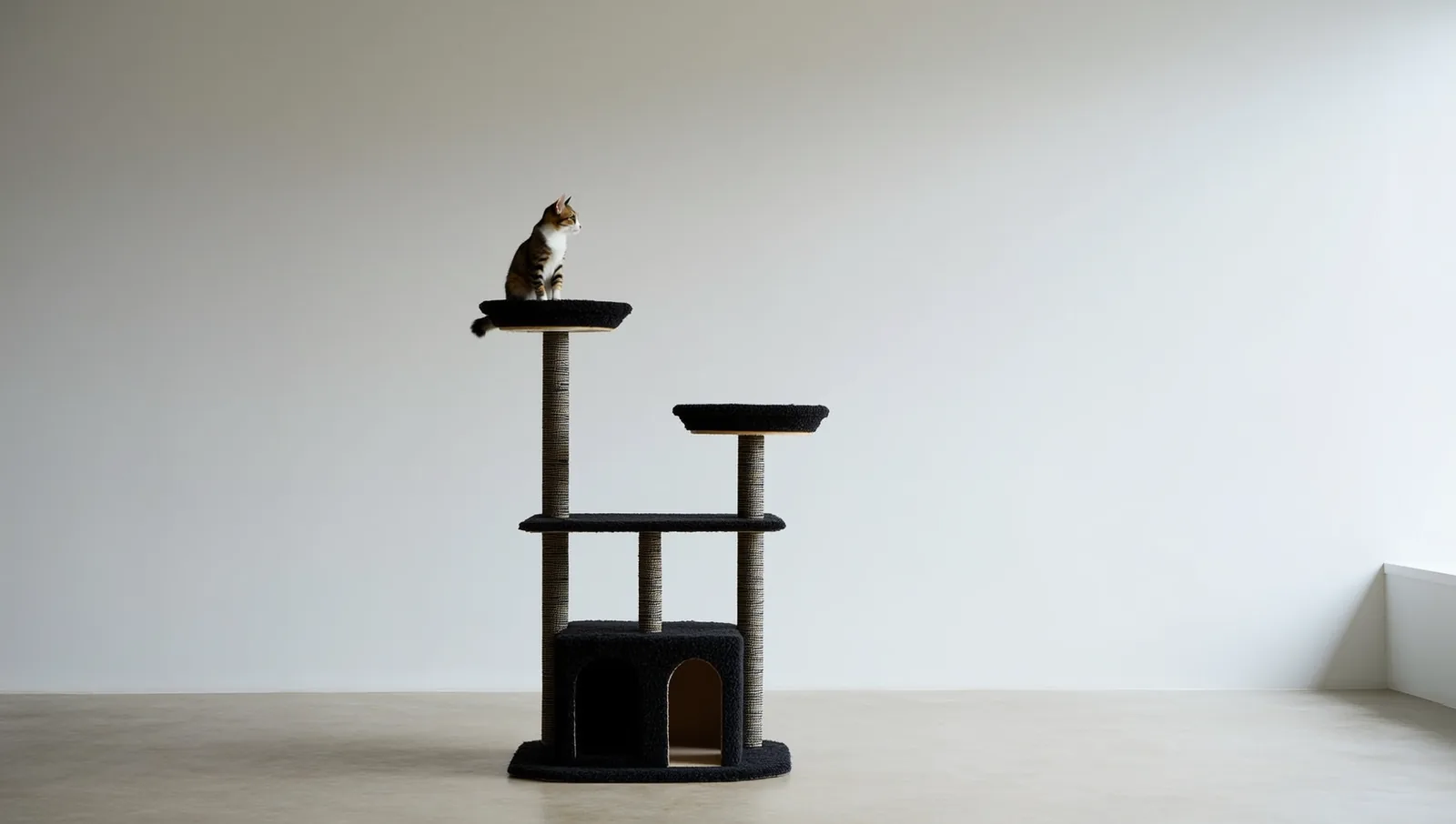
- Vertical space instead of floor space. Cats measure territory in height, not square footage. A good suite gives a cat at least two and often three levels, with a high perch that lets it survey the room from above. A tall narrow suite beats a wide flat run for a cat every time.
- A guaranteed hiding option. A covered bed, a box, a partly enclosed shelf. Research on shelter cats consistently shows that access to a hiding place lowers stress scores and shortens the adjustment period. Removing a frightened cat’s ability to hide does not make it braver, it makes it worse.
- Broken sightlines. Cat-only builders deliberately prevent cats from staring at each other. Frosted panels, offset suite fronts, and solid dividers between neighbors are all standard, because forced eye contact with a stranger is a stressor for a territorial species.
- Separation inside the suite. Food, water, litter, and the sleeping area need real distance from one another. Cats will not eat next to their toilet, and a suite that forces the issue is a suite where cats stop eating.
- Individual ventilation. Per-suite venting, which Kitty Komfort Inn specifically advertises, is one of the strongest infection control features a cattery can have, because it stops shared air from carrying respiratory pathogens down a row of cats.
- Quiet zones and sound treatment. Soft surfaces, sound-absorbing panels, and physically separated pods keep the noise floor low. The pod structure at Whiskers Lodge is a version of this: smaller clusters of cats mean fewer neighbors and less cumulative noise.
- Pheromone support. Synthetic feline facial pheromone diffusers in suite areas and enrichment rooms are close to standard practice in cat-only facilities now.
- Enrichment rooms used one household at a time. The shared playroom model borrowed from dog daycare does not transfer. Cat-only facilities rotate single cats or single families through the enrichment space and sanitize between uses.
The Operating Habits That Come With the Building
Design is the visible half. Protocols are the other half, separating a serious cat-only operation from a well-decorated one.
Whiskers Lodge is a useful worked example: shoe coverings between suites, full sanitizing of enrichment areas between each use, protocols built with input from a local advisory circle that includes veterinary professionals, and a formal partnership with a veterinary clinic about ten minutes away, with priority booking so clients can stay current on FVRCP and rabies. Those are unglamorous operational details, and they are exactly what you should be listening for on a tour.
Cat-only staffing also tends to be different. When a team handles only cats all day, it gets fluent in feline body language, low-stress handling, and the early warning signs that a cat is decompensating rather than adjusting. That fluency is what catches a stay before it turns into a problem, which is the same skill set behind managing house soiling, aggression, and other boarding behavior problems.
Why the Shift Is Accelerating Now
Several trends are stacking at once. Cat ownership has grown while apartment living has made cats the more practical pet for many households. Fear-free and low-stress handling has moved from a specialist interest to a mainstream expectation, which reframed the mixed kennel as a compromise rather than a default. Owners have become more willing to pay for a stay that visibly reduces stress, and the operators serving them are increasingly career changers with real capital, like Brookbank, rather than hobbyists adding a few cages to an existing kennel. Webcam check-ins and Instagram accounts have made the difference between a cage bank and a cat suite legible to buyers who have never toured a facility.
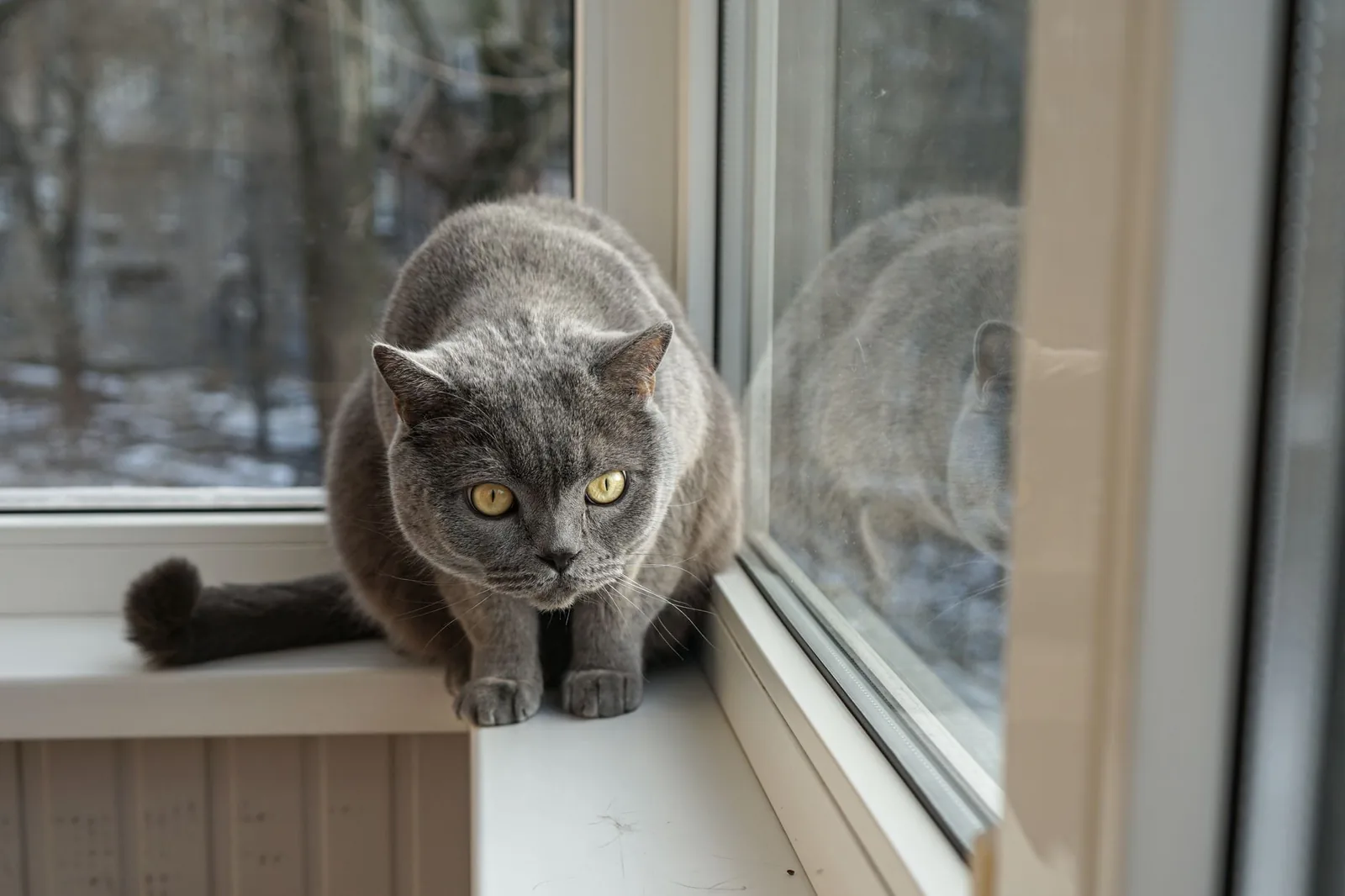
There is a business reason too. Cat-only is a viable specialization with lower startup costs than a dog kennel: less land, no outdoor runs, fewer noise issues to manage with neighbors, and a footprint that fits an urban commercial unit. We cover that math in the founder’s playbook for starting a cat hotel.
How to Tell “Cat-Only” From “We Also Take Cats”
The label has become a selling point, which means it is now worth verifying. Three questions do most of the work.
First, ask what shares the air. A separate room means very little if it shares an HVAC return with the dog kennel. Ask directly whether the cat area has its own ventilation, and ideally its own suite-level venting.
Second, walk the route your cat will actually take. If the carrier passes through a lobby full of dogs at drop-off, your cat has already had the worst part of its day before the suite door opens. Real separation usually means a separate entrance, or at minimum separate scheduling.
Third, stand still and listen. On any tour, stop talking for thirty seconds inside the cat area. If you can hear barking, so can every cat in the room, all day and all night.
A mixed facility with genuine separation, its own entrance, its own air handling, and staff who do not cross between species mid-shift can be an excellent choice. The point is not the label on the website. It is whether the separation is structural or nominal. Our broader checklist for touring and choosing a cat hotel covers the rest of what to look for once you are inside.
What It Costs, and Whether It Is Worth It
Cat-only facilities generally sit at the higher end of the boarding market, because purpose-built suites, per-suite ventilation, and one-family-at-a-time enrichment rotation all cost more per cat than a shared room. Expect to pay a premium over a cage in a mixed kennel, with the gap widening for deluxe suites and holiday dates. Our cat boarding cost guide breaks down the tiers and the add-on fees.
Whether it is worth the premium depends on your cat. A confident, sociable, previously boarded cat may do perfectly well in a mixed facility with a proper cat wing. A shy cat, a senior, a cat with a chronic condition, or a cat that has previously stopped eating at boarding is a much stronger candidate for a dedicated cat environment, and for a conversation with your vet before booking. Whichever you choose, send a blanket or a worn shirt that smells like home. Familiar scent is the cheapest stress reduction available, and it works in any building.
The rise of cat-only boarding is, in the end, a correction. The industry spent a long time housing a solitary, territorial, sound-sensitive, scent-driven species in buildings designed around a social, noisy one. Facilities like Whiskers Lodge are what it looks like when someone starts from the cat instead.
Further reading (sources)
- My Ballard on the opening of a cat-only boarding hotel in Seattle’s Fremont neighborhood
- The JOLT for a local roundup of dog and cat boarding options in Thurston County
- International Cat Care with guidance on what a well-run boarding cattery should provide
- Cat Chat on what to look for when inspecting a boarding cattery
- American Association of Feline Practitioners for the feline-friendly handling principles behind low-stress cat care