Filling Your Cattery: The Complete Marketing and Occupancy Guide for Cat Hotels
Published on September 13, 2026
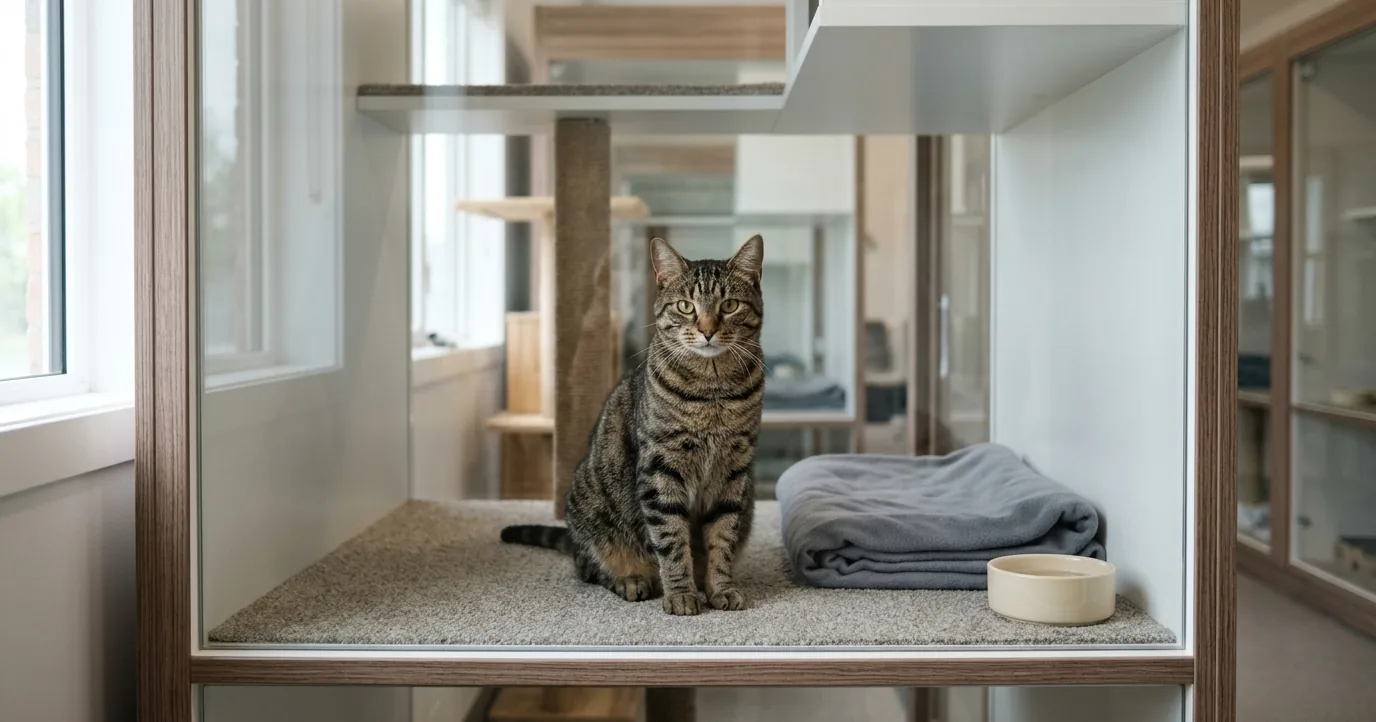
Most cat hotels are not built badly. They are built well and then sit half empty for a year longer than the founder budgeted for. Suite design, biosecurity, and fear-free handling get all the attention in this industry, and they should, because they are what keeps cats safe. But none of them put a cat in a suite. Demand does that, and demand in this business comes from a short list of channels that almost never includes the ones a new operator instinctively reaches for. This is the demand side of the job: how a cat-only facility goes from an empty calendar to a waitlist, and which levers actually move occupancy.
Occupancy Is the Only Number That Matters
Revenue in a cattery is suites times nights sold times your average nightly rate, and of those three, nights sold is the one you control weekly. Track occupancy as nights sold divided by nights available, monthly, and separate it into peak and off-peak. A facility running 85 percent in July and 30 percent in February does not have an occupancy problem, it has a February problem, and the fix for that is different from the fix for a flat year.
Two things follow from that. First, open with a suite count you can plausibly fill rather than the count that makes your spreadsheet look exciting. Ten full suites earn more than twenty-two half-full ones and are cheaper to staff. Second, treat the quiet months as a product problem. Midweek off-peak nights are the inventory to discount, bundle, or convert into daycare, never your holiday block, and a discount you would not be happy to see become your new normal rate is the wrong discount.
Local Search Does Most of the Work
Cat boarding has a tight catchment radius. Owners are not comparing facilities nationally, they are comparing the four within a tolerable drive of home on the morning they leave. That makes your Google Business Profile more valuable than your website, and both more valuable than any paid campaign you could run in year one.
Fill the profile out completely and keep it current: correct category, service area, real opening and closing hours including the drop-off and pickup windows, and thirty or more photographs of actual suites rather than stock cats. Answer the questions people post in the Q and A section yourself, because the vaccination policy question comes up constantly and a clear answer removes a booking objection before the call. Post when something changes, such as holiday availability closing.
On your own site, give each suite tier its own page with its own photographs and price, and publish your vaccination and medication policies as real pages rather than a downloadable PDF. Those pages are what rank for the long-tail searches that convert, because someone typing a policy question is already close to booking.
Drive time is a real business input, not a detail. When one Orange County operator opened a second location in 2026, part of the stated reasoning was simply that customers across the surrounding towns would no longer have to drive as far as the original site. You are competing on minutes as much as on amenities, so build your local pages around the towns inside your actual radius rather than the metro name.
The Review Flywheel
Reviews are the single highest-leverage asset a boarding facility has, because the thing a first-time customer is buying is trust in strangers with their cat. The flywheel is simple and most operators run it badly: ask consistently, ask at the right moment, never buy or gate.
The right moment is at pickup, when the cat has come home settled and the owner is relieved. Do not ask in that breath. Ask in a short follow-up message a day or two later, once the cat has eaten normally at home and the owner has something honest to report. Name the platform, give the link, and ask once. Never offer a discount in exchange, never screen for happy customers first, and never dangle a prize draw. Review gating is against Google’s policies and against most others, and the risk is not worth a handful of extra stars.
Respond to every review, particularly the bad ones, and respond like an operator rather than a brand. The two complaints you will see most are weight loss and a cat that came home sneezing. Both are largely predictable, both have real prevention protocols behind them, and a reply that explains your weighing schedule and your isolation procedure reads far better to the next reader than an apology template. Our URI prevention guide is the substance behind that reply, and a facility that can explain its own protocol in public tends to get the benefit of the doubt.
Vets and Groomers Are Your Best Referral Channel
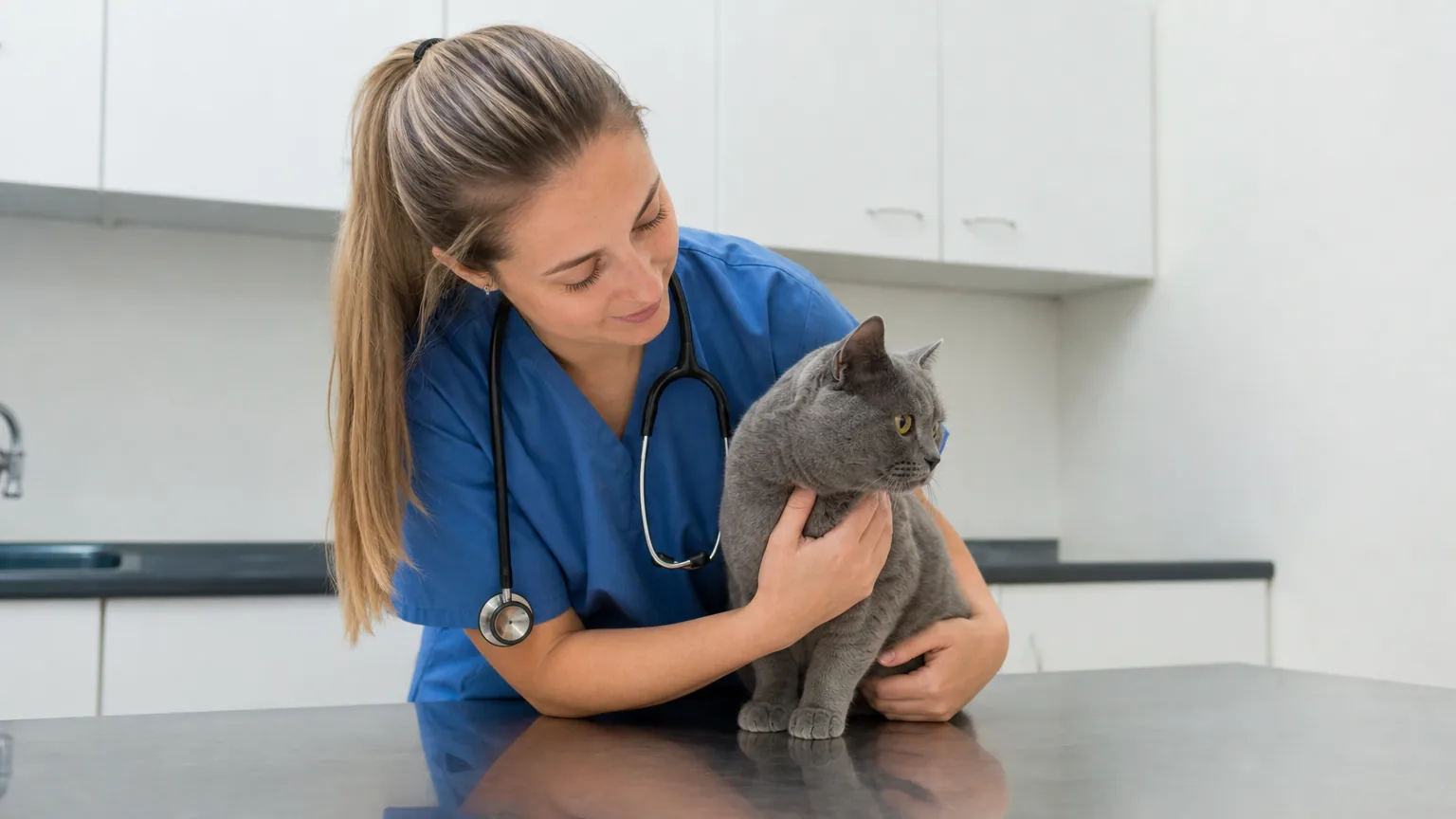
A referral from a veterinary clinic arrives pre-qualified in a way no advertisement does. The owner already trusts the recommender about their cat’s welfare, which is the exact trust you need to borrow.
Approach clinics as a business, not with a flyer. Bring the things a practice manager actually needs to hear before they put their name on you: your vaccination requirements, your isolation protocol and where the isolation room physically is, your escalation procedure when a cat stops eating or straining in the tray, who your own veterinary advisor is, and what your staff are trained in. Cornell’s Center for Veterinary Business and Entrepreneurship exists because practices are increasingly run as businesses rather than as clinics that happen to bill, and that is the register to speak in. A clinic referring to you is taking on reputational risk and solving a real problem, because clinics hate boarding healthy cats in a treatment environment and would rather send them somewhere feline-appropriate.
Then widen the list. Groomers, mobile vets, breeders, cat rescues, and relocation agents all touch cat owners at the moment boarding becomes relevant. Reciprocate genuinely by referring grooming and medical work out, and keep the relationship warm with occasional face time rather than a quarterly email. One good clinic relationship can be worth more than your entire ad spend.
The Tour Is Where the Booking Is Won
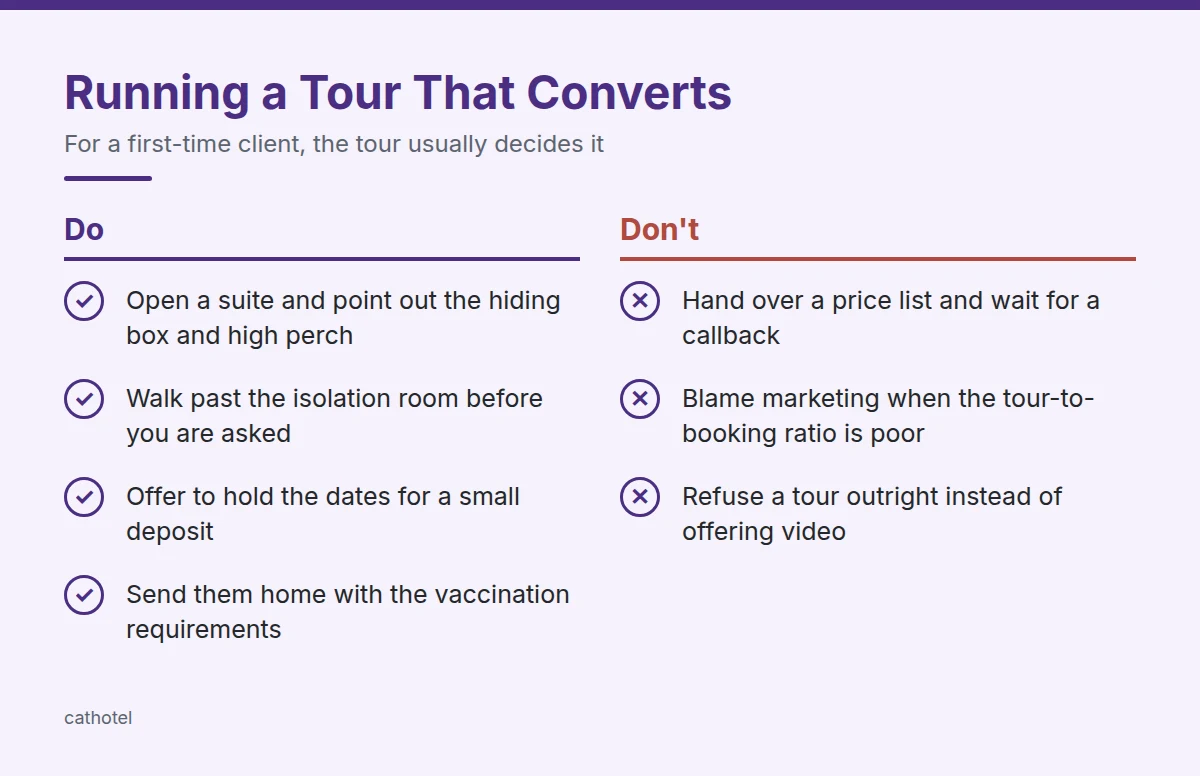
For a first-time client, the tour usually decides it. Track the ratio of tours to bookings, because if that number is poor the problem is your tour rather than your marketing, and you are burning expensive inquiries.
Owners arrive running a sensory checklist whether they know it or not, and it is close to the one in our guide to choosing the right cat hotel. Is it quiet? Can they hear dogs? Does it smell of urine or of disinfectant laid over urine? Do the suites have somewhere to hide and somewhere high to sit? Do the resident cats look relaxed? Show rather than tell. Open a suite, point out the hiding box and the vertical perch, walk them past the isolation room instead of waiting to be asked about it, and let them watch a staff member handle a cat.
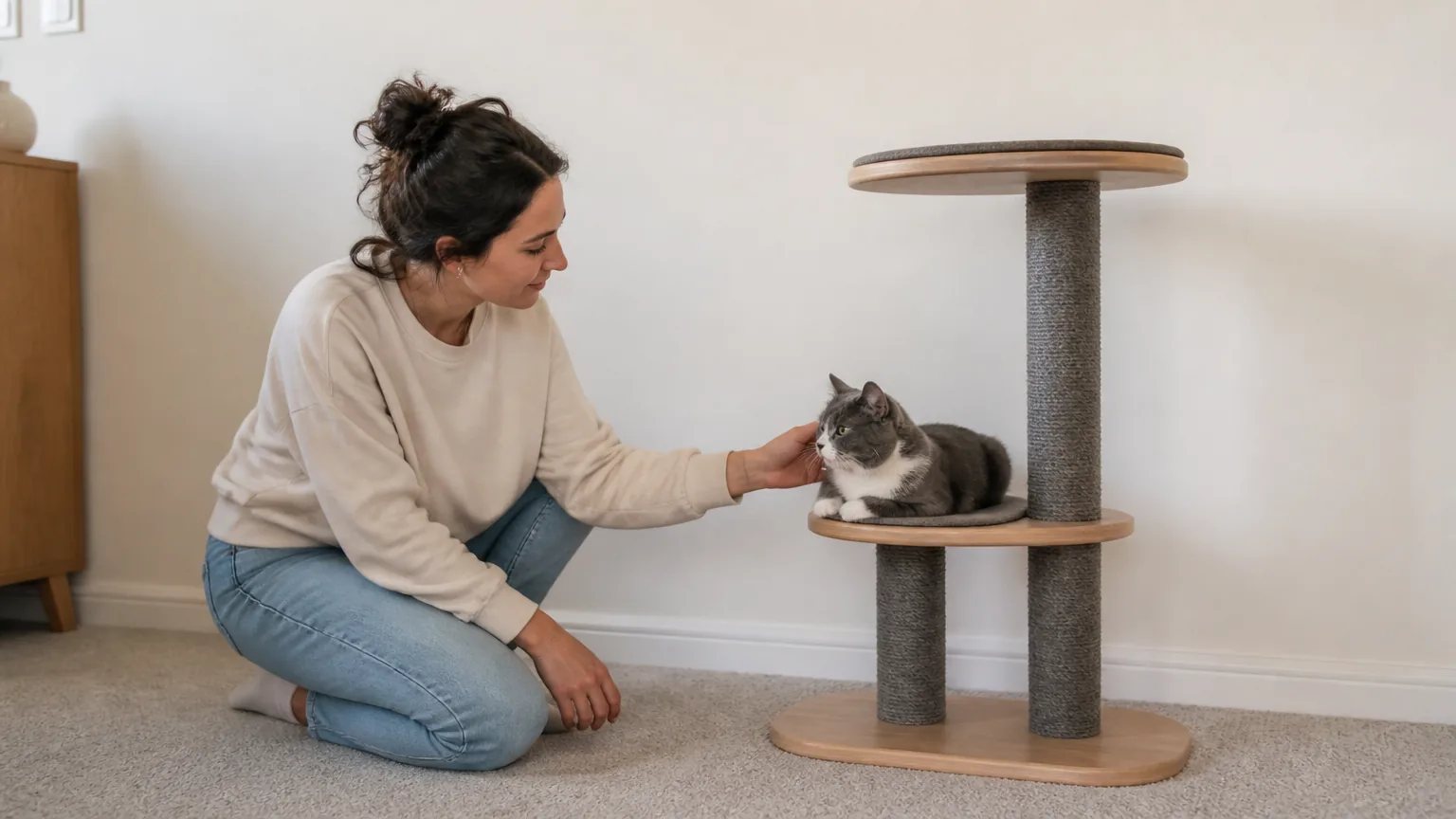
Then take the booking. Most operators tour well and close badly, letting the owner leave with a price list and a promise to think about it. Have availability open on a screen, offer to hold the dates for a small deposit, and put the vaccination requirements in their hand on the way out so the next step is concrete. If your care routine means you cannot tour during quiet hours, say so and offer a short video walkthrough instead, which converts better than a refusal.
Repeat Clients Are the Actual Growth Engine
New bookings are expensive and repeat bookings are nearly free, so the number that decides whether year three is comfortable is your repeat rate. The largest UK franchise network, founded in 2010 by an owner who could not find decent care for her own cat, now runs 26 locations and reports hotels booked as much as 18 months ahead. Established US operators report long-standing clients who have driven an hour or more, dozens of times, over several years. That is what a mature demand base looks like, and it is built one second stay at a time.
Ask for the rebooking at pickup, while the owner is still holding the relief. Travelers usually know their next trip roughly, and a held date with a deposit beats a marketing email in November. Prepaid night packages and simple membership tiers work well here because they pull cash forward and lock the client in, and they price honestly against the discount you would otherwise give away in a quiet week.
Two funnels deserve specific attention. Daycare converts cautious owners into overnight clients by letting the cat have a short, successful first visit, which is the cheapest trust-building you will ever run. And kittens are a decade-long relationship started at the right moment: a facility with a sensible young-cat policy, of the kind we cover in our guide to boarding a kitten, earns the family’s boarding, daycare, and eventually senior-cat business.
Market the Things Nobody Else Can Copy
Every cattery website claims loving care in a home-from-home environment, which means none of them do. What differentiates is specific, checkable, and usually about people.
Cat-only is the strongest claim you have, and it is a welfare argument rather than a luxury one, laid out in our piece on why cat-only boarding is on the rise. Owner presence is the next strongest. One Illinois kennel built its cat boarding announcement entirely around the fact that the owners live on site, are both Certified Pet Technicians, and bring more than forty years of combined experience, which is a far better claim than any adjective. Founder stories work for the same reason, which is why local press keeps writing them, right down to the operators whose origin story started in a basement.
Name your credentials, name your staff, name your veterinary advisor, and put a real number on your staff-to-cat ratio. Webcams and daily updates belong in this section too, not because they are luxuries but because they answer the question every boarding client is actually asking, which is whether their cat is all right right now. Operators put live check-ins alongside their themed suites for exactly that reason.
A Realistic Ramp
Opening week is the one moment local press will write about you unprompted, so use it: a chamber of commerce ribbon cutting, plus a soft-opening week at a discount for friends, family, and staff pets to season your reviews with real stays. Expect occupancy to climb slowly through the first year, peaking at holidays and summer, and expect the referral and repeat channels to overtake search somewhere in year two. When you are turning bookings away in peak weeks and your waitlist is consistent rather than seasonal, that is the signal to add suites or a second site, which is precisely the read behind both franchise growth and second-site openings across the sector. Everything upstream of that, the business plan, the licensing, the build, sits in our founder’s playbook.
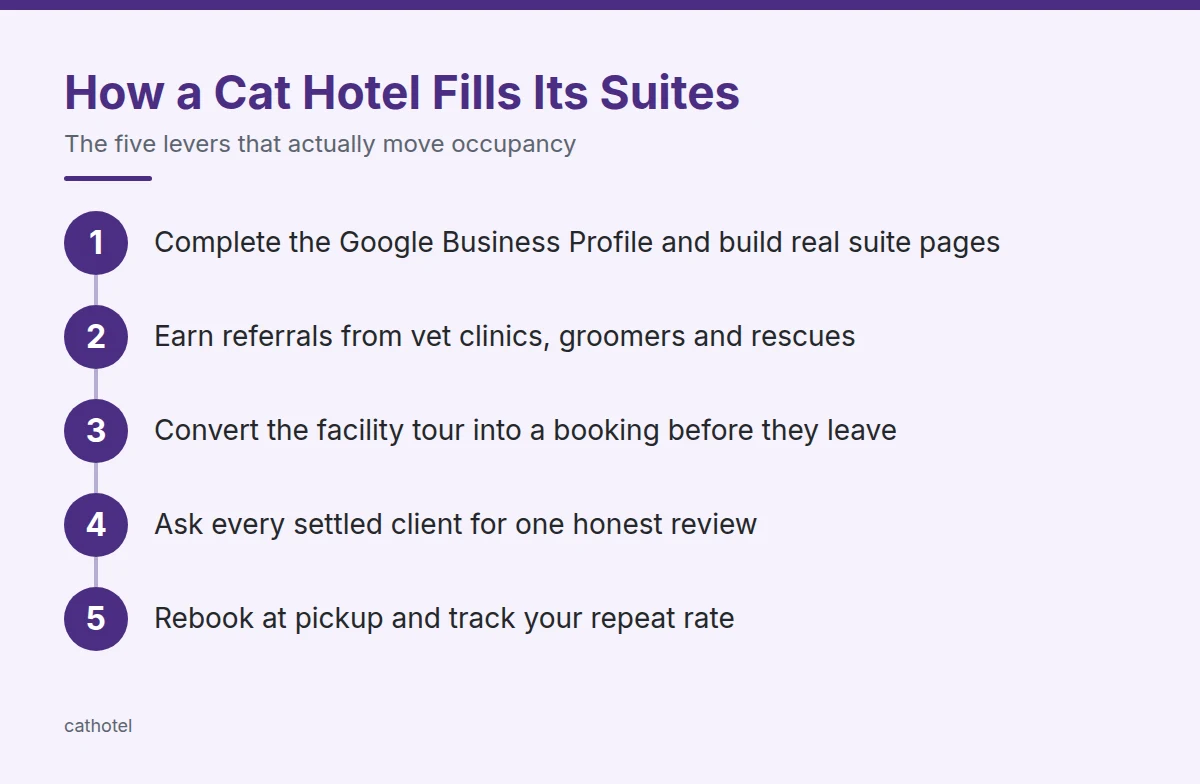
Keep fixed costs lean until the demand is proven, and put the marketing hours where the evidence points: the profile, the reviews, the clinics, the tour, and the rebooking. Those five compound. Nothing else in this business does.
Further reading (sources)
- National Law Review on why a cat-only hotel opened a second Orange County site
- Hampshire Chronicle for how a boutique cat hotel grew into a 26-site network
- FinancialContent with a cattery marketing owner-on-site monitoring as its headline
- St. Louis Magazine on the founder story behind a new cat hotel and spa
- Cornell University College of Veterinary Medicine for why veterinary practices are increasingly run as businesses