Do Cats Know You're Leaving Town? Easing Anticipatory Stress Before Boarding
Published on July 17, 2026
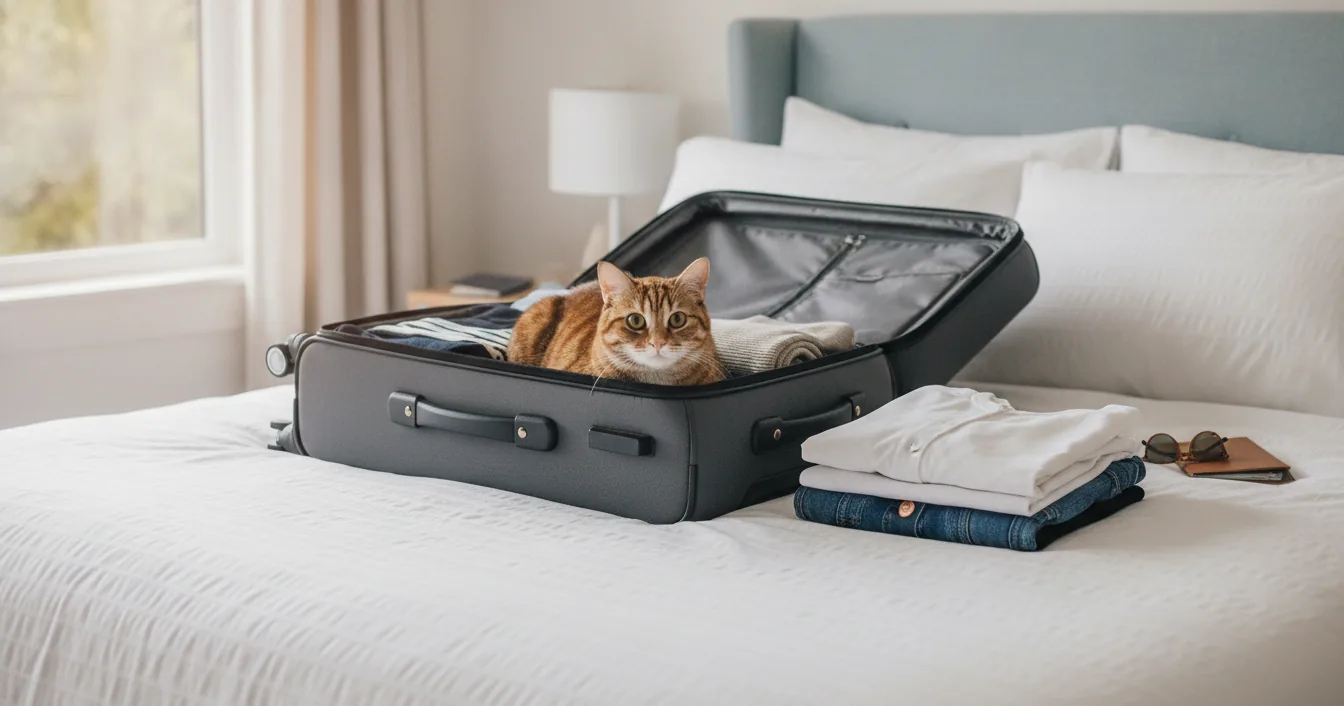
The suitcase comes down from the closet, and somewhere in the house a cat goes still. Maybe it climbs straight into the open case and settles on your folded shirts. Maybe it disappears under the bed and does not come out for dinner. Either way the message is the same: your cat has noticed, and it noticed before you said a word. Cats are creatures of routine, and the days before a trip are full of small tells that the routine is about to break. That window, the stretch of time at home before a cat ever reaches the boarding suite, is where a surprising amount of boarding stress is quietly set. It is also where an owner has the most power to lower it.
This guide is about that pre-departure window: not drop-off day or the stay itself, but the week or two at home when a perceptive cat starts to sense change coming. We will look at what cats pick up on, what early stress looks like, and a prep plan you can start weeks ahead to soften the whole trip.
Yes, Your Cat Notices Before You Do
Cats are tuned into the rhythms of their humans’ days far more closely than most owners realize. They know roughly when the alarm goes off, when the food appears, when you settle on the couch. Break that pattern and they register it. Vet-reviewed reporting from Catster notes that cats pick up on the ordinary signals of an upcoming trip: extra laundry, more time than usual spent at the computer, and of course the suitcase itself, a large unfamiliar object that tends to appear right before you vanish. Cats also recognize their owners’ voices and names, so a house suddenly full of phone calls and travel logistics sounds different too.
How much this rattles a cat is not just sentiment. A well-known Ohio State study found that even healthy cats act sick when their routine is disrupted, showing what researchers call sickness behaviors, things like vomiting, refusing food, or eliminating outside the litter box, at nearly the rate of cats with chronic bladder disease. Cats thrive on predictability, and the flip side is genuine physiological stress when the predictable starts to wobble. The pre-trip bustle is exactly that kind of wobble. Your cat is not sulking about being left. It is a small, routine-bound animal watching its world rearrange, with no way to know why or for how long.
What Anticipatory Stress Looks Like at Home
The signals a cat gives in the days before departure are the same quiet language it will speak in the boarding suite, just showing up earlier and on home ground. Once you know the tells, they are hard to unsee.
- Hiding and withdrawal. A cat that suddenly spends the day under the bed or on top of the wardrobe is coping the way cats cope, by getting small and out of sight.
- Velcro clinginess. The opposite response is just as common. Catster notes that some cats, sensing the change, try to spend extra time with their people and angle for affection while they can.
- Appetite dips. Stress is one of the first things that switches off a cat’s drive to eat, so a half-finished bowl in the lead-up is worth noticing. Our guide to a cat that won’t eat at boarding explains why a skipped meal in a cat is never quite a wait-and-see matter.
- Over-grooming. A cat licking one patch of belly or foreleg until the fur thins is self-soothing, a sign of sustained anxiety rather than a passing fright.
- Vocalizing and pacing. More meowing than usual, restlessness, or trailing you from room to room can all mean a cat that senses something is off.
- Litter box changes. Missing the box or using it more often can be a gut reacting to stress, and it echoes the sickness behaviors the Ohio State work documented.
None of these mean you should cancel the trip. They mean the anticipatory clock has started, and the prep below can slow it down. For a fuller field guide to the same signals once a cat reaches the facility, our piece on reading feline stress signals at boarding breaks each one down.
Start Weeks Ahead, Not the Night Before
Here is the single most useful shift in thinking: the work of calming a cat for boarding is done in the weeks before the trip, not the night before. Desensitization, teaching a cat that a scary thing is actually neutral or even good, only works slowly. Behavior experts who study carrier training find it takes repeated, low-pressure sessions over several weeks to change how a cat feels, not a frantic few days. The American Association of Feline Practitioners builds its carrier advice around this timeline, and the positive-reinforcement studies it points to run about six weeks. So if a trip is on the calendar, the best time to start prepping is now, while nothing is urgent and every session can end on a good note.
Desensitize the Carrier
For most cats the carrier is the single biggest trigger, because it has only ever meant one thing: a bad car ride to a worse destination. Flip that association and you have done more than any calming spray can.
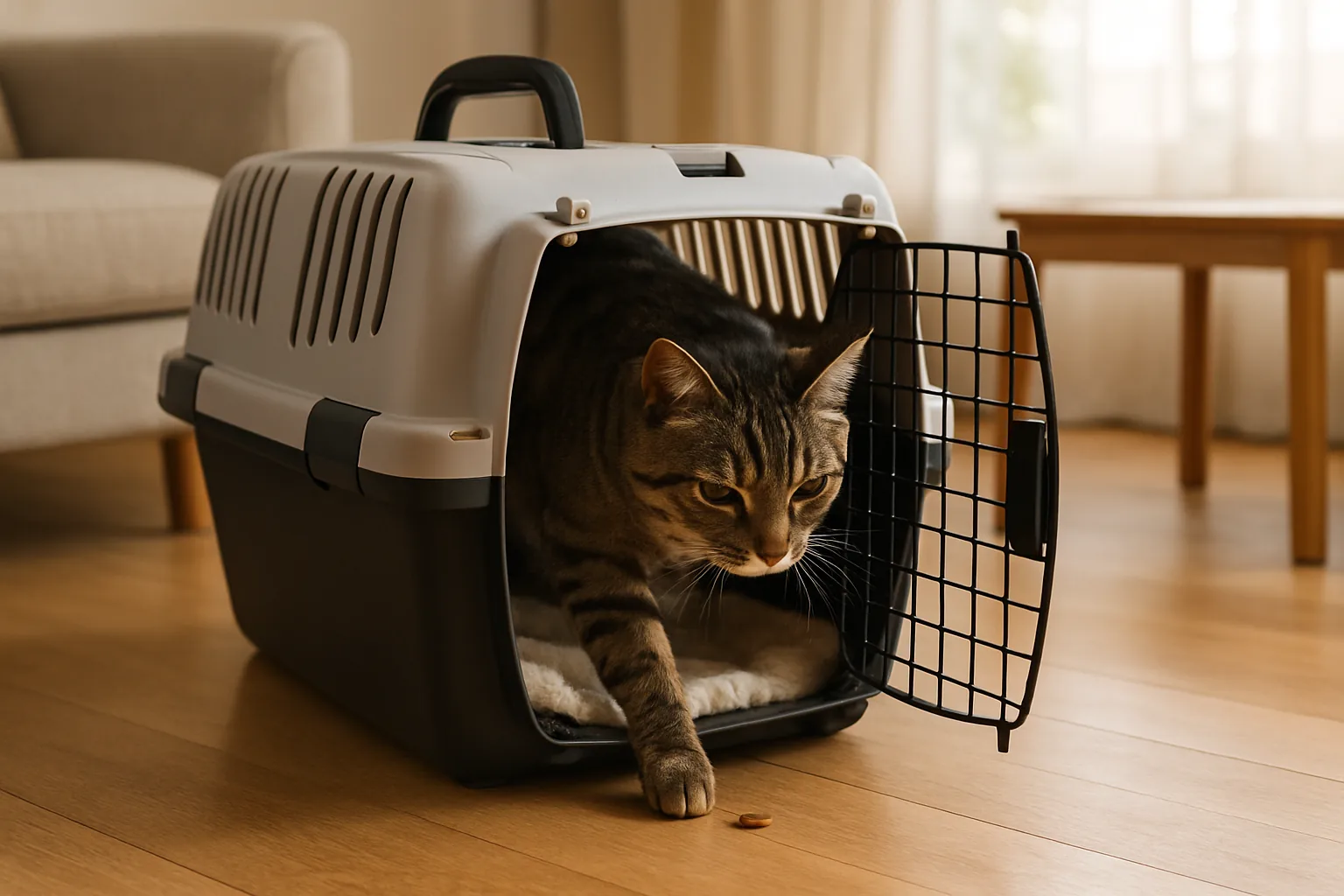
- Leave it out year-round. Stop storing the carrier in the garage and hauling it out only on travel day, which turns it into an alarm bell. Set it out as ordinary furniture, door open or removed, with a soft familiar blanket inside, in a room the cat already likes.
- Make good things happen inside it. Drop a treat or a pinch of catnip in the carrier each day. Feed meals near it, then gradually move the bowl to the doorway and finally inside. International Cat Care recommends this slow, baby-step approach so the cat chooses to go in on its own.
- Close the door for seconds, then build up. Once your cat naps in it willingly, start closing the door briefly while offering a treat, then a little longer, then a short lift, then a few minutes in the car with the engine off. Keep every step short enough that the cat stays relaxed.
The payoff is concrete. Cats trained to their carriers this way show measurably less stress on the road and settle faster at the other end, which is a gentler start to any boarding stay.
Stage the Suitcase Instead of Hiding It
The instinct is to pack fast and out of sight so as not to upset the cat. It backfires. When the suitcase only ever appears in a last-minute flurry that ends with you gone, it becomes a reliable predictor of your disappearance, and a sensitive cat learns the cue. The fix is to break that link by making the suitcase boring.
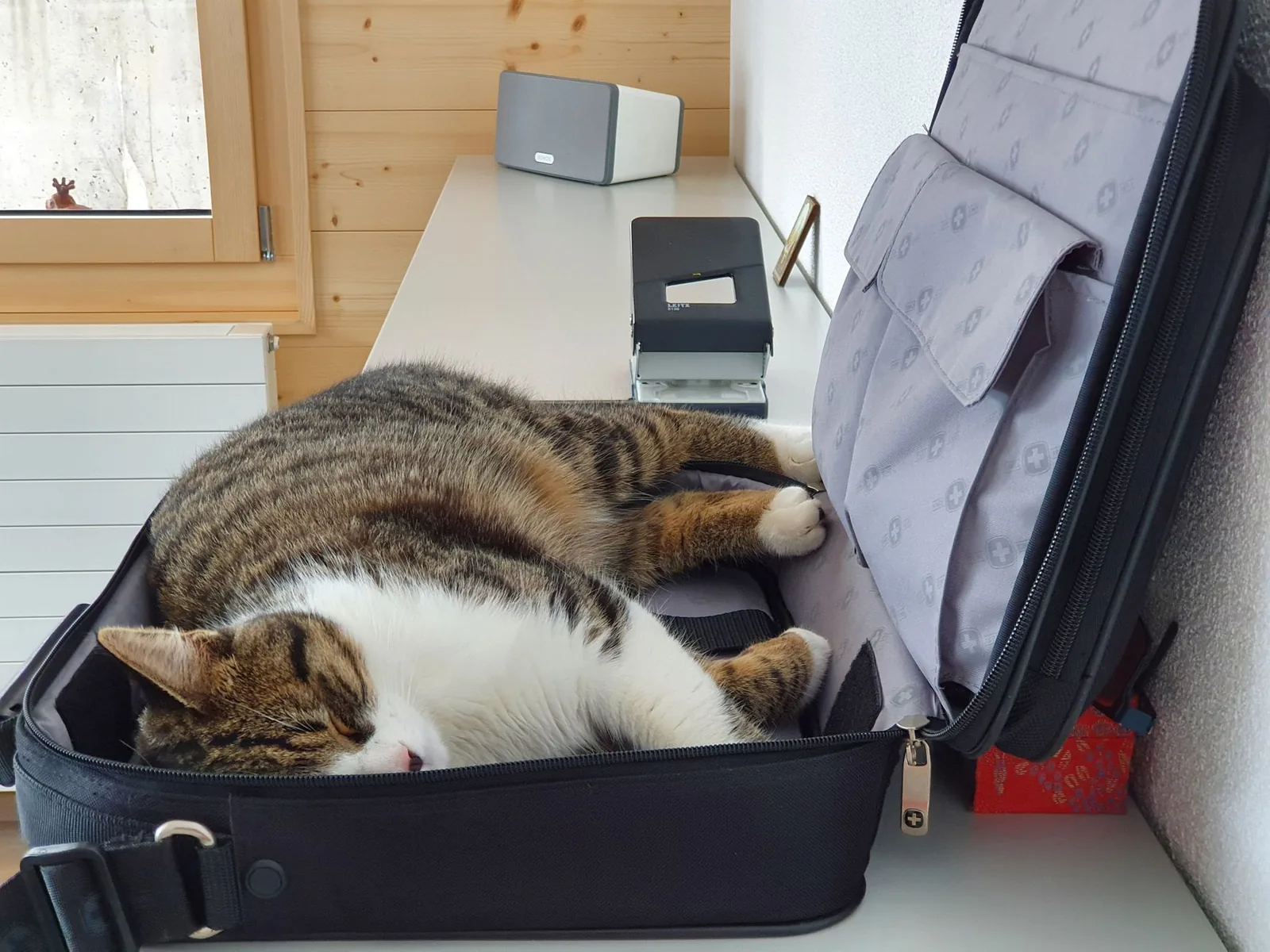
Bring the bag out a week or so before you leave and set it open on the floor or the bed. Let the cat investigate it, sniff it, and yes, nap in it, which many will happily do. Toss a treat or a favorite toy inside now and then. When the suitcase sits around for days doing nothing alarming, it stops being a countdown clock and becomes just another object the cat has decided is safe. Then pack in unhurried stages rather than one tense marathon the night before.
Anchor the Daily Rhythm
Because cats read routine so closely, the most calming thing you can do in the lead-up is keep the ordinary rhythm as steady as possible. Feed at the usual times. Hold the play sessions, the lap time, and the lights-out on their normal schedule. This is not the week to also switch foods, rearrange the furniture, or introduce a new gadget, since the Ohio State research is a reminder that stacked changes hit cats harder than any single one. Front-load calm: a few unhurried play-and-treat sessions in the days before you go leave a cat more settled than a sudden burst of guilty attention on the way out the door. If anything, aim for boring. A boring week is a reassuring week to a cat.
Pack the Scent of Home, and Do a Trial Run
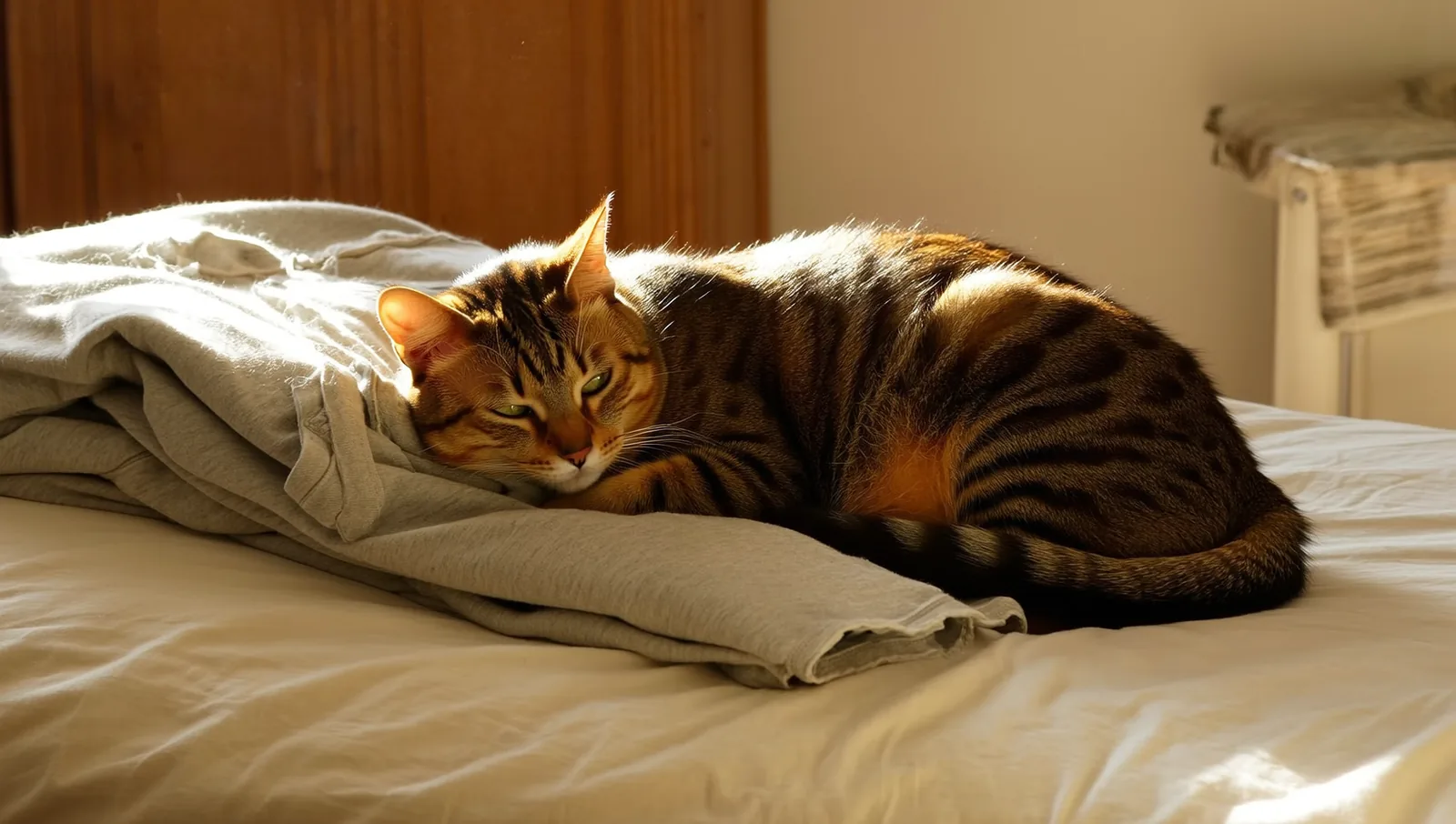
Scent is how a cat decides whether a place is safe, so send familiar smells along to the hotel. An unwashed t-shirt you have worn, or a blanket from the cat’s favorite napping spot, carries the reassurance of home into a strange suite, and Catster suggests exactly this. Send the usual food in the usual portions too, since a new diet on top of a new place is two stressors at once.
Two more moves pay off. If your cat has never boarded, book a single trial overnight well before the real trip so the first separation is short and low-stakes; our guide to choosing the right cat hotel covers what to look for in a facility that handles nervous first-timers well. And remember that a calmer arrival is a healthier one. Stress suppresses feline immune defenses, so cats that reach the suite already wound up are more prone to the colds that circulate at boarding, a link we unpack in how stress drives cat colds at boarding. Lowering the anticipatory stress at home is not only kindness. It is preventive care.
When It Is More Than Pre-Trip Nerves
Most anticipatory stress is mild and fades once the cat settles into the stay. But some signs deserve a call to your veterinarian rather than a wait. Appetite loss that runs more than a day, compulsive over-grooming that breaks the skin, persistent litter box lapses, or a cat so shut down it will not come out at all have moved past ordinary nerves. Cats with a chronic illness or a known anxiety problem should see the vet before a boarding trip is booked, both to rule out a medical driver and to discuss whether a short course of anti-anxiety medication would help. A veterinary behaviorist can build a longer desensitization plan for a cat that panics at the carrier no matter what you try. The goal is never to force calm on a frightened cat. It is to start early and stack small, positive experiences so the trip asks less of the cat in the first place.
Your cat probably does know when you are leaving town. It reads the suitcase, the schedule, and the mood of the house days ahead, and the anticipatory stress that follows is real. The good news is that the same sensitivity is the thing you can work with. Start weeks out, make the carrier and the suitcase boring, hold the daily rhythm steady, and send the scent of home along for the stay. Do that, and the cat that once vanished at the first sight of luggage has a far better chance of taking the whole thing in stride.
Further reading (sources)
- Catster on what cats notice when you are getting ready to leave town
- Ohio State University for how even healthy cats act sick when their routine is disrupted
- International Cat Care with a step-by-step way to get a cat used to the carrier
- AAFP Cat Friendly notes that carrier training over several weeks lowers travel stress