Boarding Your Cat for the First Time: A Step-by-Step Guide From Booking to Pickup
Published on September 25, 2026
The first time you board a cat, the hard part is not any single decision. It is not knowing which decisions exist. Owners who have done it a few times know to book months ahead for Christmas, to ask who is on site overnight, and to keep a returning cat apart from the one who stayed home until the two smell alike again. First-timers tend to learn each of those the hard way, one surprise at a time.
This page is the overview. It takes the six stages of a first stay in order, covers what actually matters at each one, and points to the detailed guide on this site wherever a stage deserves more than a few paragraphs.
How a First Stay Runs
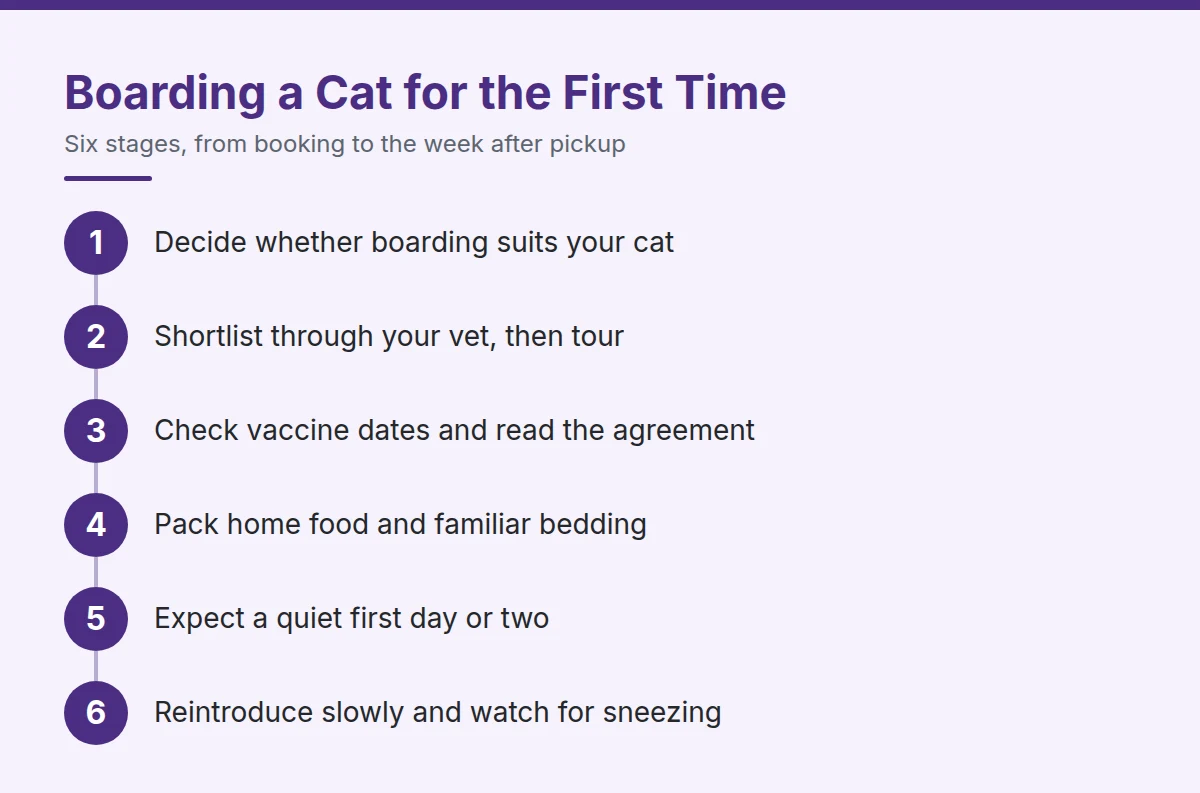
There are six stages, and they come in this order: deciding whether boarding suits your cat, shortlisting and touring, vaccines and paperwork, packing and drop-off, the stay itself, and the homecoming. Start the first one weeks before you travel, and months before if your dates fall in a school holiday.
Most of what goes wrong on a first stay goes wrong at a handover between stages. A booster that lapses between booking and arrival. A medication schedule that lived only in the owner’s head. A cat who comes home smelling of somewhere else and gets hissed at by the cat who stayed behind. None of it is hard to prevent once you know it is coming.
Decide Whether Boarding Suits This Cat
Boarding is one of three options, not the default. The other two are a sitter who drops in once or twice a day and a sitter who lives in while you are away. Which one is right depends on how long you are gone, what your cat’s health needs, and how safe your home is with nobody in it. Our comparison of an in-home cat sitter and a cat hotel works through that decision by trip length and temperament.
The short version is that a good facility earns its fee through observation. Staff see your cat several times a day, which matters most for cats on daily medication, cats with diabetes or kidney disease, and any cat with a history of urinary trouble or of going off its food. A healthy, confident adult cat is often fine at home with a reliable sitter for a long weekend.
Two groups need extra thought before you book. Very young cats run into minimum age rules and unfinished vaccine courses, which the guide to boarding a kitten covers. Older cats bring medication, mobility and appetite questions, set out in the guide to boarding a senior cat. And if your cat has a chronic illness or a behavior problem, talk to your vet before you talk to any facility. Your vet knows what a bad day looks like for that particular cat.
Shortlist, Then Tour Before You Book
Good facilities fill early. International Cat Care advises booking well in advance because the best catteries are often booked up very early, and around Christmas or the summer holidays that can mean months ahead. The holiday boarding guide has the lead times holiday by holiday.
Start the shortlist with your vet. Practices hear which local facilities handle a sick cat well and which ones call too late, and most will tell you if you ask. Then apply two filters.
Cats kept away from dogs. Barking, excited dogs near a cattery are a genuine stressor, so International Cat Care recommends choosing one with no kennels on site or one well separated from them. A cat-only facility settles the question.
A license, and somebody who inspects it. In England, every commercial cat boarding business needs a license from its local council. Statutory guidance from Defra, the UK environment department, says a copy must be displayed prominently at the premises, such as at the entrance, and the license holder’s name and license number must appear on the business’s website. Licenses also carry a star rating, and only businesses that meet the higher standards reach four or five stars. The US has no national license, and the rules change from state to state. Colorado, for example, requires a Department of Agriculture license for anyone paid to care for more than three pets at a time, not counting their own, and inspects the premises before the license is issued. Wherever you live, ask who licenses the facility and when it was last inspected.
Then go and see it. International Cat Care puts it bluntly: if the proprietor will not let you see where the cats are kept, go elsewhere. On the tour, look for:
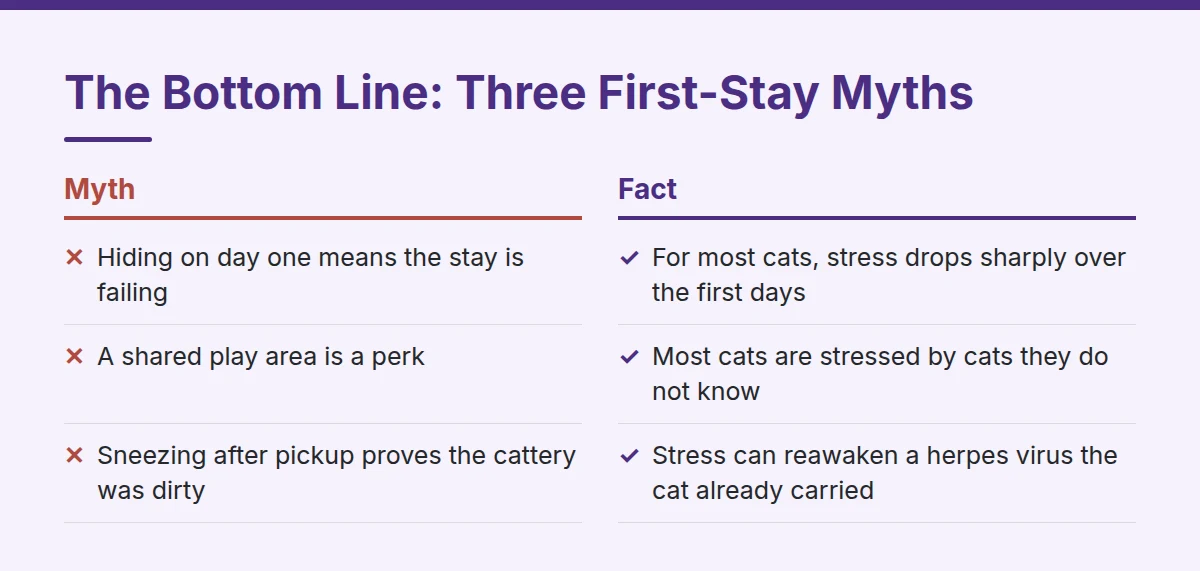
- Individual units. Cats from different households should never share space. Communal play areas sound sociable, but most cats are stressed by unfamiliar cats, and shared trays and bowls spread disease.
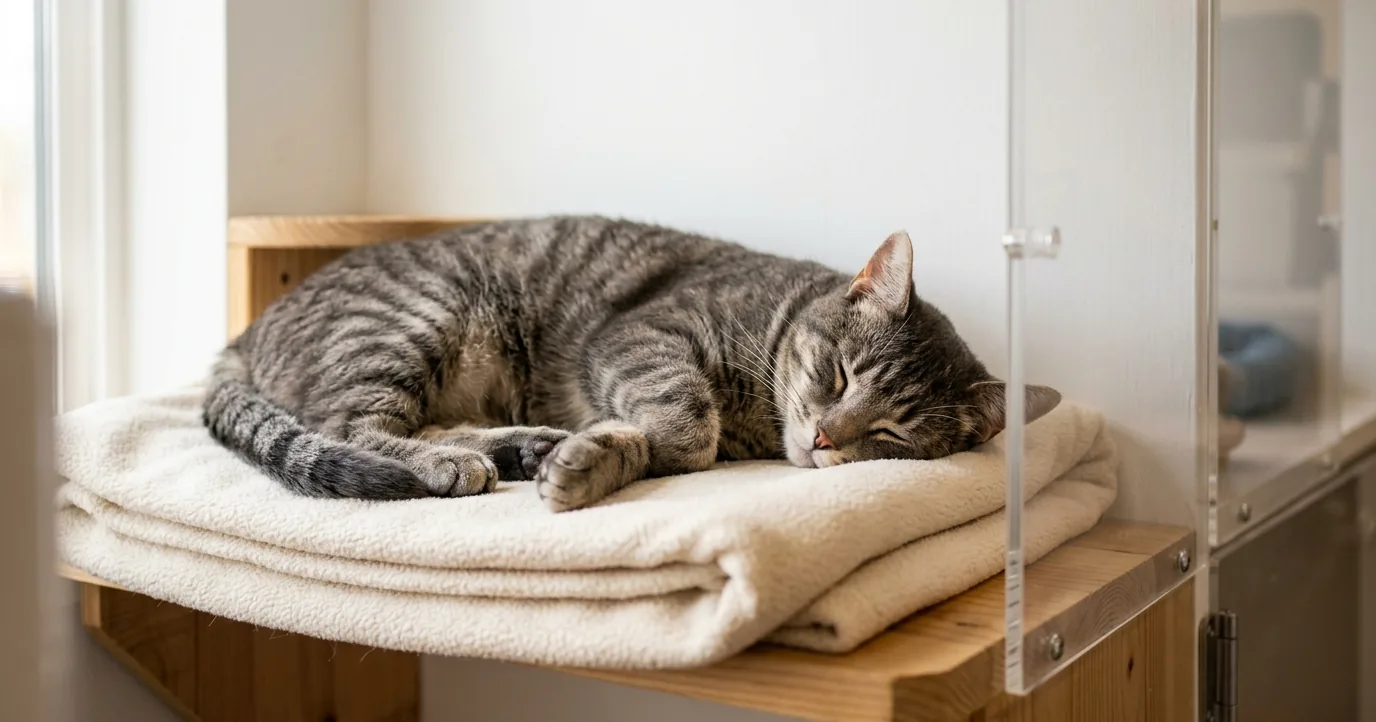
- Sneeze barriers. A solid clear panel or a wide gap between units, so no cat can touch or sneeze on its neighbor.
- A safety corridor. An enclosed area outside each unit, so a cat that slips past a carer at feeding time is still inside the building.
- Room to live in. Space to keep the litter tray well away from food and bed, a shelf to climb, and somewhere to hide.
- No smell. Units should be cleaned every day, and a well-run cattery does not smell.
Then ask three questions: who is on site overnight, which vet the facility uses, and what staff do when a cat stops eating. Our guide to choosing the right cat hotel covers the rest of the tour, and the cat boarding cost guide explains what each tier should cost and which add-ons are worth paying for.
Vaccines, Records and the Boarding Agreement
A reputable facility will ask to see your cat’s vaccination certificate, and one that never asks is telling you how it treats everybody else’s cats too. In England the minimum is written down. The statutory guidance requires current vaccination against feline panleukopenia (also called infectious enteritis) and the two main respiratory viruses, feline herpesvirus and calicivirus, the same trio American vets give as FVRCP. US facilities usually add rabies, which many states and cities require by law, and some ask about feline leukemia.
Timing matters as much as the list. Many facilities want a booster given at least a week before drop-off, and a lapsed course that has to be restarted can need a month, so check the dates when you book rather than when you pack. Some will accept a vet’s certificate from a recent titer test in place of a booster, though in England that is the facility’s decision to make. The boarding vaccination guide covers timing, proof formats and exemptions in full.
Then there is the agreement. Read it before drop-off day, not at the counter. A good one names the vet the facility will use, which licensed catteries in England must confirm with you in writing, and includes your consent for treatment if your cat falls ill. Give an emergency contact who can make veterinary decisions if you cannot be reached, as International Cat Care advises, and agree a spending limit so nobody has to guess at two in the morning. If two of your cats will share a suite, the agreement should also let staff separate them if they fall out.
Preparing, Packing and Drop-Off
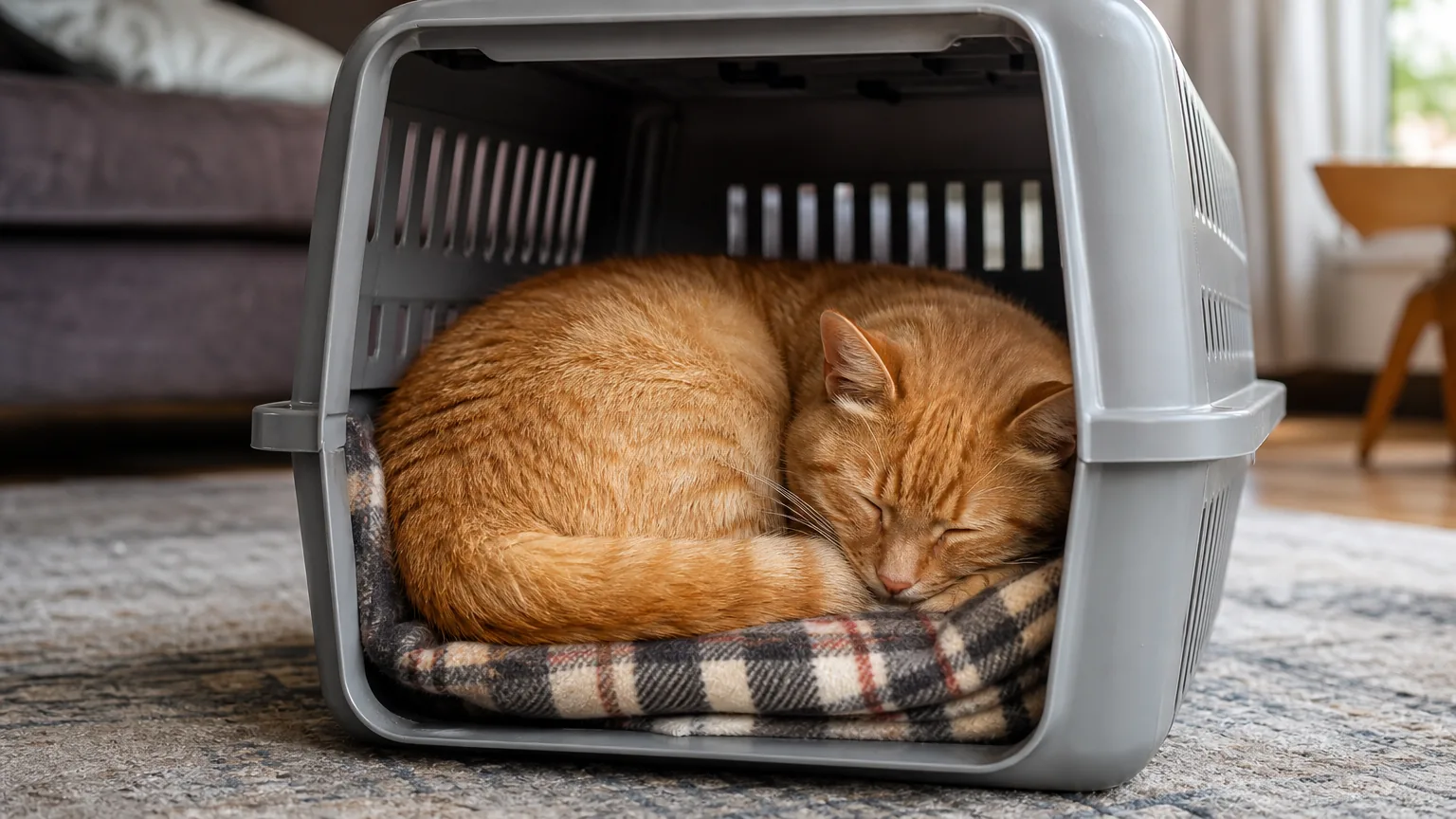
Preparation starts with the carrier, weeks before you need it. International Cat Care suggests making the carrier part of the furniture: somewhere your cat chooses to sleep or gets fed, lined with bedding that smells of home, so it does not appear only on the worst days of the year. A cat that walks into its own carrier arrives calmer than one that was wrestled into it.
Cats also read the build-up to a trip: the suitcase in the hall, the shifted routine, the unusual evening. Our piece on how cats sense you are leaving covers how to keep the days before departure calm. If your cat panics in the car or has done badly on journeys before, ask your vet two or three weeks ahead about calming medication for the journey, so there is time for a trial dose at home first.
Pack light, but specific:
- Your cat’s usual food, enough for the stay plus a few spare days. Good facilities feed what your cat eats at home, and a sudden change of diet is one more thing to cope with.
- Medication in its original packaging, with the dose and timing written down.
- Something that smells of home, such as bedding, a worn T-shirt, a favorite toy or even a scratching post. Many catteries welcome these, and a licensed one in England must keep owner-supplied toys and scratching posts in your cat’s unit, for your cat only, and hand them back at the end.
- The carrier, which can double as a hiding place in the suite.
- A one-page note covering feeding amounts, litter habits, quirks, and what normal looks like for this cat.
On the day, keep the handover calm and fairly brief. Walk the staff through your note, hand over the medication in person, and confirm how they will reach you. A long goodbye in the lobby mostly helps the owner.
What Happens While You Are Away
Expect a quiet first day or two. Many cats hide, eat little and barely use the litter tray while they take in a new room. That is the normal start of adapting, not a sign the stay is failing.
The best evidence on how the rest of the stay plays out is old but still useful. Kessler and Turner scored the stress of 140 cats through two-week stays in a boarding cattery, using a non-invasive Cat-Stress-Score. Stress fell across the stay, most sharply in the first days, but after two weeks it was still higher than in a control group of cats that had lived in an animal shelter for several weeks. About a third of the boarded cats were still rated above “weakly tense” in the second week, and 4 percent stayed above “very tense”. Most cats settle, in other words. A minority do not, and the job of a good facility is to notice which kind yours is.
Noticing is where the rules help. Under the statutory guidance, licensed catteries in England must check on the cats at intervals of no more than three hours between 8am and 6pm, monitor what each cat eats and drinks, check every day whether it has passed urine and feces, and watch its behavior daily. If a cat has had no appetite for longer than 48 hours, they must seek veterinary advice, and sooner if the cat has a known health problem. A facility elsewhere may not be bound by anything so specific, which is why the question about a cat that stops eating belongs on your tour list.
Appetite is the signal that matters most. A cat that stops eating for several days risks hepatic lipidosis, a serious liver condition, so our guide to cats that won’t eat at boarding is worth reading before the stay rather than during it. For the rest of the vocabulary (hiding, ear and tail positions, over-grooming), see reading your cat’s stress signals at boarding.
On updates, agree the rhythm before you leave. Many facilities send a daily message or photo, and some offer webcams. More useful than frequency is knowing what will trigger a phone call, and making sure you can actually be reached when it comes.
Pickup and the First Days Home
At pickup, ask for specifics rather than settling for “she was lovely”. How much did she eat, and from which day? Any litter changes? Any medication given, and any contact with a vet? A licensed cattery in England has to keep its records for at least three years, so the answers exist. Take home everything you brought, including any unused medication, which should come back to you.
At home, give your cat a quiet room with food, water and a litter tray, and let her come to you in her own time. Some cats are clingy for a day, others aloof. Both are normal.
If another cat lives with you, go slower. The returning cat smells of somewhere else, and to the cat who stayed home that can read as a stranger. International Cat Care’s advice for cats coming home from the vet applies just as well after boarding: keep the cats in separate rooms for a few hours or a day or two, then allow gradual, supervised contact. Wash the carrier bedding, and give the returning cat bedding from a shared resting spot so it picks up the smell of the household again.
Then keep watching for about two weeks. The signs of a feline upper respiratory infection are sneezing, discharge from the eyes or nose, coughing, mouth ulcers, lethargy and loss of appetite. Cornell’s Baker Institute puts the incubation period of feline calicivirus at two to 14 days, so a cat can come home looking fine and start sneezing the following week. A sneeze is not proof of a dirty cattery, either. According to the Cornell Feline Health Center, up to 97 percent of cats are exposed to feline herpesvirus in their lifetime, up to 80 percent of those stay infected for life, and up to 45 percent of carriers shed the virus again from time to time, usually when stressed. A car journey and a strange room can be enough, which our explainer on why URI risk spikes after drop-off unpacks. Either way, tell the facility, and call your vet if your cat stops eating or the signs get worse.
And if something went properly wrong, such as an injury nobody mentioned or an illness nobody flagged, the order that works is evidence first, then the facility, then whoever licenses it. Our guide to what to do when something goes wrong at the cattery sets out that route step by step.
Before the Next Stay
Write down what you learned while it is fresh: what she ate, how long she hid, how the homecoming went. If the stay went well, book the same facility again and ask for the same suite, because a place that already knows your cat’s habits beats a new one. If it went badly, you now know which questions to ask first, and that is most of what separates a first-timer from an owner who has done this before.
Further reading (sources)
- International Cat Care on what to look for in a boarding cattery, from sneeze barriers to distance from dogs
- International Cat Care also covers carrier training and reintroducing a cat who comes home smelling different
- Defra with the licensing conditions every commercial cat boarding business in England must meet
- Colorado Department of Agriculture for which pet boarding businesses need a state license and how they are inspected
- Kessler and Turner on how stress changes in cats over a two-week cattery stay
- Cornell Feline Health Center explains the signs of respiratory infection and how often herpes carriers shed under stress
- Cornell’s Baker Institute for the incubation period of feline calicivirus and how it spreads