Famciclovir for Boarding Cats With Chronic Feline Herpes: When Antiviral Therapy Makes Sense
Published on July 29, 2026
Some cats carry feline herpesvirus quietly for years and only show it when life gets difficult. Boarding is exactly that kind of difficult. If your cat has a history of weepy eyes, chronic squinting, or a snuffly nose that returns every time the household routine changes, you have probably been warned that a stay away from home will set it off again. You may also have been told there is nothing to do but wait it out.
That is no longer quite true. Famciclovir, a human antiviral repurposed for cats, is the one drug in this area with a genuine body of controlled trial evidence behind it. It is not a cure, and it is not right for every cat. But for a known herpes cat facing a two-week stay, it is a conversation worth having with your veterinarian before drop-off rather than after the flare starts.
Why Boarding Sets Off Feline Herpes
Feline herpesvirus type 1 (FHV-1) behaves like every other herpesvirus. Once a cat is infected, usually as a kitten, the virus retreats into nerve tissue and stays for life. It does not get cleared. It waits.
What brings it back out is stress, and the physiological pathway is well understood: cortisol suppresses the immune response that was holding the virus in check, latent virus reactivates, and the cat starts shedding and showing signs again. A new environment, unfamiliar smells, other cats within earshot, and a changed feeding routine are a textbook trigger stack. We cover that mechanism in more depth in our look at how stress drives cat colds at boarding.
This is why a cat can be perfectly well at home for eight months and arrive back from a stay with a closed, weeping eye. The facility did not necessarily give your cat anything. Your cat already had it.
What Famciclovir Actually Is
Famciclovir is a prescription antiviral developed for human herpes infections. In the body it converts to penciclovir, which interferes with the virus’s ability to copy its own DNA. It targets the virus itself, which makes it fundamentally different from the antibiotics a cat sometimes gets during a respiratory episode. Antibiotics do nothing to FHV-1; they are there for secondary bacterial infection, which is a separate problem.
It is also different from the supplements sold for the same purpose. L-lysine is the one most owners have encountered, and the evidence for it has collapsed over the past decade, as we set out in our review of whether L-lysine actually prevents cat colds. Famciclovir is in a different category entirely: prescription only, dosed by weight, and studied in randomized trials.
One important caveat. Its use in cats is off-label, and cats metabolize it unusually, which is why the doses in the veterinary literature look startlingly large next to human ones. This is not a drug to source yourself or to guess at.
What the Trials Actually Show
The honest summary is that famciclovir works, but the size of the benefit depends heavily on which cats you give it to and when.
Cooper and colleagues (2018) ran the study that speaks most directly to the boarding question. They gave cats famciclovir at roughly 30 or 90 mg/kg twice daily for seven days on entry to a shelter, splitting them into a therapeutic arm (cats already showing signs) and a prophylactic arm (cats that were well). The result was mixed. Clinical scores did not differ significantly between treated and untreated cats in either arm. But among cats that were already ill, treatment significantly reduced conjunctival FHV-1 shedding compared with no treatment, and at the lower dose that effect was still measurable a week after the drug stopped. The authors framed this as a possible way to interrupt viral spread through a population, while noting the cost in staff time and the stress of pilling cats twice a day.
Reinhard and colleagues (2020) ran a placebo-controlled trial in shelter cats with naturally occurring respiratory disease, treating for up to 21 days at a target of 40 to 90 mg/kg. Cats on famciclovir were significantly less likely to get worse day by day than cats on placebo. The trial was small, with 11 cats per group, so it is suggestive rather than definitive, but it points the same direction.
Vernau and colleagues (2024) produced the largest and most useful trial to date: 373 kittens with eye involvement, randomized to doxycycline plus placebo or doxycycline plus famciclovir at about 90 mg/kg twice daily for 21 days. Two findings matter for owners. Kittens with mild disease who got famciclovir reached clinical resolution four to five days sooner than those on the antibiotic alone. And significantly fewer of them developed corneal disease, which is the outcome that can cause lasting damage. All five kittens who deteriorated badly enough to be pulled from the study were in the no-famciclovir group. The authors’ conclusion is the practical takeaway: giving famciclovir early, while the signs are still mild, appears better than waiting for things to get bad.
Put together, the pattern is consistent. Famciclovir’s strongest showing is as early treatment of a cat that is starting to show ocular signs. Its weakest showing is as blanket prophylaxis for cats that are currently well.
Prophylactic Versus Therapeutic: The Distinction That Matters
Owners tend to ask for famciclovir as insurance, wanting to start it a few days before drop-off so a flare never happens. That is the prophylactic approach, and it is the one with the least support. Cooper’s prophylactic arm showed no clinical benefit at all.
The therapeutic approach means having the drug on hand and starting it at the first real sign: the first squint, the first eye discharge, the first day of sneezing. Given how much better mild-disease kittens did in the 2024 trial, this “ready to start” arrangement is usually the more sensible plan, and it avoids medicating a cat who was never going to flare.
There is one exception worth raising with your vet. A cat with a well-documented history of flaring during every single stay, particularly one who has had corneal involvement before, is a different risk profile from a cat who flared once three years ago. Some vets will choose to start early in that specific case. That is a judgment call for someone who knows the cat’s history, not a general rule.
What to Arrange Before Drop-Off
Sort this out well before the week of travel. Prescriptions, compounding, and facility paperwork all take longer than owners expect.
- Book a vet appointment specifically about the boarding stay. Bring the dates and the length of the stay. Ask directly whether famciclovir is appropriate for your cat and whether the plan should be prophylactic or start-on-signs.
- Get the dose in writing. Dosing is weight-based and the published range is wide. The facility needs the exact dose, frequency, and duration on the label, not a verbal instruction from you.
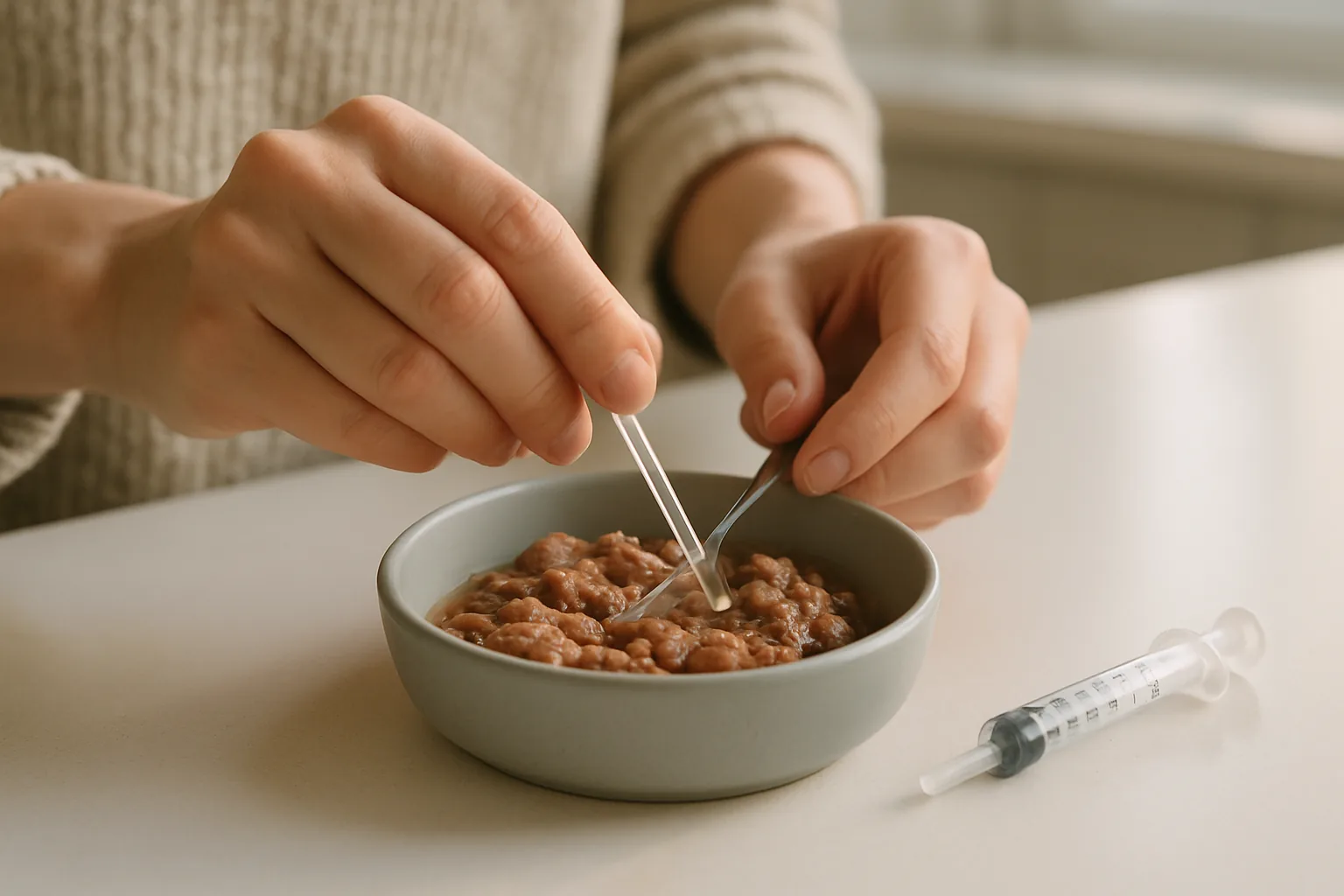
- Ask about the form. Tablets that need splitting are awkward for staff and stressful for cats. A compounded liquid or an appropriately sized capsule is easier to give reliably, and reliability is the whole point.
- Confirm the facility can and will administer it. Most charge a medication fee, and some will not handle twice-daily dosing at all. Ask before you book, not at check-in.
- Agree on the trigger and the escalation point. Who decides the cat is flaring? What signs start the drug? At what point do they call your vet instead? Get answers to all three.
- Leave your vet’s contact details and authorization for treatment, along with a spending limit if the facility asks for one.
Cats needing daily medication during a stay raise wider questions about staffing and monitoring, which we cover in the context of older cats in our guide to boarding a senior cat. The same logic applies to any medicated guest.
When Famciclovir Is Not the Answer
An antiviral only addresses the viral half of the picture. If your cat develops thick yellow-green nasal discharge, a fever, or stops eating, that suggests secondary bacterial infection or something else entirely, and it needs a vet, not a bigger dose. The broader question of what a facility should do when a cat gets sick is covered in our URI prevention guide.
For cats with genuinely chronic signs that have not responded to conventional treatment, there are other options. Fenimore and colleagues (2015) tested two of them in shelter cats sick for three to four weeks: high-dose interferon alfa-2b by injection, and a single dose of an intranasal FHV-1 and calicivirus vaccine. Both helped, with all 12 cats in the intranasal vaccine group responding. That study was small and uncontrolled, so it is a starting point for a discussion with your vet rather than a recommendation, but it is worth knowing that refractory cases have somewhere to go.
None of this replaces the basics. Current vaccination, which we detail in our cat boarding vaccinations guide, plus a low-stress facility and a familiar-smelling blanket from home, remain the foundation. Famciclovir is a useful tool for the cats that need it. It is not a substitute for choosing a place that will not stress your cat in the first place.
Further reading (sources)
- Cooper and colleagues on how prophylactic and therapeutic famciclovir performed in shelter cats
- Reinhard and colleagues for the placebo-controlled trial in cats with naturally occurring respiratory disease
- Vernau and colleagues with the 373-kitten trial that found less corneal disease and faster recovery
- Fenimore and colleagues on interferon and intranasal vaccine for chronic, treatment-resistant cases